Ridge Racer MAME Emulation Preserves Rare Arcade Hardware

The intricate work of arcade preservation has yielded a notable success with the MAME emulation of the three-monitor Ridge Racer machine, a rare variant featuring a unique multi-board architecture. This development marks a significant step in digitally safeguarding an exceptionally scarce piece of arcade history.
Developer [beaumotplage] secured one of these exceptionally scarce units, believed to number in the single digits globally. The primary objective was to dump the machine's ROMs, which were previously unpreserved in any major archive. This critical first step ensures the digital survival of the game's original code, a fundamental aspect of any preservation effort.
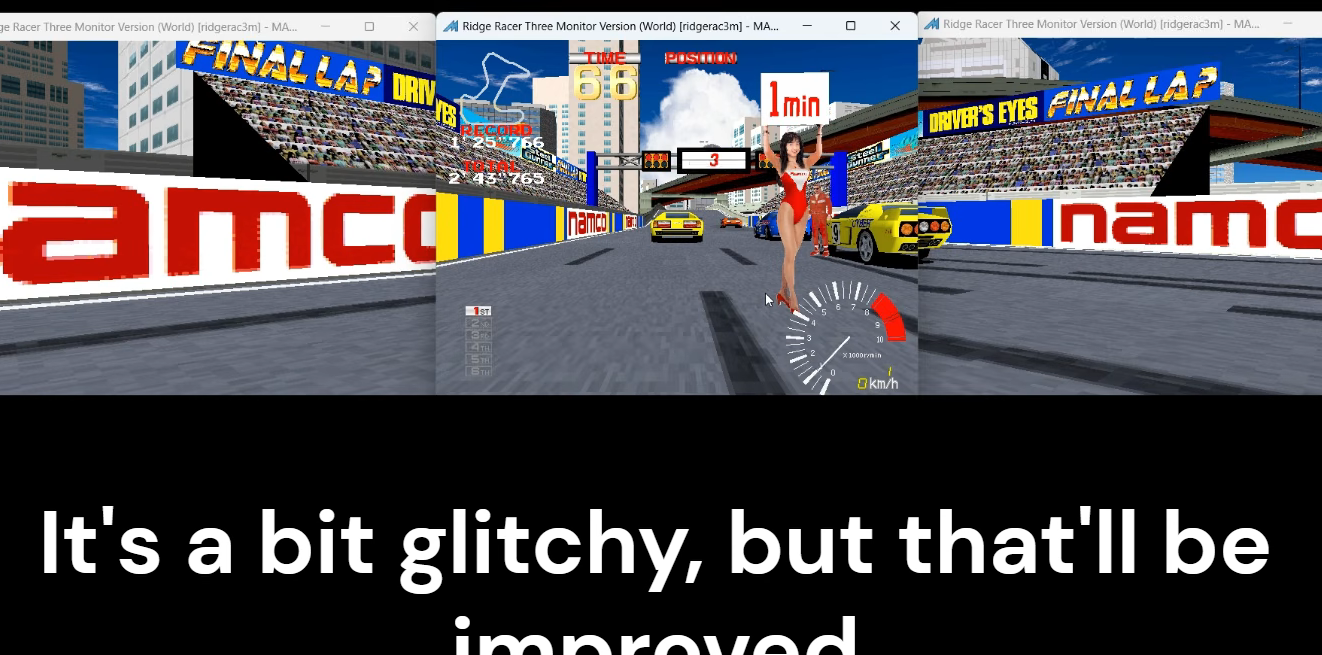
The three-monitor Ridge Racer setup is distinctive because each display is driven by its own dedicated arcade board. These individual boards communicate via C139 serial links to synchronise the wraparound display, creating the immersive experience. To replicate this in MAME, or Multiple Arcade Machine Emulator, [beaumotplage] developed specific C139 linkup code. This allows three instances of MAME to run concurrently and interact precisely as the original hardware would. While the current operation is described as "a little janky," it demonstrably functions, providing a playable representation of the original.
The Challenge of Multi-Board Systems
This project underscores the often-overlooked complexity involved in thorough arcade preservation. It is not merely a matter of dumping ROMs; understanding and replicating the intricate hardware interactions, particularly in multi-board or networked systems, is paramount. Many early 3D arcade titles, including Ridge Racer, pushed the boundaries of available technology by linking multiple processing units. This approach created experiences beyond what a single board could achieve at the time. The real story here is the dedication to reverse-engineering these bespoke communication protocols, ensuring that even the most unusual configurations can be experienced digitally. This level of detail is crucial for a complete historical record.
A Broader Preservation Context
The successful emulation of such a complex system highlights the ongoing commitment within the preservation community. It demonstrates that even decades after their initial release, these machines continue to present technical puzzles. Overcoming these challenges ensures that the full breadth of arcade innovation, from the common to the truly obscure, remains accessible. It is a testament to the persistent efforts of individuals like [beaumotplage] that these unique hardware configurations are not lost to time.
Looking Ahead
The hacked version of MAME for three-monitor operation is available for download, though it does not include the ROM dumps themselves. Beyond the digital preservation, there is anticipation regarding a potential full hardware restoration of the physical machine. Such comprehensive efforts ensure both the software and the original physical experience are safeguarded for future generations. This dual approach offers the most robust form of historical archiving.
Follow RetroShell on X for daily retro gaming news. Join the community on r/RetroShell.
Originally published by Hackaday. Read original article.