Metal Slug: Three Decades of Enduring Arcade Excellence

Thirty years ago, on April 19, 1996, Nazca Corporation released Metal Slug (メタルスラッグ), a run-and-gun arcade title that quickly became a cornerstone of the Neo Geo MVS system. This seminal work, developed by a team that would soon be absorbed into SNK, demonstrated a mastery of 2D pixel art and refined the hashiru to utsu (走ると撃つ) genre for a new era. It is my view that the game’s immediate success was a testament to its unique blend of tight mechanics and unexpected charm, setting it apart from its contemporaries.
The arcade landscape of the mid-1990s was undergoing a significant shift, with 3D graphics gaining prominence. However, Metal Slug offered a refreshing counterpoint, doubling down on the strengths of 2D sprite work. It built upon the established foundations of earlier titles, such as Konami's Contra, by delivering a familiar yet significantly enhanced experience, as noted by ComicBook Gaming.
At its core, Metal Slug presented players with a relentless onslaught of enemy soldiers, demanding quick reflexes and strategic movement. The game supported two players, fostering a cooperative dynamic essential for navigating its challenging stages. This design choice was crucial for its arcade appeal, encouraging shared experiences and repeat plays.
The Enduring Appeal of Nazca's Craft
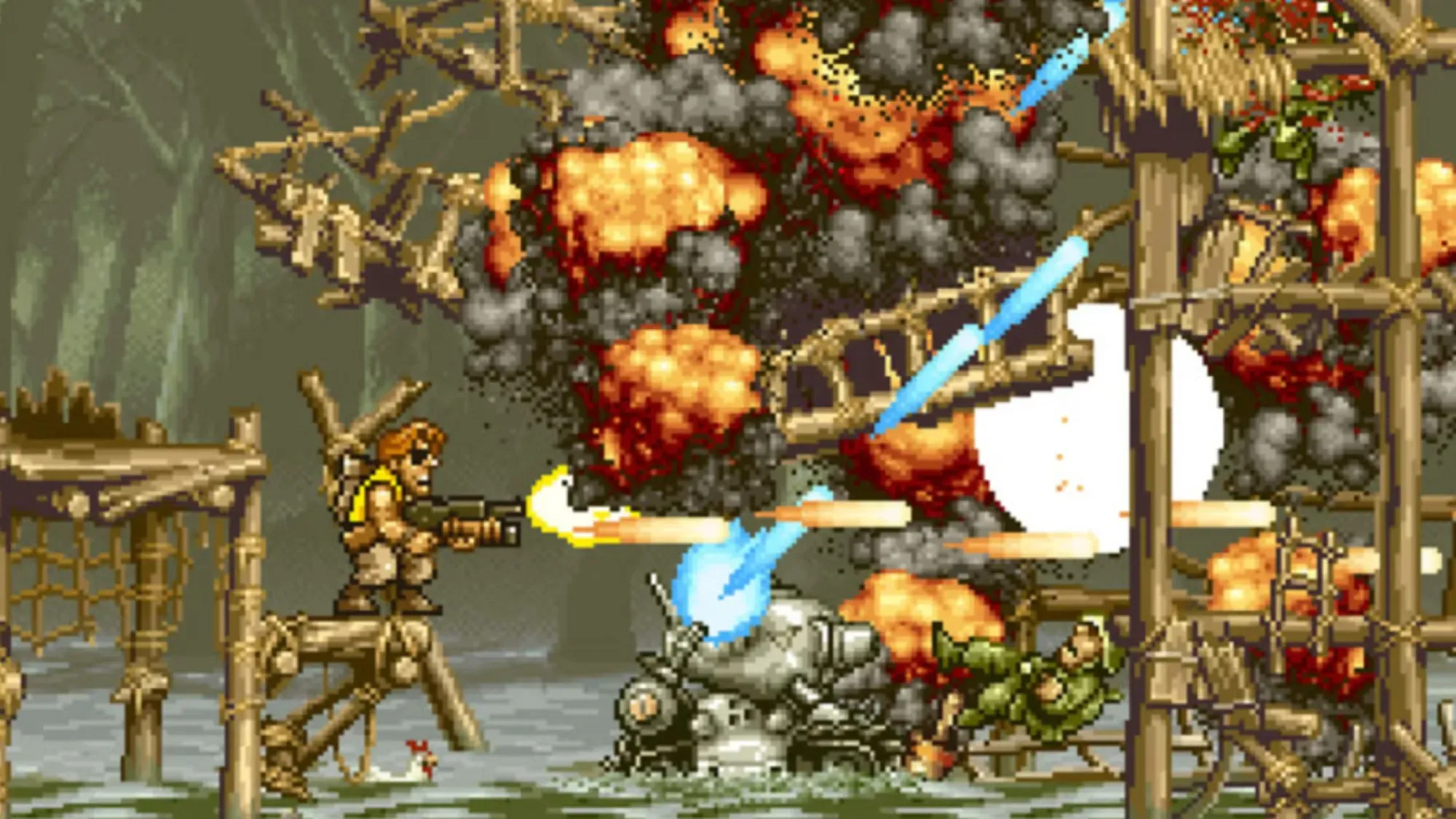
What truly distinguished Metal Slug was its distinctive visual style and presentation. The detailed 2D pixel art, rendered on the powerful MVS hardware, allowed for richly illustrated backgrounds that added considerable depth to the game world. Characters, in contrast, featured a more cartoony aesthetic, which cleverly facilitated unexpected comedic moments amidst the intense action.
The narrative follows Captain Rossi and Lieutenant Roving of the Peregrine Falcon Strike Force, tasked with thwarting the nefarious General Donald Morden. Their mission to undermine his plans for world domination provides a straightforward yet engaging premise. This simple setup allowed the gameplay to remain the primary focus, a common trait in successful arcade titles.
A World of Diverse Adversaries
Nazca Corporation’s design philosophy embraced a brighter, lighter tone as the series progressed, introducing a diverse array of adversaries. Players encountered not only villainous commandos but also armies of aliens, mummies, and zombies. This constant variety kept the combat fresh and unpredictable, a key factor in its enduring appeal.
Combat emphasised rapid movement and the efficient use of various firearms, including machine guns and grenades, to dismantle massive tanks and enemy formations. A notable gameplay tweak was the close-quarters attack, allowing players to inflict significant damage up close. This tactic, however, carried the inherent risk of leaving the player exposed, adding a layer of strategic depth.
The Challenge Worth Every Coin
The game’s deceptive difficulty was a hallmark, characterised by single-hit kills and overwhelming enemy forces. This presented a uniquely challenging experience for players, demanding precision and mastery. It is this finely tuned difficulty, I believe, that truly cemented Metal Slug's reputation among arcade enthusiasts.
Despite some initial harsh reviews from critics at the time, Metal Slug quickly garnered international success for SNK. Its immediate popularity in arcades led to numerous ports for home consoles, expanding its reach beyond the coin-op environment. This rapid transition underscored the game's universal appeal, as reported by ComicBook Gaming.
A Timeless 2D Masterpiece
In an era where early 3D graphics often looked dated, Metal Slug stood out as a tough-as-nails and incredibly charming throwback. Its commitment to refined 2D gameplay offered a refreshing alternative. This adherence to classic design principles ensured its longevity, unlike many early 3D experiments.
It is easy to understand why players, myself included, developed such an affection for the game. Despite the intense difficulty, the colourful settings and bombastic battles provided an inherently fun experience. The gameplay felt challenging but never cheap, fostering a sense of accomplishment with each successful advance.
Rewarding Moments and Lasting Legacy
Moments of becoming temporarily overpowered, such as piloting a walking tank, felt immensely rewarding due to the preceding challenge. Metal Slug refined the side-scrolling gameplay of its predecessors in a manner that was effective, engrossing, and thoroughly entertaining. This balance is a hallmark of exceptional arcade design.
The game resonated particularly with younger gamers, who were drawn to its tight gameplay and charming visuals. This encouraged repeated quarter deposits, driving players to continually advance further. Its success paved the way for several sequels and compilation collections, ensuring its legacy for future generations.
Today, Metal Slug is readily available across various modern platforms, allowing new audiences to experience its timeless design. Despite three decades passing since its debut, the game retains the captivating world-building and effective gameplay that made it an instant classic. It remains a benchmark for the run-and-gun genre.
The original Metal Slug exemplifies the kind of timeless game design that developers of the era strived to achieve. It continues to challenge players with enough style to prevent frustration, proving as enjoyable now as it was in 1996. Its enduring presence in the retro gaming scene is a testament to Nazca Corporation's vision and SNK's commitment to quality arcade experiences.
Follow RetroShell on X for daily retro gaming news. Join the community on r/RetroShell.
Originally published by ComicBook Gaming. Read original article.