Ratchet & Clank: Size Matters on PSP: A Study in Handheld Compromise

The transition of established console franchises to handheld platforms often presents a fascinating, if sometimes fraught, exercise in design compromise, and Ratchet & Clank: Size Matters for the PlayStation Portable is a particularly illustrative example of this phenomenon, offering a clear view into the practicalities of adapting complex 3D action to a more constrained hardware envelope. Released in early 2007, this title marked the Ratchet & Clank series' inaugural foray into handheld gaming, arriving just months before the PlayStation 3's Tools of Destruction. As GameGrin reports, its development by High Impact Games, a studio founded by former Insomniac staff, rather than the series' original creators, adds another layer of intrigue to its place within the franchise's continuity and design evolution.
A Spin-off's Unique Position
Size Matters occupies a curious space in the Ratchet & Clank chronology. While it ostensibly follows the events of Deadlocked and Up Your Arsenal, elements within its narrative appear to echo the very first game, creating a somewhat muddled sense of progression. This narrative ambiguity, coupled with the shift in development teams, hints at the challenges inherent in expanding a successful console series onto a new, portable platform. The decision to entrust a spin-off studio with such a significant entry suggests a strategic move by Sony to broaden the franchise's reach, while perhaps also acknowledging the distinct development requirements of the PSP hardware.
The Handheld Compromise: Visuals and Controls
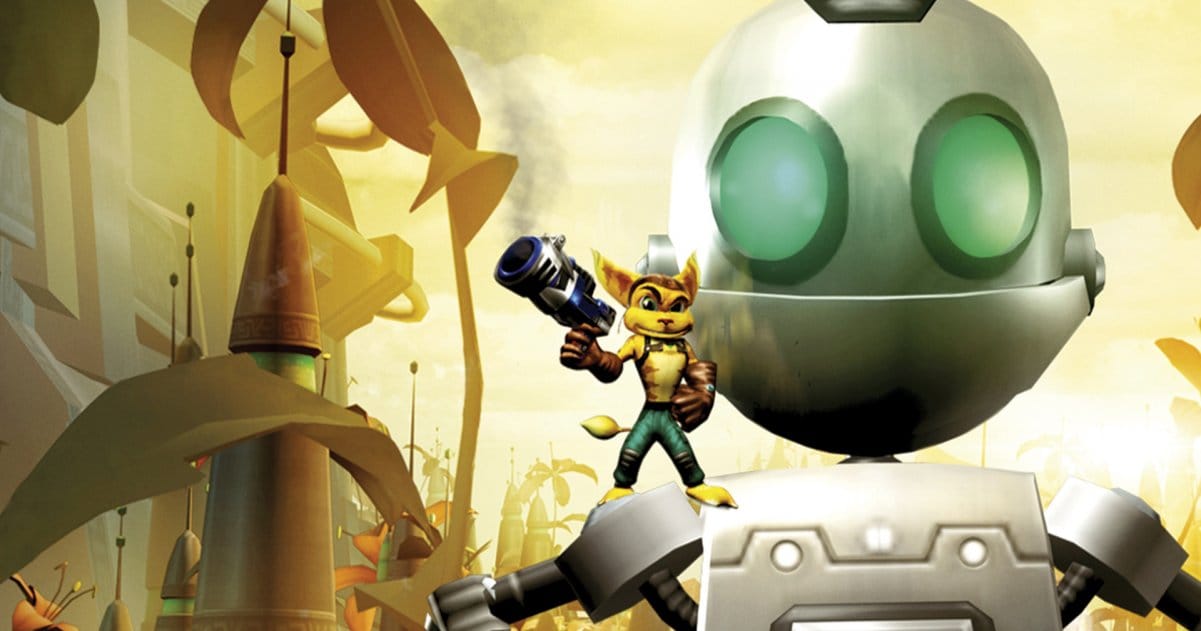
Adapting a visually rich, fast-paced action platformer to the PSP's specifications inevitably led to certain compromises, as GameGrin's analysis highlights. The game's camera, for instance, feels more zoomed-in than its console predecessors, a likely adjustment to mitigate the handheld's technical limitations and smaller screen. This tighter perspective, however, contributes to a sense of awkwardness in movement, a common complaint for early 3D handheld titles attempting to replicate console experiences. The visual fidelity also suffered, with textures described as lacklustre, some even resembling those from the original PlayStation era, according to Insomniac Studios. Character models, particularly Ratchet's, are noted for an unsettling quality, a phenomenon often referred to as the "uncanny valley" when 3D models fall short of realistic rendering.
Design Decisions Under Constraint
Beyond the visual aspects, the PSP's unique control scheme presented significant design hurdles. With only two shoulder buttons compared to the PlayStation 2's four, developers at High Impact Games had to re-evaluate fundamental actions. The source notes that performing a long jump now required pressing both shoulder buttons simultaneously, a minor but noticeable departure from established muscle memory. More significantly, the strafing mechanic, crucial for combat in the main series, was unintuitively mapped to the directional pad rather than the thumbstick. This particular choice, as GameGrin observes, made combat feel less fluid and more cumbersome, especially in the heat of an encounter. It is worth noting that such control reconfigurations were a frequent point of contention for many console ports to the PSP, demonstrating the persistent challenge of translating complex input schemes to a more limited physical interface.
Combat Encounters and Efficacy
The combat in Size Matters also drew criticism, with enemies described as "spongey" and capable of dishing out damage at a disproportionately high rate. This imbalance, particularly evident in boss battles, could lead to frustrating loops where players were forced to expend precious bolts on rearming, as ammunition was not replenished upon defeat. This design choice, whether an intentional difficulty ramp or an oversight, significantly impacts the player's progression and resource management. The efficacy of weapons, a hallmark of the Ratchet & Clank series, also suffered. The starting blaster, the Lacerator, was deemed so ineffective that the Omniwrench, a melee weapon, often proved a more viable option. This suggests a potential miscalibration of weapon damage against enemy health pools, a critical flaw in a game built around varied and powerful armaments.
A Return to Creative Level Design
Despite these mechanical and technical shortcomings, Size Matters did manage to recapture some of the series' signature creativity in its level, character, and weapon design. The game eschewed the more militaristic settings of some PS2-era entries, instead offering a diverse array of locales such as a spaceport, a farm, and a medical suite. A particularly memorable sequence, as highlighted by GameGrin, involved a dream sequence where Ratchet battles chainsaw-wielding Qwarks amidst floating villain portraits. This return to imaginative, varied environments and scenarios was a welcome development, reminding players of the franchise's whimsical roots and its capacity for unexpected narrative flourishes. The planet-hopping, semi-linear structure also aligned with the series' established formula, providing a familiar framework for exploration and adventure.
The Ubiquity of Handheld Mini-Games
One characteristic often associated with handheld spin-offs of console franchises, particularly on the PSP, is the proliferation of mini-games. Size Matters is no exception, incorporating a range of diversions that GameGrin compares to titles like Daxter. This design philosophy, where core gameplay is augmented by numerous smaller activities, was perhaps a response to the perceived demands of the handheld market, a way to offer bite-sized entertainment for shorter play sessions, or perhaps even a method to pad content given the constraints on developing expansive, high-fidelity environments. The mini-games in Size Matters fall into two categories: revamped returning features and entirely new, Clank-centric activities.
Clank's Diversions and Armour Progression
Returning mini-games included Skyboarding, an evolution of hoverboarding with added verticality, and Giant Clank sections, which functioned as on-rail shooters. While Skyboarding offered a neat addition, the races were criticised for frustrating rubber banding. The Giant Clank segments, likened to Kingdom Hearts' Gummi Ship sequences, were found to be overly difficult and poorly checkpointed. The new mini-games, however, largely revolved around Clank's ability to control various devices. These included Robot Wars-esque arena battles, a football/basketball hybrid, turret defence sections, and even a direct Lemmings clone featuring Gadgebots. GameGrin found the arena battles surprisingly engaging, noting their quick matches and interesting chassis types. The primary criticism here was not the quality of the mini-games themselves, but their pacing; the game tended to present all optional content at once, potentially disrupting the narrative flow for completionist players.
Armour Sets and Replayability
Size Matters also introduced a significant new mechanic: armour sets. Ratchet begins the game in his classic, unarmoured state, but can acquire pieces of seven distinct sets throughout the narrative. Beyond providing damage reduction, completing a set granted a special ability, such as a lightning blast upon landing. A particularly clever design choice was the ability to mix and match pieces from different sets to unlock secret combinations and unique powers, encouraging experimentation. However, the requirement to complete the game a minimum of three times, specifically in Challenge Mode, to unlock the final two suits, the Hyperborean and Chameleon, presents a considerable demand on the player. For a handheld title, often intended for more casual, pick-up-and-play sessions, this level of mandated replayability for full completion might be seen as a hard ask, particularly if the initial playthrough was not entirely compelling.
Weaponry and its Evolution
The weapon arsenal in Size Matters, while suffering from the aforementioned enemy sponginess, did attempt to inject some of the series' characteristic creativity. Alongside standard blasters and launchers, returning favourites like the Suck Cannon and Glove of Doom made an appearance. The game also featured "edge cases," weapons that were essentially re-skinned versions of earlier armaments, such as the Scorcher (a Pyrocitor expy) and the Static Barrier (a Shield Charger expy). These weapons, GameGrin notes, gained more distinct identities through the addition of weapon mods. New additions included the Bee Mine Glove, which deployed explosive mechanical bees, and the Laser Tracer, a powerful, ammo-efficient beam weapon that required Ratchet to remain stationary during use. The decision to limit weapon upgrades to four levels, compared to the five or ten seen in other entries, is another subtle design alteration, perhaps reflecting the handheld's more constrained progression systems.
A Legacy of Adaptation
Ratchet & Clank: Size Matters stands as a compelling artefact in the history of handheld gaming, particularly for those interested in the challenges of porting established console franchises. As GameGrin's retrospective highlights, it is a game of notable contrasts: hampered by the PSP's technical limitations and control scheme, yet simultaneously invigorated by a return to creative level design and the introduction of innovative mechanics like the armour sets. The game's existence, and its subsequent analysis, offers valuable insight into the development decisions made when adapting a beloved series to a new form factor. With the ongoing discussion around the preservation of digital storefront content, particularly for platforms like the PSP, understanding the nuances of titles such as Size Matters becomes increasingly pertinent, ensuring that these unique entries are not lost to time.
Keep your collection properly. RetroShell's shop stocks UK-made acrylic protectors for Atari, Sega, Nintendo and more.
Follow RetroShell on X for daily retro gaming news. Join the community on r/RetroShell.
Originally published by GameGrin. Read original article.