Miniloong Pocket One Arrives with RK3566 and Custom OS
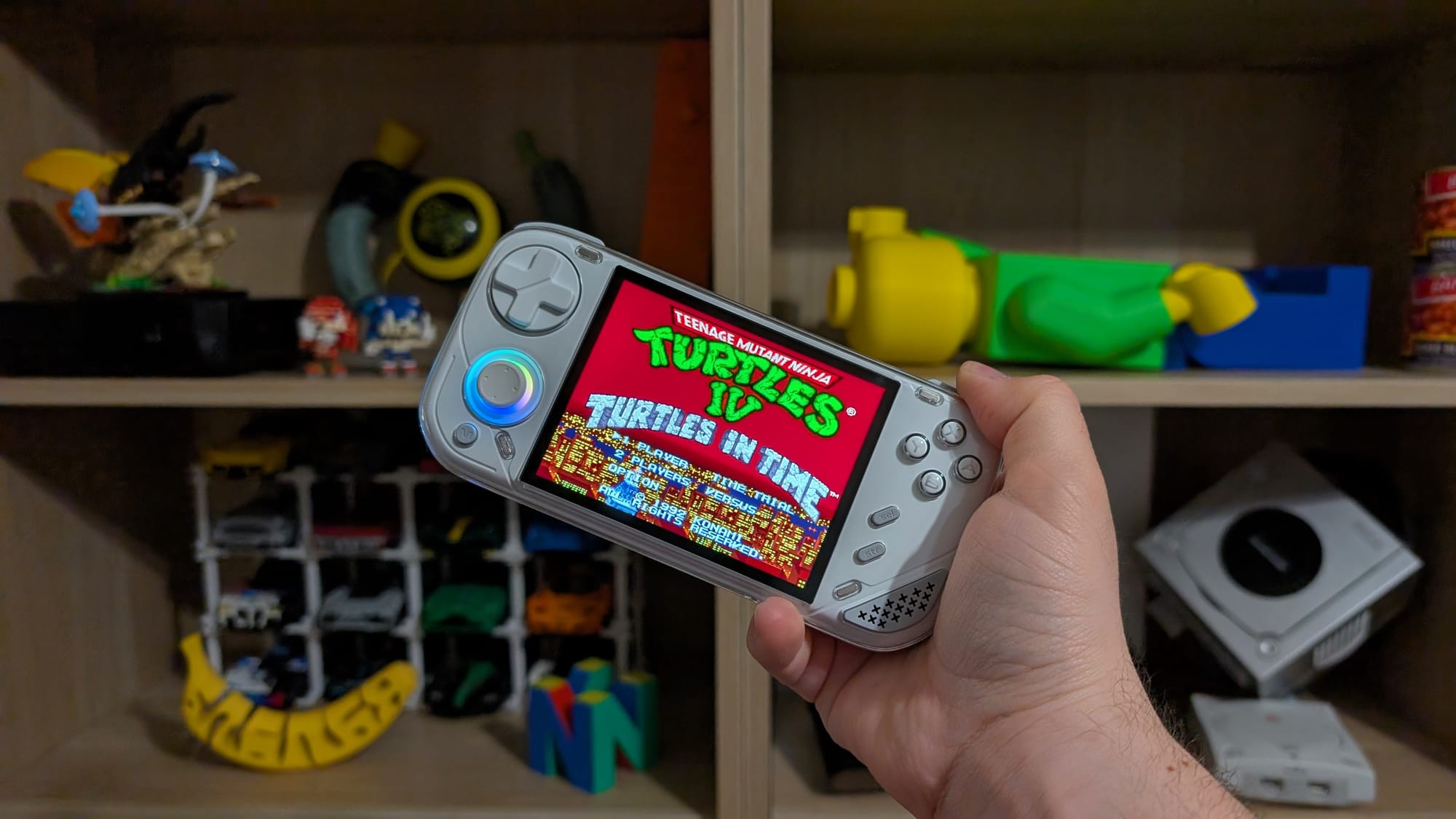
The Rockchip RK3566, a system-on-a-chip (SoC) that saw a resurgence with devices like the Powkiddy RGB30 in late 2023, is once again at the heart of a new budget handheld, the Miniloong Pocket One. This new entrant aims to carve out its niche with a custom operating system and a surprisingly robust build quality, despite its sub-£100 price tag.
Retro Handhelds reports that the Miniloong Pocket One is appearing on various online marketplaces, with prices fluctuating between £50 and £80. While some listings suggest figures as low as £35, these are generally considered unreliable. This pricing positions the Pocket One squarely in the competitive budget segment, where devices often make compromises on materials or software experience.
Miniloong, a relatively unknown name in the crowded handheld space, has made a notable first impression with the Pocket One's physical design. The review highlights a build quality comparable to more expensive units, a crucial factor for a device intended for regular use.
The RK3566's Enduring Presence
The Rockchip RK3566, first released in 2020, gained significant traction with devices such as the Anbernic RG503 in 2022. While much of the Linux handheld community has since moved towards more powerful SoCs like the Allwinner H700 or A133P, the RK3566 continues to find a home in the budget sector. Its longevity speaks to its cost-effectiveness and its proven capability for a specific range of emulation.
This particular SoC features four ARM Cortex-A55 CPU cores, typically clocked around 1.8 GHz, paired with a Mali-G52 2EE GPU. For many retro systems, particularly those from the 8-bit and 16-bit eras, this configuration provides ample power. The challenge for manufacturers using the RK3566 now lies in optimising the software and hardware around it to deliver a compelling user experience, especially as newer, more efficient chips become available.
Premium Build on a Budget
One of the most striking aspects of the Miniloong Pocket One, as detailed by Retro Handhelds, is its construction. The plastic used for the back shell is described as solid, drawing favourable comparisons to premium devices like the Ayaneo Pocket Air Mini. This level of material quality is uncommon for a handheld in this price bracket, where cost-cutting often leads to creaky plastics or less tactile finishes.
The rear of the device also features textured plastic, which significantly enhances grip and overall ergonomics. This thoughtful design choice addresses a common complaint with many budget handhelds, which can often feel slippery or uncomfortable during extended play sessions. The front cover, while a clear glossy plastic, does not detract significantly from the overall premium feel.
Ergonomically, the Pocket One appears to excel. The grips on the back provide ample space for hands, and the placement of the face buttons is reported to be comfortable for thumb access. Furthermore, the stacked shoulder buttons are a welcome addition, eliminating the need for awkward finger stretches often associated with inline button configurations. This design choice makes the device feel more substantial and easier to handle, reminiscent of the well-regarded RGB10 Max 3 in terms of comfort.
Screen and Scaling Prowess
The display on the Miniloong Pocket One is another highlight, described as large, bright, and capable of excellent integer scaling. Integer scaling, the process of scaling an image by whole number multiples (e.g., 2x, 3x, 4x) to maintain pixel perfect clarity, is critical for retro gaming enthusiasts. It ensures that original pixel art remains sharp and undistorted, avoiding the blurry artefacts that can arise from non-integer scaling.
For Game Boy Advance titles, the screen manages a 4x integer scale, resulting in a near full-screen image with only minimal black bars at the top and bottom. This is a significant advantage, as the GBA's unique 240x160 resolution often presents scaling challenges on modern displays. The ability to achieve such a clean 4x scale means GBA games look incredibly crisp and vibrant on the Pocket One.
Similarly, PlayStation 1 and Nintendo 64 games benefit from a perfect 3x integer scale, filling the entire screen without compromise. While the RK3566 may struggle with the more demanding N64 titles, the visual fidelity for PS1 games is excellent. This makes the Miniloong Pocket One a strong contender for those primarily interested in systems up to the PlayStation 1 era, where screen quality and accurate scaling are paramount.
LoongOS: A Bespoke Operating System
Instead of relying on established community firmwares like ArkOS, EmuElec, or Rocknix, Miniloong has developed its own operating system, dubbed LoongOS. This Android-esque interface features a well-organised menu structure and a decent overall layout. The decision to create a proprietary OS is a bold move in a market often dominated by open-source solutions, but it allows for a tailored user experience.
LoongOS is praised for its ease of navigation and straightforward ROM management. A key feature is its built-in Over-The-Air (OTA) updater, which suggests Miniloong's commitment to ongoing software support and improvements. This is a crucial detail, as many budget handhelds receive little to no post-launch software development, leaving users reliant on community patches or alternative firmwares.
However, LoongOS is not without its initial quirks. Retro Handhelds notes some questionable lag in menus, and users who purchase the device without a pre-loaded SD card may face challenges in populating system files. Some emulated systems, such as Game Gear, reportedly did not appear correctly regardless of file organisation. The presence of dual SD card slots, however, offers a workaround, allowing users to experiment with alternative operating systems if they prefer.
Modularity: Promise Versus Reality
The Miniloong Pocket One boasts a degree of modularity, allowing users to remove the faceplate and D-pad, and easily swap stick caps. This feature hints at customisation options, a popular aspect of the handheld modding scene, where enthusiasts often personalise their devices with different colours or button styles. The ability to easily replace worn components or change the aesthetic is generally a positive.
However, the review points out a significant caveat: there are currently no official channels to purchase replacement faceplates or D-pads. While the device is designed for modularity, the ecosystem to support it is not yet in place. This is a common issue with new manufacturers, where the ambition for customisation outpaces the logistical reality of supplying parts. What this hints at, for the scene, is a potential future for community-driven customisation, should Miniloong fail to provide official options. The design is there, but the supply chain is not.
Performance Expectations and Market Position
The primary limitation of the Miniloong Pocket One, particularly for its higher price points, is the performance ceiling of the RK3566. While the SoC is robust for PlayStation 1 and earlier systems, its capabilities diminish significantly when attempting to emulate more demanding platforms like Nintendo 64, Dreamcast, or PlayStation Portable (PSP). Performance on these systems is described as hit-and-miss, with some reviewers even struggling to run Dreamcast titles effectively.
This performance bottleneck is particularly relevant given the current market landscape. For a price approaching £80, there are now several Android-based handhelds featuring more powerful Unisoc or Allwinner chips that can comfortably handle light GameCube emulation, alongside a smoother experience for PSP and Dreamcast. Devices such as the Mangmi Air X, MagicX One35, or even the TrimUI Smart Pro S offer stronger performance at a similar or even lower price point.
It is worth noting that the source's price figures suggest a competitive environment where the RK3566, while still capable, is being outpaced by newer, more efficient silicon. The real story here is the rapid evolution of the budget handheld market, where even a well-built device with a custom OS can struggle to justify its price if it cannot keep pace with performance expectations for later-generation systems. For those focused on PlayStation 1 and below, the Miniloong Pocket One presents a compelling package, but for anything beyond that, the market offers more powerful alternatives.
Ultimately, the Miniloong Pocket One is a well-built RK3566 handheld with an impressive screen and comfortable controls, matching the build quality of devices typically seen in late 2025 or early 2026. Its custom LoongOS shows promise with OTA updates, indicating potential for long-term support. However, its performance limitations, particularly for PSP and Dreamcast, mean it faces stiff competition from other budget handhelds that offer greater emulation power for a similar cost. If your retro gaming needs are primarily focused on 8-bit, 16-bit, and PlayStation 1 era titles, the Miniloong Pocket One stands out as a strong contender in the sub-£100 Linux handheld category. However, for those seeking a full PSP or N64 experience, the current market provides more capable options.
Keep your collection properly. RetroShell's shop stocks UK-made acrylic protectors for Atari, Sega, Nintendo and more.
Follow RetroShell on X for daily retro gaming news. Join the community on r/RetroShell.
Originally published by Retro Handhelds. Read original article.