Capcom's First Localisation Lead Details Early Challenges

The early days of Japanese game development often obscure the intricate, sometimes ad-hoc, processes that shaped the final product for Western audiences. Takuya "Tom" Shiraiwa, Capcom Japan's inaugural localisation lead, offers a rare glimpse into this formative period. His account, recently published by Time Extension, details how a single individual navigated the complexities of cultural translation and corporate demands.
Shiraiwa joined Capcom Osaka at 25, initially working in the sales department, selling arcade boards overseas. He was an avid gamer, a detail that proved crucial. At the time, few English speakers within the company understood game mechanics, leading the research and development team to seek his assistance for what they simply called "text translation".
The Genesis of a Department
This informal arrangement meant Shiraiwa became Capcom's de facto, and often sole, English translation resource. There was no dedicated localisation department; it was simply him. His English skills, initially honed through necessity during meetings with foreign visitors and collaborators from Capcom USA, were further developed during a two-year stint as a liaison in Sunnyvale, California.
Capcom in the early 1990s, post-Final Fight but pre-Street Fighter II, was described by Shiraiwa as "a very amateurish company in a good way". The priority, he explained, was making games people wanted to play, rather than focusing solely on profit. This environment, while perhaps lacking formal structure, fostered a deep commitment to the creative output.
A Liaison's Many Roles
Shiraiwa's responsibilities quickly expanded beyond mere text translation. He became the critical intermediary between the Japanese development teams and the overseas subsidiaries in the United States and Europe. His role involved conveying feedback and suggestions from these regions back to Osaka, ensuring that games considered international market perspectives.
This dual function meant he was involved in nearly all Capcom projects of the era. He was often the only person bridging the linguistic and cultural divide. The breadth of his involvement, even in projects where his specific contribution might have been minor, led to his name appearing in many "special thanks" sections.
The Tyranny of Character Limits
The actual process of translation in those early days was remarkably rudimentary. Developers would provide Shiraiwa with text on paper. He would then type the English translation, returning it as a Word file.
Crucially, he was given strict character counts and line limits, often mirroring the space allocated for the original Japanese text. This presented a significant challenge. Japanese, being a high-context language, often requires more space to convey the same meaning in English. Shiraiwa described this as a "nightmare".
He eventually had to insist on at least double the space for English text. Even with this concession, fitting everything remained difficult, sometimes resulting in translations that felt abbreviated or almost like a "hidden code". This practical constraint had a direct impact on the tone and clarity of early English localisations.
Licensing and the Marvel Machine
Beyond direct translation, Shiraiwa also served as a middleman for licensed intellectual property titles. Games like Dungeons & Dragons: Tower of Doom and Goof Troop required him to communicate with licensors such as TSR and Disney. His job involved translating style guides and character guidelines for the development team.
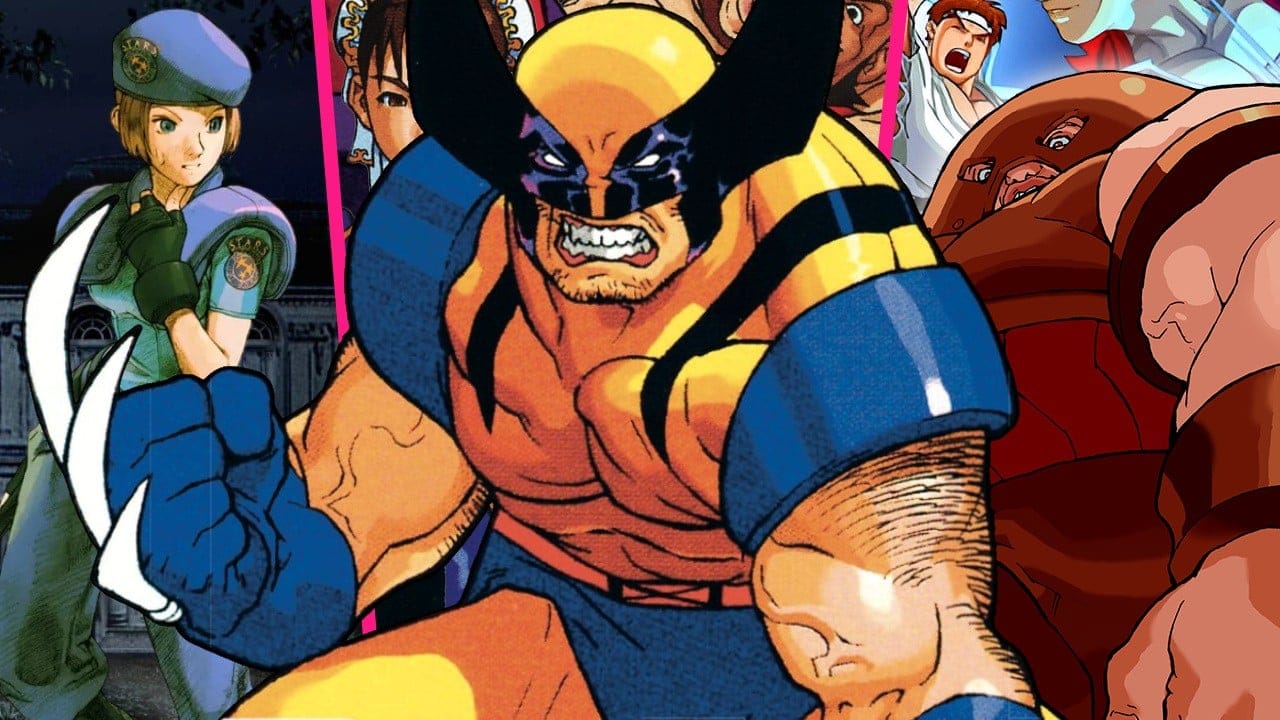
He would then translate Capcom's gameplay ideas back to the licensors for approval. This process was particularly challenging with Marvel Comics. Shiraiwa recounted a specific instance where Marvel insisted the character Juggernaut could not jump due to his weight, despite the practical implications for a head-to-head fighting game. This kind of detailed character adherence was a constant point of negotiation.
It is worth noting that the source's interview highlights a shift in Marvel's stance. After the initial Marvel vs. Capcom fighting games proved hugely successful, Marvel became significantly more lenient, allowing Capcom greater creative freedom. This suggests that commercial success can often override previously rigid creative guidelines, a common dynamic in licensed media.
Uncredited Labour and Formalities
Shiraiwa's broad involvement meant his name appeared on many projects, even when he had little memory of his specific contribution. He cited Slip Stream, a 1995 arcade racing title that unusually used Sega System 32 hardware, as an example. Despite being credited, he had no recollection of working on it.
His best guess was that developers automatically included his name as a formality, knowing he was the only person who understood English and liked video games. This anecdote offers a quiet insight into the often-unseen labour of early game development, where critical roles were filled by individuals whose contributions might not always align with formal credits.
What this hints at, for the scene, is the difficulty of accurately documenting the full scope of work in early game development. Many crucial tasks were performed by individuals whose roles were fluid and informal, making it challenging for future historians and archivists to piece together a complete picture of a game's creation. The "special thanks" section, it seems, often served as a catch-all for indispensable, if ill-defined, support.
A Shifting Landscape for Localisation
Shiraiwa noted that the informal, one-person approach to localisation began to change around the time Resident Evil was released. This period marked a turning point, with more dedicated resources and personnel being brought in to handle the increasing demands of English translation and voice recording.
His departure from Capcom in 2004 to join rival Square Enix marked the end of an era. Shiraiwa's story is a valuable record of the foundational work that established Capcom's presence in Western markets. It underscores the often-overlooked human element behind the technical and creative achievements of early Japanese game development.
His experience shows how essential, yet often unrecognised, the role of a single individual can be in shaping the global reach of a company's output. The challenges he faced with character limits and licensor demands are a reminder of the practical constraints that influenced the games we played, long before localisation became a dedicated, multi-person department.
Wear the scene. Our Player Clothing line is a limited run — each t-shirt is individually numbered, designed for people who can still quote cartridge error codes from memory.
Follow RetroShell on X for daily retro gaming news. Join the community on r/RetroShell.
Originally published by Time Extension. Read original article.