
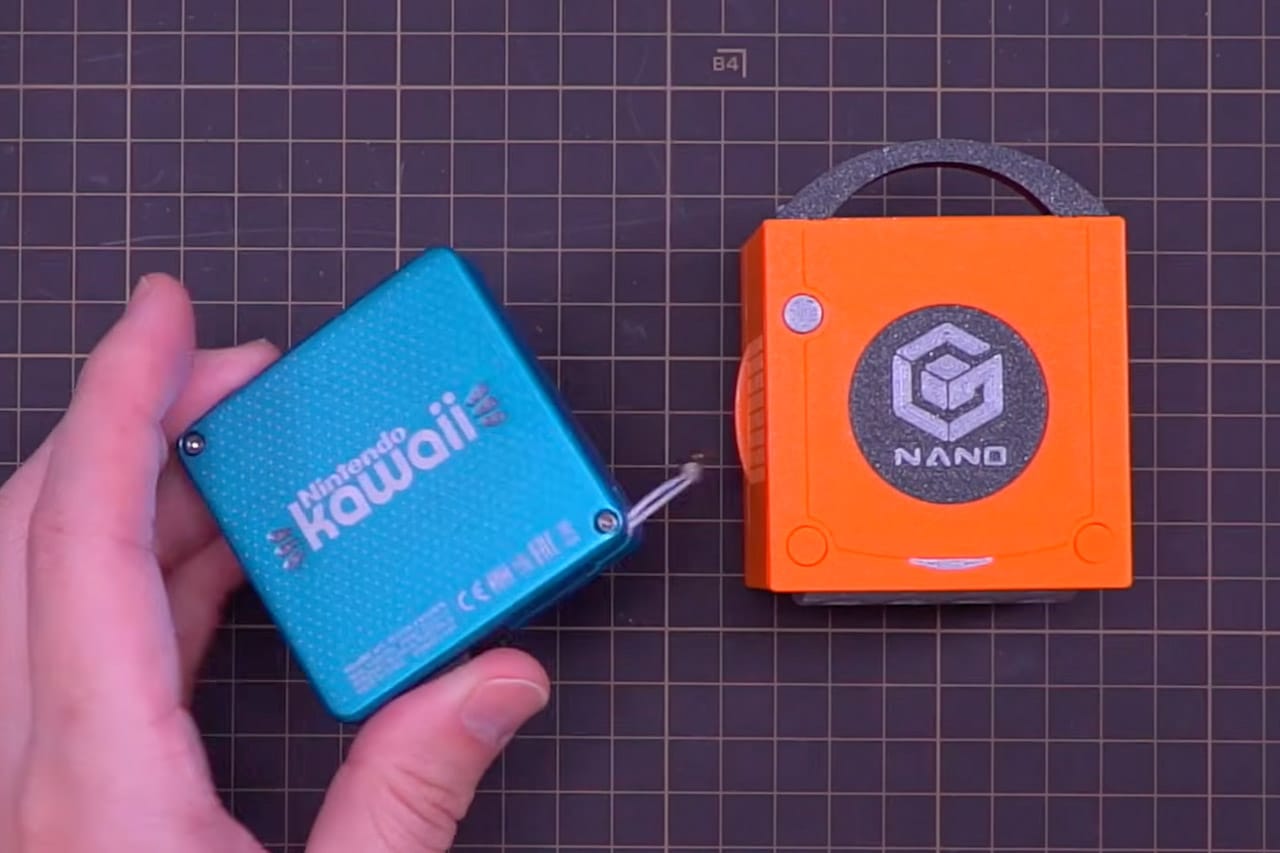
Kawaii: GameCube Modding Reaches Keychain Scale

The prospect of a fully functional Nintendo GameCube console reduced to the dimensions of a keychain attachment presents a considerable engineering challenge, one that TechEBlog reports has been met with the device known as Kawaii. Such a feat moves beyond mere component reduction; it speaks to the intricate power management and thermal dissipation issues inherent in miniaturising a system originally designed for a much larger footprint.
This development, while details remain sparse, suggests a significant leap in the long-standing tradition of GameCube portable builds. For years, enthusiasts have sought to condense the console's hardware into handheld forms, often requiring custom circuit boards and intricate wiring. The notion of a GameCube existing at a truly pocketable scale, let alone keychain-sized, represents a new frontier for hardware hacking.
The Engineering Challenge of Miniaturisation
Reducing a console like the GameCube, which relies on a 485 MHz IBM PowerPC Gekko CPU and a 162 MHz ATI Flipper GPU, to such a small form factor is not a trivial undertaking. Original GameCube motherboards are relatively large, and even with modern System-on-Chip (SoC) solutions or highly integrated custom boards, the power delivery systems and cooling requirements for these components remain substantial. The source's description implies a level of integration and efficiency that would have been unthinkable a decade ago.
What this hints at, for the scene, is a potential shift in how we perceive the limits of console hardware. If a GameCube can be made this small, it opens discussions about the viability of similar projects for other, perhaps more complex, fifth and sixth-generation consoles. It moves the conversation from simply making a console portable to making it truly ubiquitous.
A Legacy of Portable GameCube Builds
The GameCube has a rich history within the hardware modding community, with numerous projects dedicated to creating portable versions, often referred to as "GCp" builds. These typically involve trimming the original motherboard, integrating a screen, battery, and custom controls into a new enclosure. Projects like the "GCp-Revival" or various "GCP-Fusion" iterations have showcased impressive craftsmanship and technical skill, but rarely approached the scale implied by a keychain device.
This new Kawaii project, as reported by TechEBlog, pushes the envelope considerably further. It suggests a focus not just on portability, but on extreme miniaturisation, perhaps leveraging advancements in low-power components or highly efficient custom silicon. The quiet politics of preservation, in this context, extends beyond software emulation to the physical manipulation of original hardware, allowing it to exist in entirely new forms.
Implications for Hardware Hacking and Preservation
The ability to shrink complex console hardware to such an extent has broader implications for the hardware hacking community. It demonstrates what is achievable with dedication and advanced techniques, potentially inspiring new approaches to custom console builds and even the preservation of original hardware in novel ways. While the practical utility of a keychain GameCube might be debated, its technical achievement is undeniable.
Moving forward, the community will undoubtedly be keen to see more technical details regarding the Kawaii project. Understanding the methods employed, the components used, and the performance achieved will be critical for appreciating the full scope of this miniaturisation effort and its potential impact on future modding endeavours.
Wear the scene. Our Player Clothing line is a limited run — each t-shirt is individually numbered, designed for people who can still quote cartridge error codes from memory.
Follow RetroShell on X for daily retro gaming news. Join the community on r/RetroShell.
Originally published by TechEBlog -. Read original article.