
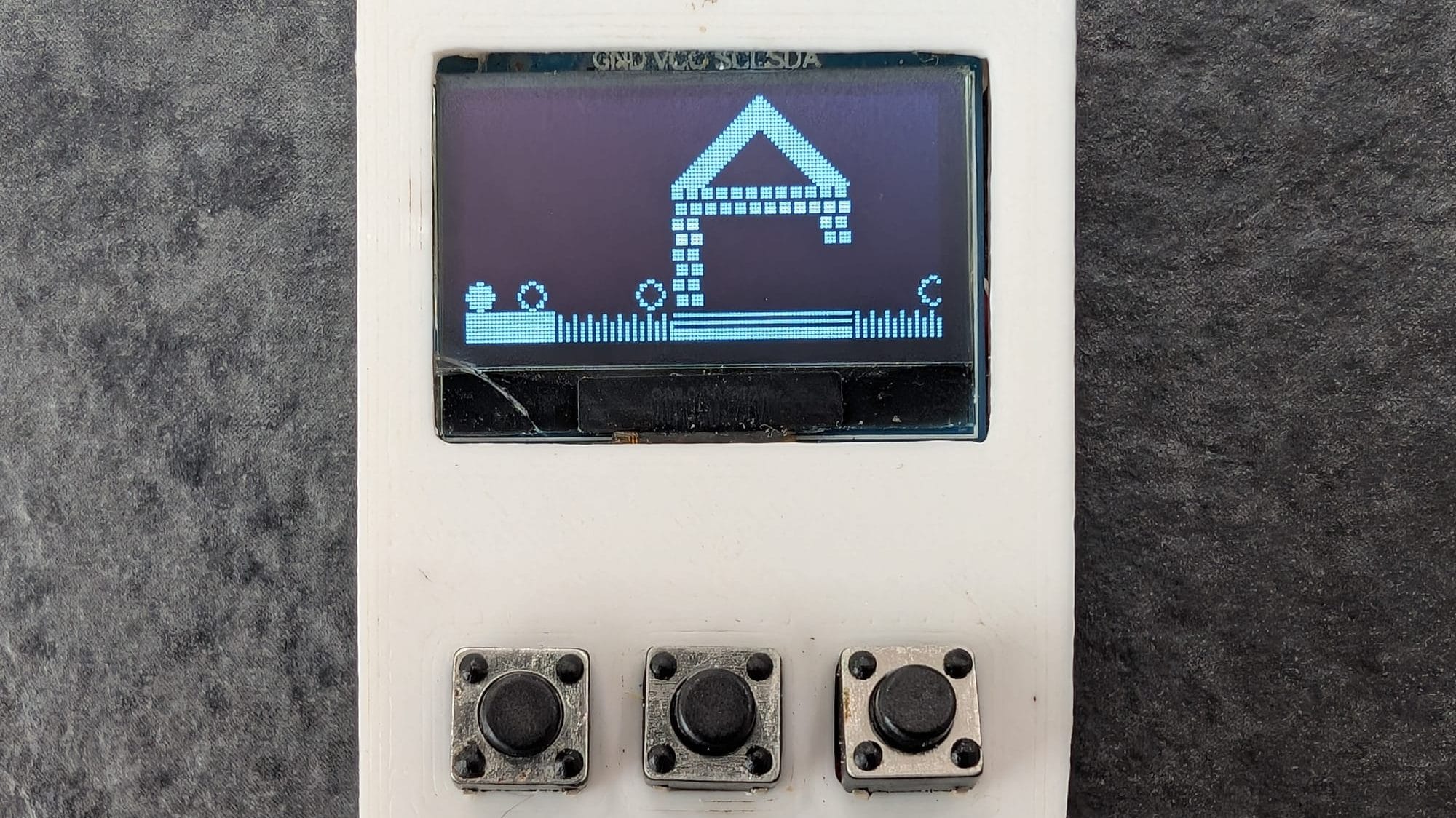
A $1 Handheld Console Built with RISC-V and Rust

While many of us are chasing the perfect IPS retrofit for a Game Boy Advance or waiting on the next Analogue Pocket firmware update, Chris Dell has shown what is possible at the absolute opposite end of the budget spectrum. He crafted a fully functional handheld console for around one US dollar, powered by a 48 MHz RISC-V microcontroller. This project, highlighted by Hackaday, demonstrates how accessible hardware development can be with the right components and a clever approach.
Dell's creation centres on the CH32V003, a microcontroller that sells for as little as nine cents in bulk. A microcontroller is a small computer on a single integrated circuit, designed to perform specific functions. This particular chip is a 32-bit Reduced Instruction Set Computer (RISC-V) device, clocking in at 48 MHz. It features 2 KB of Random Access Memory (RAM) for active data and 16 KB of flash memory for storing programmes.
The Hardware Behind the Price Tag
To complement the CH32V003's impressive capabilities for its price, Dell paired it with an SSD1306 Organic Light-Emitting Diode (OLED) display. OLED screens are known for their high contrast and low power consumption, making them suitable for compact, battery-powered devices. Three tactile pushbuttons provide the input, keeping the bill of materials extremely lean, according to `ch32-hal` project. These components, while simple, form the core of a functional gaming device.
Dell developed the console's software using Rust, a programming language known for its performance and memory safety. He used the ch32-hal project, a hardware abstraction layer, to interface with the CH32V003. This setup allowed him to implement a platform game that ran smoothly at 25 frames per second (fps), a respectable rate for such a constrained system. The efficiency of Rust and the ch32-hal library were critical in achieving this performance with limited resources.
What This Means for the Modding Scene
What this hints at, for the scene, is a renewed focus on ultra-low-cost entry points for hardware development. This could foster a new wave of homebrew for extremely constrained systems, much like the early days of 8-bit computing. The ability to prototype and develop on hardware that costs less than a cup of coffee significantly lowers the barrier to entry for aspiring developers and modders. It encourages experimentation without the financial overhead typically associated with custom hardware projects.
While the CH32V003 will not be powering the next generation of high-end retro handhelds, its existence proves that innovation does not always require expensive silicon. This project serves as a strong reminder that creativity and efficient programming can unlock surprising potential from even the most humble components. It is a testament to the ingenuity within the hobbyist community, pushing the boundaries of what is considered possible with minimal investment.
RetroShell makes the Nintendo protector set collectors actually reach for — precision-cut, British production, ships worldwide.
Follow RetroShell on X for daily retro gaming news. Join the community on r/RetroShell.
Originally published by Hackaday. Read original article.