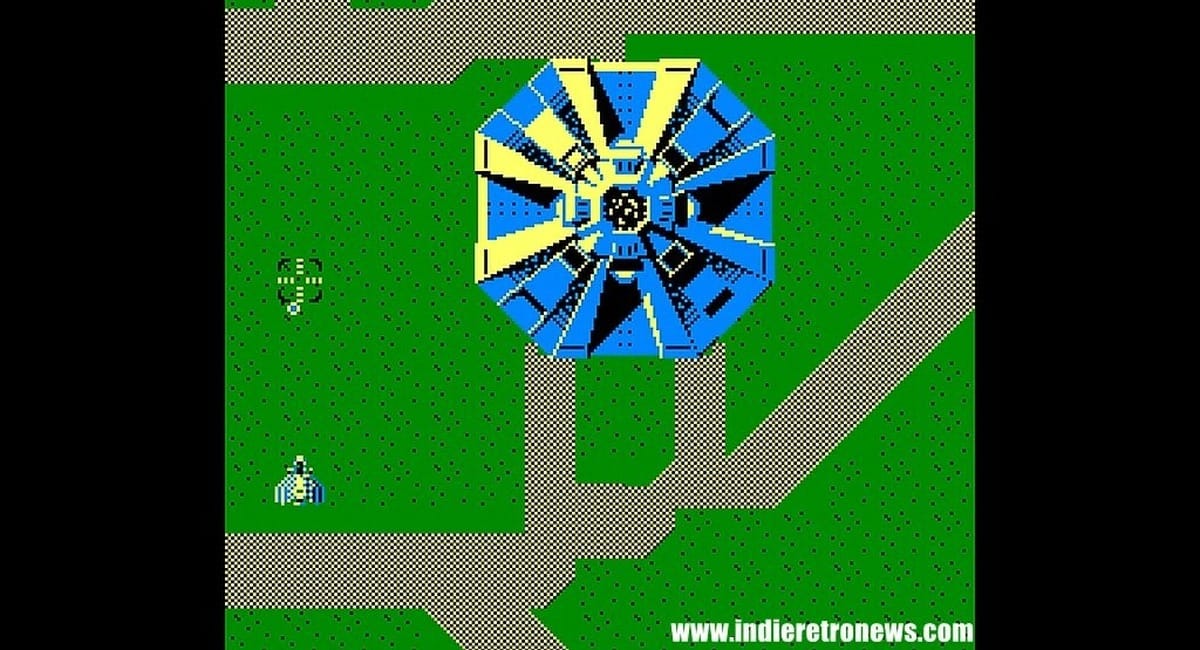
Xevious 128k Edition Discovered for Amstrad CPC

The Amstrad CPC, a machine that brought colour computing into many British homes during the mid-1980s, has seen a rather intriguing discovery recently: a 128k edition of Namco's seminal 1982 arcade vertical shooter, Xevious. This enhanced version, offering the potential for richer graphics and smoother play than its earlier 64k counterparts, was reportedly found as a hidden Easter egg, a delightful surprise for enthusiasts still exploring the machine's software library.
Unearthing a Hidden Amstrad Gem
For those who remember the original Amstrad CPC port of Xevious, released by U.S. Gold in 1987, it was a serviceable, if somewhat compromised, conversion of the arcade original. The 64 kilobyte memory constraints of the base CPC464 often meant sacrifices in sprite count, colour palette, or scrolling fluidity, a common challenge for programmers like those at Tiertex who often handled these conversions. This newly surfaced 128k edition, however, hints at a more ambitious take on the game, utilising the expanded memory of models like the CPC6128 or the later Plus range to potentially deliver a more faithful arcade experience.
What this hints at, for the scene, is the enduring possibility of finding hidden depths within period software. The notion that a more capable version of a well-known title could lie dormant, tucked away as an Easter egg, speaks volumes about the ingenuity of programmers and the often-rushed development cycles of the era, according to Indie Retro News. Perhaps a programmer, frustrated by the limitations of the standard release, tucked away a more complete vision for those with the hardware to run it, a quiet act of defiance against commercial pressures.
The CPC's Enduring Appeal
The Amstrad CPC, much like the ZX Spectrum or the Commodore 64, fostered a vibrant development scene in the UK, with companies like Ocean Software, Imagine, and Gremlin Graphics pushing the boundaries of what these machines could achieve. The challenge of translating complex arcade programmes into the relatively modest memory and processing power of home micros was a constant battle, often resulting in ports that bore only a passing resemblance to their coin-op inspirations. Xevious itself, with its dual air-to-air and air-to-ground firing mechanics, presented a particular challenge for home conversions, requiring careful management of on-screen objects and scrolling backgrounds.
This discovery of a 128k version, even if it's been lurking for decades, re-energises the ongoing efforts of the Amstrad community to document and preserve every scrap of software for the platform. It shows that even for games considered well-trodden, there can still be surprises awaiting those who dig deep enough into the code. It is a testament to the dedication of those who continue to explore these machines, ensuring that such hidden treasures do not remain lost to time.
Moving forward, it will be fascinating to see if this 128k Xevious edition offers significant graphical or gameplay improvements over the standard release. Its existence alone provides another rich thread in the complex tapestry of British home computing history, reminding us that the past still holds secrets, waiting for the right moment to reveal themselves.
Keep your collection properly. RetroShell's shop stocks UK-made acrylic protectors for Atari, Sega, Nintendo and more.
Follow RetroShell on X for daily retro gaming news. Join the community on r/RetroShell.
Originally announced by Bandai Namco · first reported by Indie Retro News.