
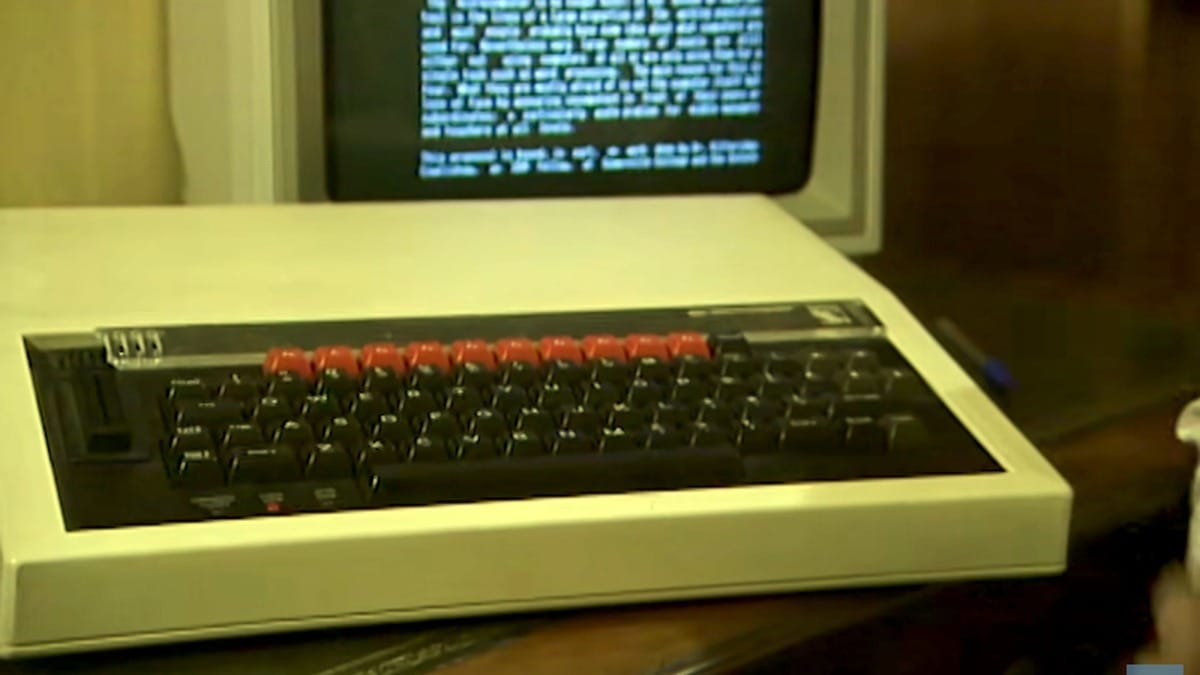
BBC Archive Film Recalls Computer Literacy Project's Legacy

The BBC archive has recently unveiled a fascinating retrospective from 1992, looking back at the first decade of its ambitious Computer Literacy Project. This programme, launched in the early 1980s, aimed to equip young people across Britain with the digital skills needed for the coming information age, a vision that truly shaped a generation of programmers and enthusiasts. The BBC Micro, with its formidable Tube interface and built-in BBC BASIC, was a machine of serious intent, far removed from the more playful, if equally beloved, ZX Spectrum, and its story is central to this newly available film.
Hackaday reports on this archival release, which offers a more immediate historical view of a project still very much in motion at the time of filming. The Computer Literacy Project was a broad initiative, encompassing a range of television programmes designed to demystify computing for the public, alongside the commissioning of a bespoke machine. That machine, of course, was the Acorn BBC Micro, a high-specification 8-bit computer that would go on to provide the very genesis of what we now know as ARM Holdings. A true powerhouse.
The Beeb's Early Digital Vision
The 1992 film features interviews with the engineers and visionaries at Acorn, who recount the development of the BBC Micro, a machine whose hardware capabilities were truly advanced for its period. Its MOS 6502 processor, coupled with dedicated graphics and sound chips, offered a powerful platform for learning and creation, a far cry from the simpler machines some of us first encountered. It then moves to consider the wider cultural effects, reminding those of us who grew up with it of the television programmes and school lessons that introduced us to programming.
For many, the BBC Micro was their first encounter with a keyboard and screen, perhaps in a classroom in the mid-1980s, a few years after the summer before the miners' strike ended, a period when magazines like Crash and Zzap!64 were just starting to capture the imagination of young enthusiasts.
Acorn's Engineering Prowess
What this film hints at, for the scene, is a profound sense of optimism that permeated British computing in the 1980s, a belief that technology could genuinely empower and educate. The real story here is the BBC's foresight in commissioning a machine like the BBC Micro, a decision that not only shaped a generation of British coders but also laid the groundwork for ARM, a legacy few other 8-bit machines can claim. This early vision, however, contrasts sharply with the following decade, when educational computing often descended into rote learning of office software, losing some of that initial spark of discovery.
It would take another two decades for the spirit of accessible, creative computing to be rekindled in schools, largely through projects like the Raspberry Pi and the BBC micro:bit. The Beeb, it seems, has always held a deep interest in fostering digital literacy, a thread that runs from the original Computer Literacy Project right through to today's initiatives. This continuity shows a commitment to public education that few other national broadcasters can match.
A Legacy Beyond the Classroom
This newly accessible archive film provides a valuable window into a critical period of British technological ambition, showing how a national broadcaster and a dedicated team of engineers helped define a generation's understanding of computers. It is a timely reminder of the enduring power of public service broadcasting to inspire and educate, a lesson that remains relevant as we continue to navigate the ever-changing digital world.
Keep your collection properly. RetroShell's shop stocks UK-made acrylic protectors for Atari, Sega, Nintendo and more.
Follow RetroShell on X for daily retro gaming news. Join the community on r/RetroShell.
Originally published by Hackaday. Read original article.