
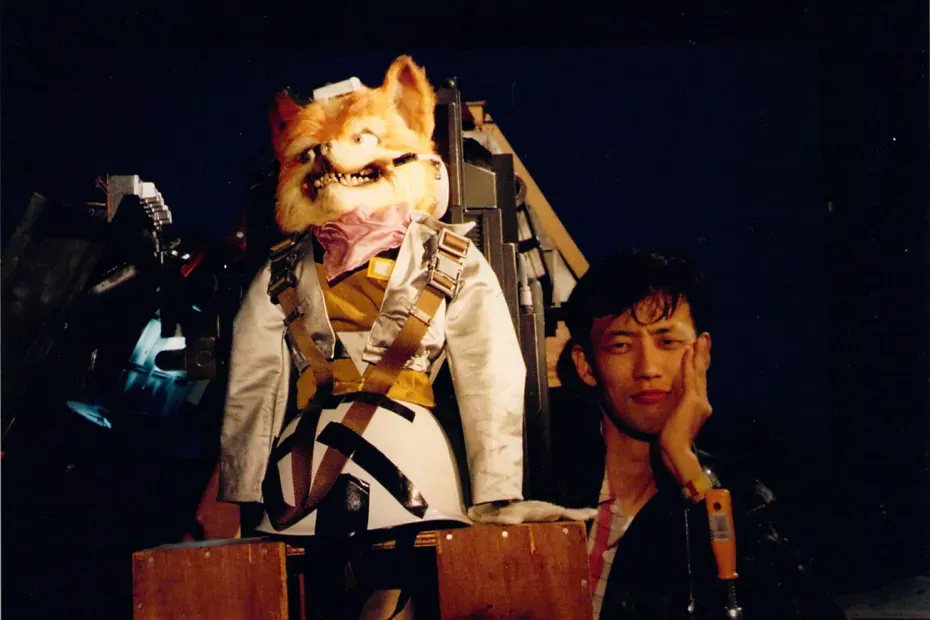
Star Fox Puppets Confirmed Destroyed by FX Studio

The Japanese FX company responsible for the original Star Fox promotional puppets has confirmed their destruction. This revelation, brought to light by Time Extension and reported by My Nintendo News, highlights the inherent challenges in preserving certain types of media artefacts. The use of natural rubber and animal products in their construction meant their longevity was always going to be a finite proposition, a common enough problem for anyone involved in the long-term preservation of physical media.
The puppets, depicting the Star Fox team including Fox McCloud, Slippy Toad, Falco Lombardi, and Peppy Hare, were created to promote the Super Nintendo game. The FX company stated that the materials, specifically fur and feathers glued to natural rubber, deteriorate simply by being exposed to air. This inherent instability meant their disposal was necessary once production concluded.
The Inevitable Decay of Materials
The company's statement was direct: “The Fox puppets created at our company were made by gluing fur and feathers to natural rubber, so they deteriorate simply by being exposed to air. Because of that, we had to destroy them after production was finished.” This is not a case of deliberate neglect, but rather a stark reminder of the material science at play in practical effects. Unlike digital assets, which can be copied and migrated, physical props are subject to the immutable laws of decay.
The real story here is the quiet politics of preservation, or rather, the lack thereof for items not initially deemed of lasting historical value. Promotional materials, by their very nature, are often considered ephemeral. They serve their purpose and are then discarded, or left to degrade in storage. The concept of archiving such items for future generations is often an afterthought, if it is considered at all.
A Challenge for Archivists
For archivists and preservationists, this scenario is a familiar one. Many early film props, costumes, and even some video game prototypes faced similar fates due to unstable materials or a lack of dedicated storage. The cost and expertise required to stabilise and maintain such items are considerable, often exceeding the perceived value of a promotional puppet from a 1990s video game. It is a pragmatic, if unfortunate, reality.
The original Star Fox, known as Starwing in Europe, was a technical marvel for its time, pushing the Super Nintendo's Super FX chip to render polygonal graphics. The decision to use physical puppets for its advertising campaign was a creative choice that blended well with the game's nascent 3D aesthetic, giving the characters a tangible presence that resonated with audiences. These puppets were a physical manifestation of that early 3D ambition.
While the physical puppets are now gone, their photographic and video legacy persists, capturing a specific moment in video game marketing history. This incident serves as a poignant illustration of the challenges inherent in preserving the full spectrum of a game's cultural footprint, particularly when that footprint extends beyond the digital realm into the physical. It shows the ongoing need for proactive preservation strategies across all forms of media.
RetroShell makes the Nintendo protector set collectors actually reach for — precision-cut, British production, ships worldwide.
Follow RetroShell on X for daily retro gaming news. Join the community on r/RetroShell.
Originally published by My Nintendo News. Read original article.