
Adafruit Explores Super Nintendo Cartridge Internals

Adafruit's recent technical dissection of Super Nintendo Entertainment System cartridges offers a granular view into the silicon and circuit boards that defined a generation of 16-bit software, a level of scrutiny often overlooked in favour of mere gameplay, yet critical for true hardware preservation. This detailed exploration moves beyond the plastic shell, revealing the complex engineering within these enduring artefacts.
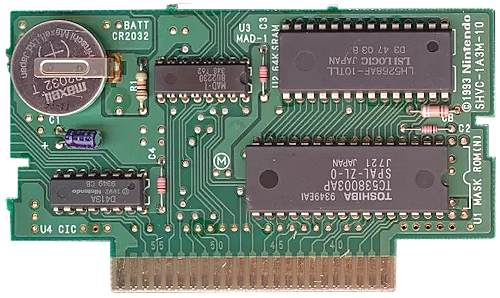
The examination, published on the Adafruit blog, systematically breaks down the various components found within typical SNES game cartridges. It highlights the printed circuit boards (PCBs), the read-only memory (ROM) chips that store the game code, and the static random-access memory (SRAM) often used for save data. Understanding these fundamental elements is the first step in any serious effort to document or replicate vintage hardware.
The Cartridge's Inner Workings
The article details the common configurations of these components, noting how different games employed varying memory sizes and arrangements. It explains the function of the ROM chip, which holds the game's programme and assets, and the SRAM, which requires a small battery to retain player progress, according to Video Game History Foundation. This battery is a familiar point of failure for collectors and a frequent target for modding and repair efforts.
What this hints at, for the scene, is the sheer variety hidden beneath seemingly identical exteriors. While many cartridges appear similar from the outside, the internal architecture can differ significantly. This is particularly true when considering the console's various enhancement chips, which Adafruit touches upon, though the primary focus remains on the core components.
Beyond Standard Components
The Super Nintendo was notable for its use of co-processor chips embedded directly within game cartridges, extending the console's capabilities. Chips like the Super FX, SA-1, DSP-1, and Cx4 allowed for advanced 3D graphics, improved artificial intelligence, and complex mathematical calculations that the console's main processor could not manage alone. Adafruit's work provides a foundational understanding of the environment these specialised chips operated within.
The real story here is not just the technical specifications, but the quiet politics of preservation. Each cartridge represents a unique hardware configuration, a bespoke system designed to run a specific piece of software. Documenting these internal layouts, identifying chip types, and understanding their interconnections is paramount for accurate emulation and for ensuring that these games remain playable and understandable long after the original hardware inevitably fails. It is a form of digital archaeology, meticulously cataloguing the past.
Implications for Preservation and Emulation
This level of detailed hardware analysis is invaluable for those working on cycle-accurate emulation projects, such as the MiSTer platform, or for hardware enthusiasts creating FPGA-based recreations. Without a precise understanding of the original circuitry, the nuances of a game's timing or graphical output can be lost. Adafruit's contribution helps to close that knowledge gap, providing a clear reference for the physical reality of these systems.
Ultimately, the ongoing effort to document and understand the internal workings of classic game cartridges ensures that the history of video games is not merely remembered, but actively preserved in a verifiable, technical manner. This work underpins future efforts to keep these games alive, whether through software emulation, hardware restoration, or entirely new methods yet to be conceived. It is a continuous process of discovery and documentation, essential for the longevity of the medium.
If you're here, you probably want the whole scene. Join the weekly roundup on Substack — it's free, arrives Monday, and skips the filler.
Follow RetroShell on X for daily retro gaming news. Join the community on r/RetroShell.
Originally published by Adafruit. Read original article.