Resident Evil at Thirty: A Genre's Unlikely Genesis

The thirtieth anniversary of Resident Evil's original PlayStation release offers an opportunity to reflect on a title that, in 1996, did not merely join a genre but largely defined it. Capcom, then known more for its fighting game prowess, took a calculated risk with Bio Hazard, a project whose very marketing coined the term 'survival horror' for a market that had little frame of reference beyond a few niche PC titles. This was not a guaranteed success; indeed, the commercial landscape for such a distinct offering was largely uncharted.
Capcom's most recent financial report indicates that Resident Evil Village, released in 2021, had sold 12.872 million copies by October 2025. This figure includes 1.566 million units sold in the preceding two quarters alone. Such numbers illustrate the franchise's current standing as a commercial powerhouse. However, the initial launch of Resident Evil was a venture into the unknown, particularly given that creative director Shinji Mikami and his team had previously worked on titles like Aladdin and Goof Troop.
Mikami's Vision and Early Design Choices
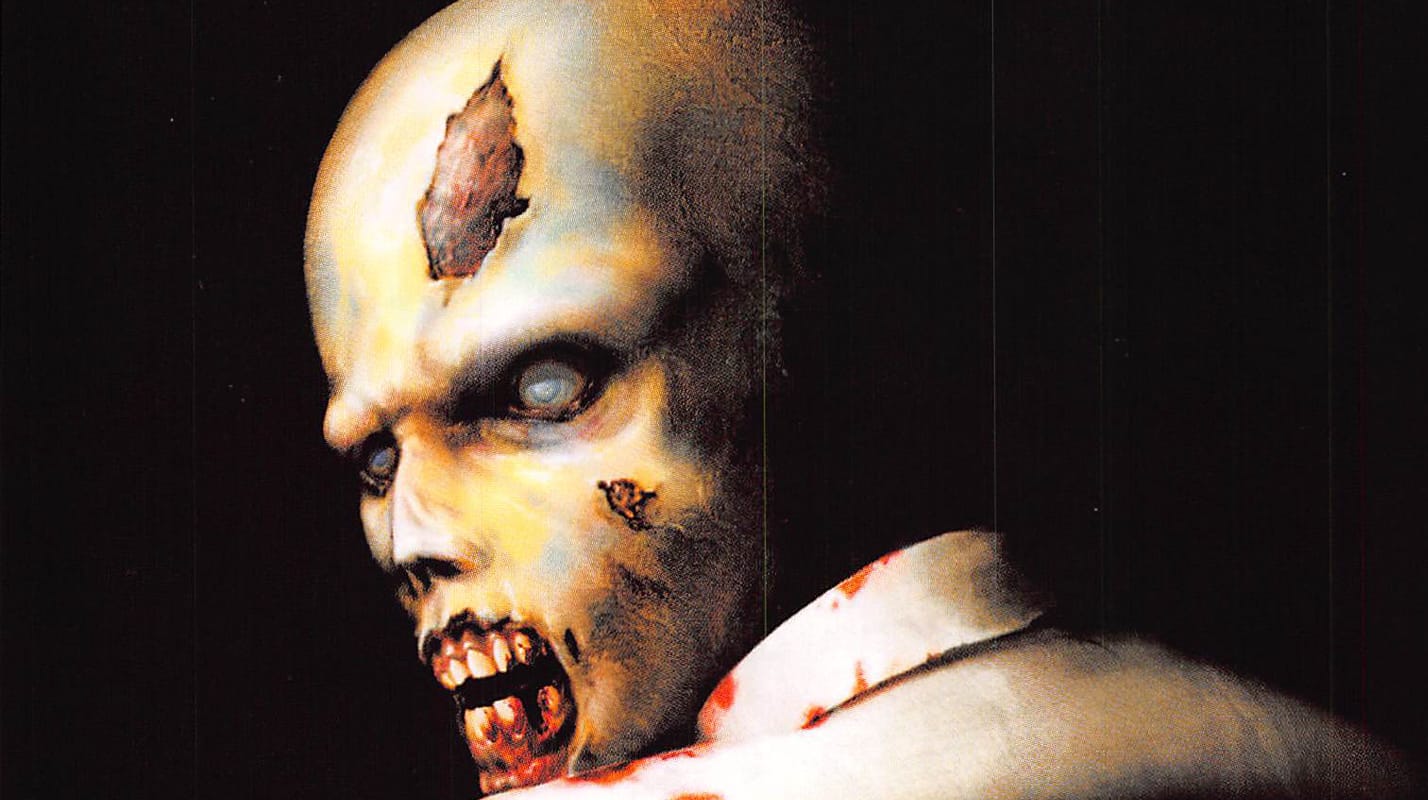
Mikami's inspiration for Resident Evil stemmed from a desire to improve upon existing horror narratives. In an April 1996 interview with GamePro magazine, he stated, "My main inspiration was Zombie, a famous Italian horror movie. When I saw the movie, I was dissatisfied with some of the plot twists and action sequences, according to PlayStation Blog. I thought, 'If I was making this movie I’d do this or that differently.' I thought it would be cool to make my own horror movie, but we went one better by making a video game that captures that same sense of terror." He aimed to immerse the player directly into a horror film experience.
The game achieved this by immediately thrusting players into a perilous situation. An opening full-motion video (FMV) sequence depicts a Special Tactics and Rescue Service (S.T.A.R.S.) team under attack from monstrous dogs, forcing them to seek refuge in a sprawling mansion. Players then choose between Jill Valentine or Chris Redfield, each offering distinct advantages. Jill, for instance, possesses lock-picking skills and greater carrying capacity, while Chris begins with a lighter and excels with heavier weaponry.
The Mechanics of Fear: Pre-rendered Backgrounds and Fixed Cameras
Resident Evil established a now-familiar blend of exploration, resource management, and puzzles. While the core setup was not entirely new in 1996, its execution was notable. The game used pre-rendered backgrounds, a technical solution to the PlayStation 1's limitations, combined with 'tank controls' and cinematic, fixed camera angles. These camera choices often obscured threats just out of sight, amplifying the sense of dread. Modern horror titles, such as Heartworm and the upcoming Kurai Yama, frequently adopt these mechanics as a shorthand for the survival horror experience.
Initial critical reception, however, was somewhat varied. Contemporary reviews, unlike those coloured by decades of appreciation, reveal a struggle to categorise the game. GamePro, in the same issue featuring the Mikami interview, described Resident Evil as taking "Alone in the Dark-style gaming to a higher level with gory Doom-like combat and gorgeous graphics." Interestingly, elements now considered hallmarks, such as the "B-grade video and dialogue," were then highlighted as "mostly laughable" faults.
Early Criticisms and Misconceptions
GameSpot also reviewed Resident Evil favourably, drawing comparisons to Alone in the Dark. However, it pointed out "two flaws... and they’re big." These included the "unrealistic" limited inventory space and item trunks, alongside cinematics "filled to the vomit-line with some of the most hokey, badly-translated, drama-killing, god-awful voice acting ever burned onto a disc." Electronic Gaming Monthly (EGM) praised its "realistically rendered rooms" and monsters, though it found the control scheme unusual, a common point of contention among reviewers at the time.
It is worth noting that the critical landscape of the mid-nineties was still grappling with how to assess a game that so deliberately blurred the lines between adventure, action, and horror. The very notion of a "survival horror" genre was nascent, and critics often defaulted to comparisons with established titles, even when Resident Evil was clearly forging its own path. This initial struggle to articulate its unique qualities is a quiet proof of its originality.
Eclipsing its Predecessors: Alone in the Dark's Fate
Alone in the Dark is often considered the true progenitor of survival horror. Its 1993 sequel, Alone in the Dark 2, ported to the PlayStation in 1996, featured private detective Edward Carnby investigating a kidnapping that leads to a spooky mansion populated by mobsters possessed by pirate ghosts. Gameplay involved a mix of stealth and gunplay. However, critics of the time were less kind to this port.
Computer and Video Games (CVG) gave Alone in the Dark 2 a 2/5 score, comparing it unfavourably to Resident Evil and noting its age. GamePlayers awarded it 79% but observed that "as groundbreaking as this series was when it first appeared…it’s clear that the form has been improved on and passed by since then. Comparing AITD (1 or 2) to the likes of, say, Resident Evil, shows just how far things have come." Next Generation was particularly harsh, giving it two stars and stating, "This aging graphic adventure still has some merit, but frankly it’s yesterday’s news, and releasing it to PlayStation in the wake of Resident Evil just makes it redundant." Resident Evil quickly surpassed Alone in the Dark 2 both technically and commercially.
Commercial Success and Enduring Appeal
While precise sales figures for the original 1996 release are difficult to ascertain, most sources estimate it sold around 5 million copies. For context, the 2014 Resident Evil HD Remaster, a re-release of the 2002 GameCube remake, has sold 4.8 million units by November last year. This near-identical sales volume for a modern re-release speaks volumes about the original's enduring appeal and the franchise's sustained cultural relevance. The fact that a game from 1996 can still command such figures, even in a remastered form, is not insignificant.
The success of Resident Evil quickly established a trend. The late 1990s saw a proliferation of survival horror games, many of which achieved popularity in their own right. Titles such as Clock Tower (1996), Nightmare Creatures (1997), Hellnight (1998), and Silent Hill (1999) all followed in its wake, demonstrating the genre's rapid expansion and the clear influence of Capcom's original vision.
The Saturn's Unique Additions and PC Port Differences
Following its PlayStation debut, Resident Evil received two significant ports in 1997. The Sega Saturn version introduced new enemies, specifically a Golden Tyrant and Hunter variants known as Ticks. It also included a 'Battle Game' mode, which served as a precursor to the 'Mercenaries' mode that would later appear in Resident Evil 3: Nemesis. The PC port, released in Japan in 1996 and in the West in 1997, largely mirrored the original PlayStation version but notably featured uncensored content and a colour opening FMV. Both ports generally received positive reviews, consistent with the PlayStation original.
Mikami's initial hopes for a sequel, expressed in his GamePro interview, were quickly realised. A Director's Cut version, remixing game content, arrived in 1997, followed by a well-received sequel in 1998. Resident Evil 3: Nemesis launched in late 1999 on the PlayStation, bringing back Jill Valentine. It is a common misconception that Nemesis was poorly received; in fact, its critical response was very favourable. GameSpot called it "the most sophisticated of all the RE games, both graphically and in terms of gameplay." Any complaints typically focused on its shorter playtime and a shift towards more action-orientated gameplay.
The Road to Resident Evil 4 and Beyond
The decision to reinvent the series with Resident Evil 4 on the GameCube in 2005 was not, as often believed, a response to poor reviews for earlier entries. Instead, it was a deliberate choice made by RE4 producer Hiroyuki Kobayashi. Early E3 footage in 2003 showed a version of RE4 more aligned with its predecessors, but by the following year's E3, Capcom presented a significantly altered gameplay angle. This willingness to experiment, even with a successful formula, shows a certain commercial pragmatism.
Game Revolution's review of the original Resident Evil concluded with a prescient observation: "This is exactly the kind of revolutionary title that we applaud. Sure, others like it will come along, some will even surpass it, but hats off to Resident Evil for getting there first." This sentiment captures the essence of Resident Evil's legacy. It was not merely a good game; it was a foundational text, establishing conventions and expectations for a genre that continues to evolve three decades later. The quiet politics of its preservation, through remakes and re-releases, ensures its continued influence.
If you run Sega hardware, do the boxes a favour. Our Sega game protectors fit Megadrive, Saturn and Dreamcast cases, made in the UK from cast acrylic.
Follow RetroShell on X for daily retro gaming news. Join the community on r/RetroShell.
Originally announced by PlayStation Blog · first reported by Eneba News.