Stellaris Adds Nomad Empires, Defying Past Technical Limits

Paradox Interactive is set to release a new expansion for its grand strategy title, Stellaris, on 15th June, introducing “Nomad” empires. This addition allows players to control mobile civilisations that traverse the galaxy in vast Arkships, a design choice the developers had long considered unfeasible due to fundamental engine constraints.
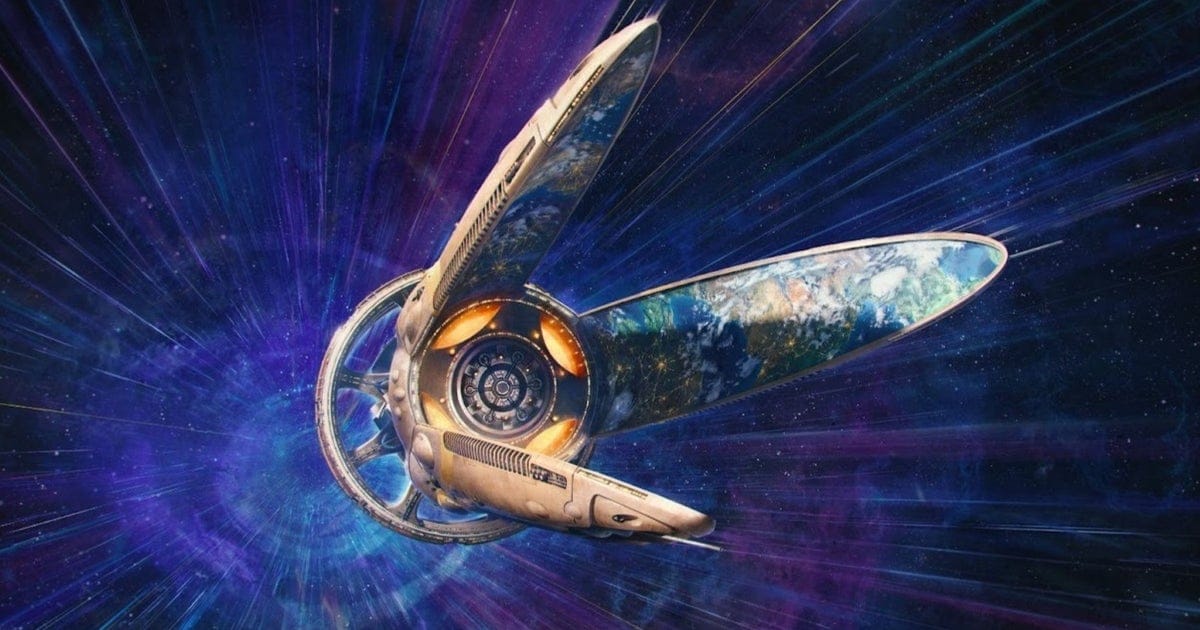
The expansion, launching alongside the free 4.4 "Pegasus" update, fundamentally redefines territorial control within the game. Instead of fixed planetary holdings, these new empires operate from colossal Arkships, which function as mobile colonies, shipyards, and even military or scientific vessels. This represents a considerable shift from the established gameplay loop.
Overcoming the Impossible
Stephen Muray, the Stellaris Game Director, detailed the development process in a recent blog post, acknowledging the long-held belief that "moving planets are impossible." He candidly noted that even mentioning the concept would historically "make programmers cry." The technical hurdle involved separating the core colony logic from its planetary anchor, a task that evidently required substantial re-engineering.
This is not a minor adjustment; it is a re-architecture of a core game system. The ability to decouple a civilisation's primary population centre from a static celestial body suggests a deeper modification to the game's underlying code than many players might assume, according to Stellaris video game Wikipedia. It speaks to a willingness at Paradox to invest significant development effort into features that challenge the game's original design parameters.
New Civilisation Origins and Mechanics
The Nomads expansion offers several distinct origins for these mobile civilisations. The "Heirs of the Khan" origin casts players as the successor to a fallen leader, navigating galactic intrigue and assassins. "The Sacred Path" sends a civilisation on a pilgrimage between holy sites, transforming its populace into priests and zealots. Finally, "Forever Cruise" involves transporting retired aristocrats across the galaxy, placing immense strain on the crew.
Each nomadic civilisation begins with a choice of specialised Arkship: civilian, scientific, or military. These choices influence initial modifiers and technology unlocks. While Arkships are versatile, they cannot perform all functions. Researching anomalies, archaeology sites, astral rifts, or certain special projects still requires the construction of standard, disposable science ships. This design choice prevents an entire mobile colony from being consumed by unforeseen galactic hazards, a practical consideration for game balance and player experience.
Implications for the Modding Community
Muray's blog post also contained a direct, if light-hearted, warning to the Stellaris modding community: "This is gonna break your mods." This statement, while delivered with a touch of humour, highlights a serious consequence of such fundamental changes. The deep integration of planetary mechanics into countless community-created modifications means that many existing mods will likely cease to function correctly, or at all, following the update.
What this hints at, for the scene, is a period of significant adjustment. Mod authors will need to dedicate considerable time to updating their creations, or risk seeing them become incompatible with the latest version of the game. This ongoing cycle of major updates and subsequent mod breakage is a familiar challenge for communities built around complex, evolving strategy titles. It is a necessary friction, perhaps, but friction nonetheless, for those who invest countless hours in extending the game's life.
A Shifting Galactic Strategy
The introduction of Waystations and Waylines further defines the nomadic playstyle. Nomadic empires can build a finite number of Waystations in systems to gather resources, monitor other civilisations, and construct megastructures. Linking Waystations in adjacent systems creates Waylines, which spread beneficial modifiers like boosts to resource capacity and research production. This system allows for a form of mobile, temporary territorial influence without the need for fixed planetary occupation.
This new approach to expansion and resource management will undoubtedly lead to novel strategic considerations. Players will need to balance the benefits of mobility with the need for stable resource generation and defence. The dynamic nature of these empires could also introduce new diplomatic challenges and opportunities, particularly when interacting with established, planet-bound civilisations. It is a genuine re-imagining of how an empire can function within the Stellaris universe, moving beyond simple expansion and conquest.
Paradox's decision to tackle a previously "impossible" feature demonstrates a continued commitment to evolving Stellaris in unexpected directions. The technical achievement is notable, and the resulting gameplay changes promise a fresh experience for players, even as the modding community prepares for the inevitable retooling of their creations.
RetroShell also makes museum-grade acrylic game protectors — UK-produced, cast acrylic, sized for every major console generation.
Follow RetroShell on X for daily retro gaming news. Join the community on r/RetroShell.
Originally published by Rock Paper Shotgun. Read original article.