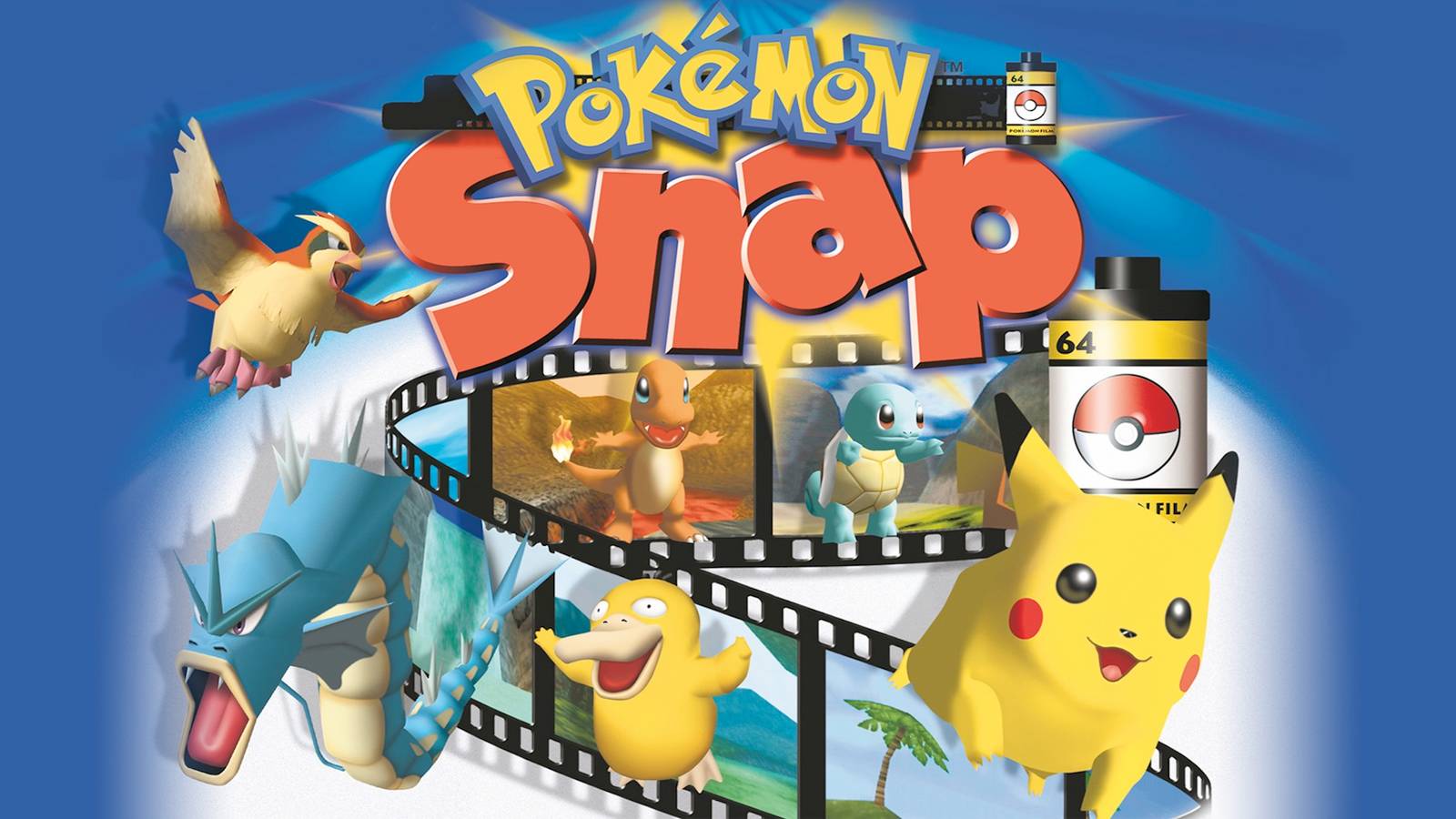
Pokémon Snap's Origins: A 64DD Experiment Turned Franchise Hit

Twenty-seven years ago, Pokémon Snap emerged from a rather different genesis than its eventual release suggested, initially conceived as a generic photography title for the Nintendo 64DD. This early ambition, targeting a peripheral that ultimately saw limited commercial success, speaks volumes about Nintendo's willingness to experiment with novel hardware concepts, even when those concepts struggled to find a market beyond Japan.
The project began in the mid-1990s, with a development team at Nintendo exploring a game centred on taking photographs. The Nintendo 64DD, a disk drive peripheral, was the intended platform; its read and write capabilities were seen as ideal for transferring and printing player-captured images. However, the game's core motivation remained unclear, a significant hurdle for its viability.
The 64DD's Unfulfilled Promise
The Nintendo 64DD, or Disk Drive, was a peripheral designed to expand the N64's capabilities, offering larger storage capacity than cartridges and the ability to rewrite data. This was a critical feature for a game like Snap, where players would save their unique photographs. The 64DD was released exclusively in Japan in December 1999, after years of delays, and ultimately sold fewer than 15,000 units.
Its commercial failure meant that many planned titles, including several from Nintendo itself, were either cancelled or repurposed for the standard N64 cartridge format. This context is vital for understanding Pokémon Snap's trajectory. The game's initial design was intrinsically linked to the 64DD's unique features, particularly the ability to print photos via a compatible printer, a concept that would have been difficult to implement with cartridge-based storage alone. The peripheral's struggles forced a re-evaluation of the game's platform and, more significantly, its identity.
A Forced Evolution into Pokémon
As development stalled on the generic photography game, the Pokémon franchise began its meteoric rise in Japan. The original Red and Blue Game Boy titles, followed by the anime series, created a cultural phenomenon. Nintendo president Satoru Iwata later recounted in a 2010 interview, as reported by CBR Games, that the original Pokémon Snap was not initially a Pokémon game.
He stated, "the motivation for playing the game wasn't clear. We wondered what players would enjoy taking pictures of, and later on we made a somewhat forced switch to taking pictures of Pokémon." Masanobu Yamamoto, a designer on the project, expressed initial reservations about this abrupt shift. "I was involved as a designer, so when characters other than the ones we had designed were used, I had a slightly negative reaction to it," he told the same interviewer.
However, he conceded that adopting the Pokémon world provided much-needed clarity, defining the game's direction and purpose. This strategic pivot, while initially met with internal hesitation, proved to be the project's salvation.
Technical Hurdles and Missed Deadlines
The transition to Pokémon was not without its technical challenges. While Nintendo had existing 3D models of the creatures for Pokémon Stadium, these were too high-polygon for Snap. The game's requirement to display multiple Pokémon on screen simultaneously, often in dynamic environments, demanded lower-resolution models to maintain performance on the N64 hardware. New models had to be created from scratch, adding to the development workload.
Pokémon Snap was first announced at Space World '97, Nintendo's annual showcase event in Japan. The plan was to release it for the 64DD, timed with the 1998 debut of the first Pokémon film, Mewtwo Strikes Back. This deadline, however, came as news to the development team, who had not been informed of the projection. The game failed to meet this ambitious schedule for several reasons, including the ongoing issues with the 64DD and the need to release the game before the second generation of Pokémon (Gold and Silver) launched, which would have introduced a new roster of creatures not planned for Snap's compatibility.
Redefining the First-Person Perspective
Despite its origins, Pokémon Snap arrived on the base N64 in Japan on March 21, 1999, followed by a North American release on July 26. The game presented a unique take on the first-person perspective, traditionally associated with combat-oriented titles. Players assume the role of Todd Snap, a photographer, navigating various environments in the ZERO-ONE Vehicle, an on-rails, multi-terrain machine. The objective is to photograph Pokémon in their natural habitats.
Professor Oak guides the player, instructing them to "shoot" Pokémon in the photographic sense. This mechanic, requiring players to frame their subjects and time their button presses correctly, mirrors the targeting and action of a conventional first-person shooter, but without any violence. The game successfully translated the core loop of aiming and activating a trigger into a non-confrontational, observational experience. This is where the game's quiet genius lies; it subverted genre expectations without compromising engagement.
Commercial Performance and Cultural Resonance
Pokémon Snap's gameplay loop is relatively brief, with the main story reportedly taking around four hours to complete. Players select their best photographs, which Professor Oak then scores based on criteria such as subject size, framing, and pose. This simple yet addictive system, coupled with the novelty of seeing Pokémon in 3D environments, resonated with fans.
Commercially, the N64 Pokémon Snap sold approximately 3.6 million units worldwide. While this placed it towards the lower end of the first-generation Pokémon spin-off sales figures, which ranged between 3 and 6 million units in North America, its performance was still respectable. CBR Games notes that, anecdotally, only Pokémon Mystery Dungeon: Explorers of Time and Explorers of Darkness, released after 2000, managed to outsell it among spin-offs. This suggests a significant, if not chart-topping, commercial success for a game that was, by all accounts, an unusual proposition.
The game also cultivated a strong sense of nostalgia. For decades, it remained the sole title of its kind within the Pokémon universe, making it a distinct and memorable experience for N64 owners. The real story here is not just its sales figures, but its enduring cultural footprint as a unique, gentle entry in a franchise often defined by competitive battling. It offered a different way to interact with the creatures, fostering observation rather than confrontation.
The Enduring Appeal of a Niche Concept
The concept of a non-violent first-person photography game, particularly one featuring beloved creatures, proved remarkably resilient. The initial hesitation from the development team regarding the Pokémon branding ultimately transformed the project from an aimless technical demonstration into a beloved classic. The game's success demonstrated that the Pokémon universe could support a diverse range of gameplay experiences beyond its core RPG mechanics.
This willingness to experiment with genre, even if born out of necessity, broadened the appeal of the Pokémon brand. It showed that the franchise could be about more than just battling and training; it could also be about discovery, observation, and the simple joy of capturing a moment. This expansion of thematic scope is a quiet but important aspect of Snap's legacy, influencing later spin-offs that also explored different facets of the Pokémon world.
A Legacy Continued on Modern Hardware
Over two decades later, the concept was revisited with New Pokémon Snap, released for the Nintendo Switch in 2021. The sequel largely retained the original's core gameplay, albeit with significant graphical upgrades and a vastly expanded roster of 234 Pokémon species, up from the original's 63. Todd Snap, the original protagonist, transitioned into a helpful side character, allowing for a new player avatar.
New Pokémon Snap sold around 2.4 million copies, a figure lower than its N64 predecessor. While it may not have resonated with the same singular impact as the original, perhaps due to the sheer volume of Pokémon titles available on the Switch, it was nonetheless a strong piece of fan service. It expanded the world in a delightful way, offering a modern interpretation of a cherished formula. What this hints at, for the scene, is the continued commercial viability of niche, non-traditional Pokémon experiences, even if they don't reach the dizzying heights of the mainline RPGs.
The Nintendo Switch family of systems has, in many respects, become the ultimate Pokémon machine. It hosts multiple core RPGs, remakes, and the Legends action RPGs. Titles like Pokkén Tournament DX, Pokémon Mystery Dungeon: Rescue Team DX, and Detective Pikachu Returns further diversify the offerings. The eShop also provides exclusive experiences, including reissues and new battle simulators. Pokémon Snap's journey, from a struggling 64DD concept to a multi-million-selling N64 title and a modern Switch sequel, shows the enduring appeal of its unique, non-violent approach to the first-person perspective within one of gaming's largest franchises.
If you run Sega hardware, do the boxes a favour. Our Sega game protectors fit Megadrive, Saturn and Dreamcast cases, made in the UK from cast acrylic.
Follow RetroShell on X for daily retro gaming news. Join the community on r/RetroShell.
Originally published by CBR Games. Read original article.