Handheld Wonders: Unpacking 'Impossible' Retro Ports
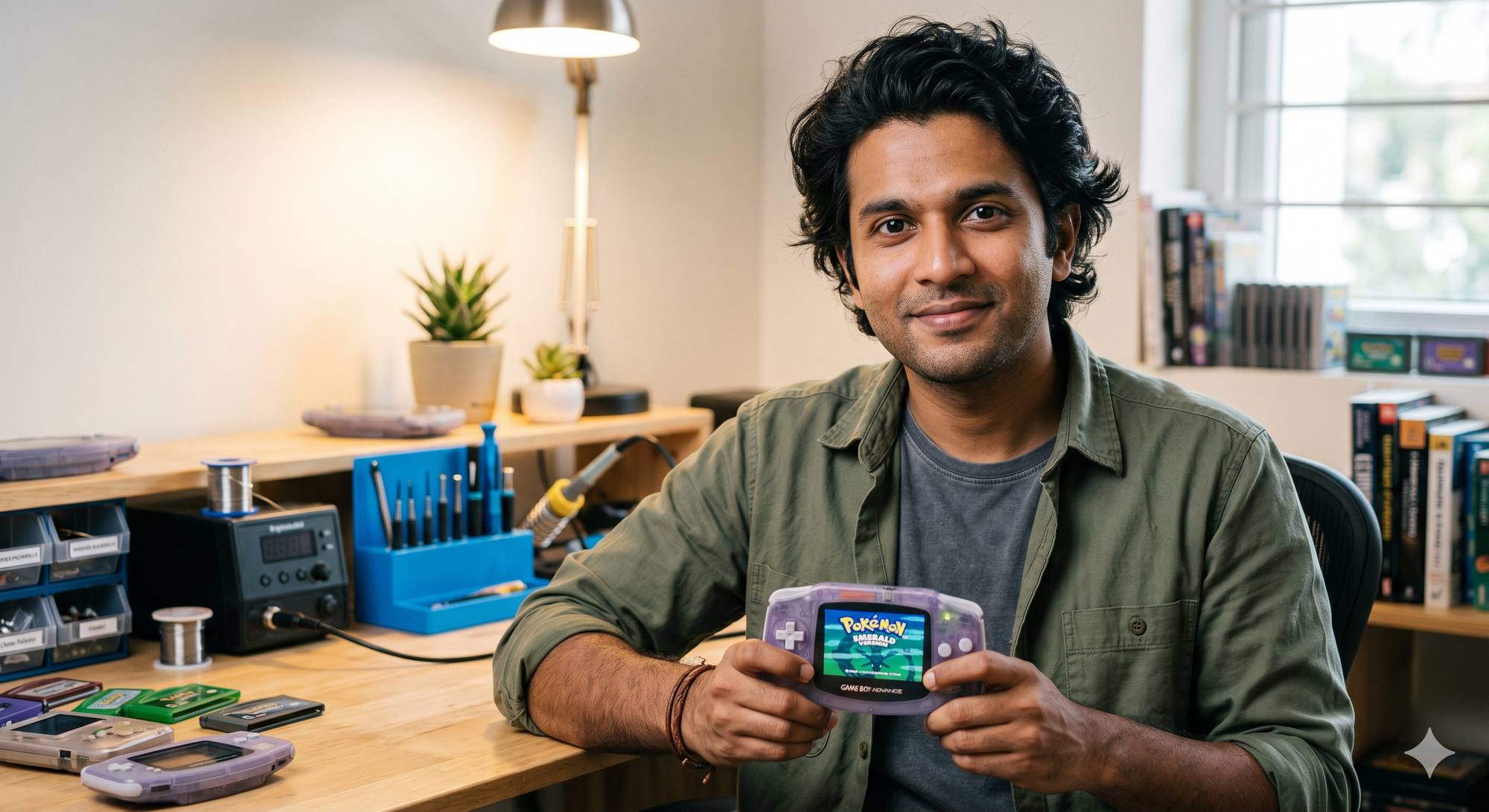
The history of handheld gaming is filled with developers pushing the limits of modest hardware, often achieving feats that seem improbable even with today's sophisticated FPGA cores. While the Analogue Pocket can run a cycle-accurate Game Boy Advance core at 16.78 MHz, the original GBA had to make do with its ARM7TDMI CPU and a mere 256KB of external WRAM, making any attempt at porting complex console experiences a true test of optimisation. A recent piece from Cultured Vultures shines a light on some of these 'impossible' handheld ports, showcasing the ingenuity of studios working within severe constraints.
Dragon's Lair on Game Boy Color: An 8-bit Cartoon
One of the most audacious ports discussed is Dragon's Lair for the Game Boy Color. The original 1983 arcade game, directed by Don Bluth, ran on laserdisc hardware, presenting full-motion video animation that players interacted with via quick-time events. Translating this to an 8-bit handheld with a Z80-derived CPU and limited cartridge space seemed absurd. Digital Eclipse, a studio known for its meticulous retro conversions, tackled this by re-imagining the game as a series of simplified, single-screen action rooms. Each room mirrors a famous moment from the arcade original, rendered with sprites and straightforward movement rather than full animation. The core trial-and-error gameplay remains, guiding Dirk through traps where precise timing is critical. It is a remarkable achievement that the sequence of traps and the overall feel of Dirk's perilous journey are still recognisable, essentially compressing a laserdisc experience into an 8-bit puzzle-action format.
Daikatana's Redemption on Game Boy Color
John Romero's Daikatana is infamous for its troubled development and marketing, but its Game Boy Color port offers a surprising twist. Instead of attempting a doomed first-person shooter conversion, the handheld version re-imagines the game as a top-down action-adventure. This blend of shooting, exploration, and light puzzle-solving creates an experience closer to a The Legend of Zelda-style game with arcade shooting elements. The GBC version feels more structured than its console counterpart, offering consistent progression across its multi-era stages and a surprising amount of content for such small hardware. It is often regarded as one of the better games on the Game Boy Color, largely because its simpler design was a far better fit for the platform.
Driv3r's Open World on Game Boy Advance
The Game Boy Advance port of Driv3r is another technical marvel. While the console versions aimed for open-world driving and on-foot action, the GBA version, developed by Velez & Dubail, surprisingly retains this ambition. It features large open cities where players can freely drive, exit their vehicles, and run around on foot. This alone was highly unusual for the GBA, which rarely attempted such expansive environments with both vehicle and character movement. Velez & Dubail applied techniques learned from their work on the impressive GBA version of V-Rally 3. Mechanically, the game remains recognisable, allowing players to steal cars, evade police, and complete mission objectives across sizeable maps. The visual simplification is evident, but the core gameplay loop of a portable open-world crime game is largely intact.
Doom on Game Boy Advance: A Near-Perfect Fit
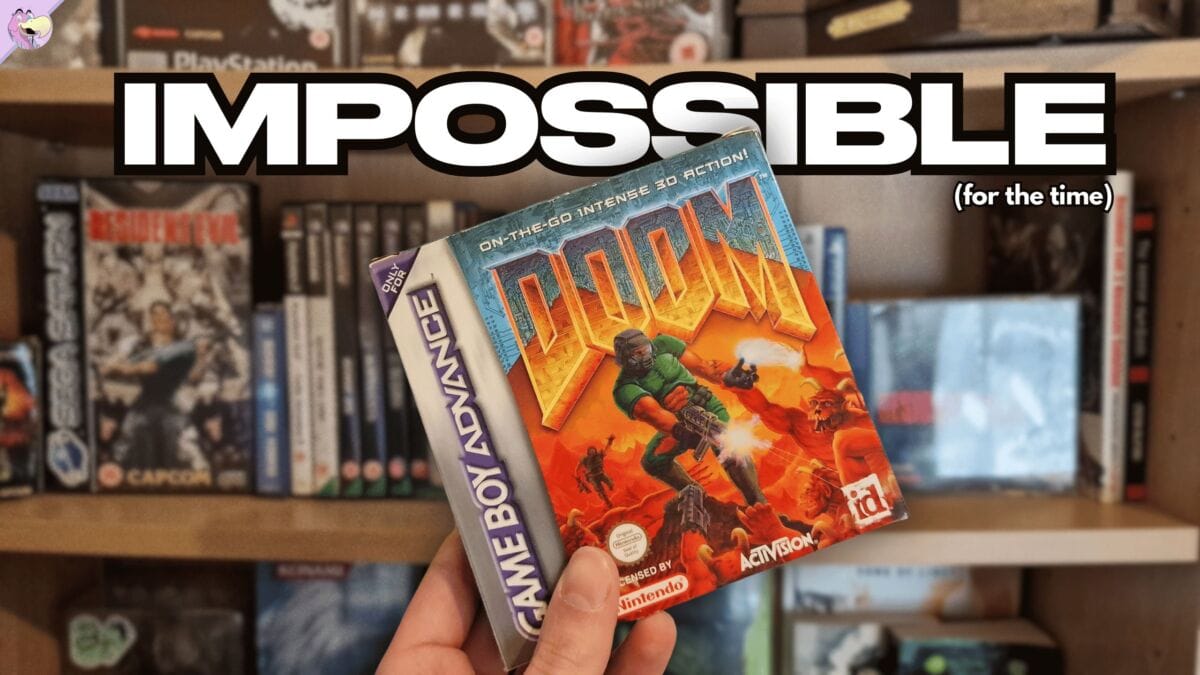
Porting id Software's Doom to the Game Boy Advance in 2001 was a significant undertaking, even though the original game had seen numerous conversions. David A. Palmer Productions handled the conversion, delivering a straight adaptation of the original campaign. Levels, weapons, enemies, and the core run-and-gun pacing are all present and recognisable. What makes this port particularly interesting is how much more complete it feels compared to many earlier console attempts at Doom-style shooters. While mid-90s ports often cut levels, reduced enemy types, and heavily simplified the game, the GBA version, reportedly engineered from the Jaguar port source code, delivers a largely full experience. Aside from darker visuals and some trimmed enemy counts, it captures the essence of Doom on a device powered by two AA batteries, a truly remarkable feat for the early 2000s.
Tony Hawk's Pro Skater on N-Gage: 3D on a Phone
The N-Gage, Nokia's ambitious phone-console hybrid, received a fully 3D portable Tony Hawk's Pro Skater in 2003. Developed by Ideaworks3D, this port attempted something far more ambitious than the isometric or top-down versions seen on other handhelds. The N-Gage hardware was pushed to deliver a structure much closer to the console originals, allowing players to skate around compact 3D parks, complete objectives, and chain tricks. Despite the N-Gage's unusual button layout and portrait screen orientation, which could make controls awkward and visibility limited, the game's mechanics hold together well. This was a convincing take on a portable skateboarding game, especially considering the state of mobile gaming just a few years prior.
Spider-Man 3 on PSP: Web-Swinging Manhattan
Spider-Man 3 on the PlayStation Portable, developed by Vicarious Visions, managed to bring open-world web-swinging to a handheld in 2007. The console versions of Spider-Man 2 had defined the open-world superhero genre, but its PSP counterpart was a linear mission-based game. Spider-Man 3 changed this completely, featuring a freely explorable, albeit smaller and simplified, version of New York City. The core systems of web-swinging traversal, combat, and side activities were all intact. For a handheld of its era, being able to freely swing around a portable Manhattan was a significant technical achievement, capturing the defining feature of the console series.
The Warriors on PSP: Console Experience in Your Pocket
Rockstar Leeds' port of The Warriors to the PlayStation Portable two years after its 2005 console release is remarkably intact. Based on the 1979 cult film, the original game was a substantial brawler with story missions, side activities, and a detailed recreation of late-70s New York. The PSP version retains the full campaign, including the two-player cooperative mode. While visually pared back compared to the PlayStation 2 release, it still looks strong on the smaller screen. The character models, in particular, show a surprising level of detail and expressive faces for the hardware. The PSP version feels less like a handheld adaptation and more like a full console experience compressed onto a portable system, a true show of force from the developers.
Star Wars: The Force Unleashed on PSP: Pocket Jedi Power
Star Wars: The Force Unleashed was pitched as a major technical showcase for LucasArts on consoles, featuring flashy physics systems and large-scale Force powers. Replicating this spectacle on the PlayStation Portable seemed like a daunting task, but Krome Studios delivered a surprisingly cohesive port. The core structure remains intact, with players fighting through story missions using a mix of lightsaber combat and Force abilities like lightning, pushes, and throws. The campaign closely follows the main narrative, and the portable version even adds extra content. While environments are simplified, the combat system still feels recognisably Force Unleashed, allowing players to juggle enemies and blast them across rooms. For a handheld release, it captures the series' power fantasy remarkably well, effectively turning the PSP into a pocket-sized Jedi power trip.
The Enduring Appeal of Handheld Engineering
What this hints at, for the scene, is a deep appreciation for the engineering prowess of these developers. Cultured Vultures' report shows that these ports were not just about shrinking a game, but often about re-thinking its core design to fit the unique capabilities and limitations of handheld hardware. The real story here is the creative problem-solving; whether it was Digital Eclipse's sprite-based re-imagining of Dragon's Lair or Velez & Dubail's ability to squeeze open-world mechanics onto the GBA, these studios understood their target platforms intimately. They knew when to adapt, when to simplify, and when to push the hardware to its absolute limits, delivering experiences that often defied expectations for their time.
These 'impossible' ports stand as a testament to the dedication of developers who saw potential where others saw insurmountable obstacles. They remind us that even with the most constrained hardware, from the 8-bit Game Boy Color to the more capable PlayStation Portable, clever design and meticulous optimisation can yield truly impressive results. For enthusiasts who enjoy delving into the technical underpinnings of retro hardware, these titles offer fascinating case studies in how to make the seemingly unfeasible a playable reality.
Pair the knowledge with the fit. Player Clothing t-shirts are individually numbered, limited-edition runs — retro DNA on cotton.
Follow RetroShell on X for daily retro gaming news. Join the community on r/RetroShell.
Originally published by Cultured Vultures. Read original article.