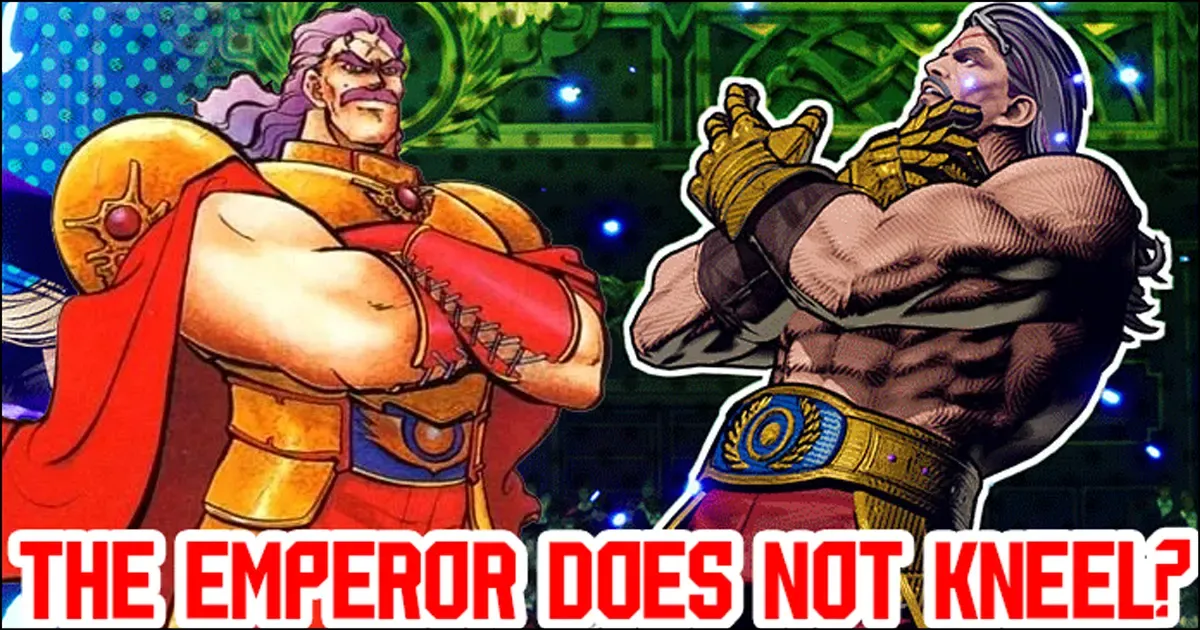
Fatal Fury Director Reveals Krauser's Original Memory Constraint

Wolfgang Krauser, the imposing "Emperor of Darkness," has made his long-awaited return in Fatal Fury: City of the Wolves, marking his first appearance in nearly three decades. EventHubs recently conducted an interview with Director Hayato Konya, who offered a candid look into Krauser's past and his contemporary revival. Among the revelations, Konya-san disclosed a technical detail from Fatal Fury 2 (1992, Neo Geo) that many fans, particularly those outside Japan, may not have known: Krauser's infamous inability to crouch was not a design choice reflecting his imperial status, but a direct consequence of memory limitations during the game's kaihatsu, or development.
The Emperor's Stance and Technical Realities
For years, the prevailing lore suggested that Krauser, as an emperor, simply "does not kneel." This narrative was a convenient explanation offered by the original developers for his unique boss character animations in Fatal Fury 2. However, Konya-san, after consulting with veteran SNK staff, confirmed that the truth was far more practical: the team simply ran out of memory space on the Neo Geo to implement a crouching animation, along with other minor movements. This kind of constraint was common in the early 1990s, where every kilobyte of ROM space was carefully managed, especially for a graphically rich kakutō geemu (fighting game) on advanced hardware like the Neo Geo. Composers like Masahiko Hataya and Yasumasa Yamada, who crafted the memorable soundtrack for Fatal Fury 2, also faced similar technical limitations when creating their musical scores, often needing to optimize every sound sample and loop.
What this hints at, for the scene, is the constant negotiation between creative vision and hardware reality that defined game development during the 16-bit and 32-bit eras. Developers often had to make difficult choices, and sometimes, these technical compromises inadvertently shaped character identity or gameplay quirks that became legendary. The fact that this specific detail about Krauser remained largely unknown in Western fan communities, despite decades of discussion, speaks to the depth of information still waiting to be uncovered from Japanese development archives and interviews.
Krauser's Return in City of the Wolves
Konya-san explained that the decision to bring Krauser back as a downloadable content (DLC) character was finalized around August of last year. The team aimed to include a boss character from the Fatal Fury series as part of their monthly DLC release schedule. The primary goal for Krauser's modern iteration was to remain faithful to his established character and the perception fans, including Konya himself, hold of him. This meant preserving the essence of his gameplay while updating his visual design to reflect the passage of time.
Visually, Krauser has received subtle updates, such as changes to his hair color and facial hair. These adjustments are intended to show his age and experience without fundamentally altering his iconic appearance. The development team considered various minor concepts during this process, including different hair color schemes like all purple or all grey, before settling on the final design. The focus was on refinement rather than radical reinvention, ensuring that Krauser felt both familiar and fresh to long-time fans.
A Formative Experience and Enduring Legacy
Konya-san shared a personal anecdote that shaped his understanding of Krauser: early in his career at SNK, a senior colleague often defeated him in-game using Krauser. This experience solidified Krauser's image as a "frightening and powerful character" in Konya's mind, an impression that directly influenced his portrayal in City of the Wolves. This kind of personal connection to a character, often rooted in competitive play or early development memories, frequently informs how creators approach revivals of classic figures.
The interview also touched upon Krauser's place within the broader Fatal Fury lore, particularly his connection to Geese Howard and the Sacred Scrolls of Jin. While Geese remains deceased within the game's narrative, Krauser's survival is attributed to the events following his defeat by Terry Bogard, which led to rumors of his death rather than an actual demise. Konya-san confirmed that the story of Fallen Rock and the Sacred Scrolls of Jin is planned for continuation, hinting at future developments in the series' overarching narrative.
Depiction and Fan Demand
Regarding Krauser's characterization, Konya-san stated that the team primarily drew inspiration from his previous game appearances and his own personal image of the character, rather than explicitly referencing his anime movie portrayal. However, he acknowledged that some unconscious influence from the movie version might have occurred. This approach prioritizes the interactive experience of the kakutō geemu over external media adaptations, which is often a critical distinction for developers working with established franchises.
Krauser's importance to SNK is undeniable. He is famously known as "the only man Geese Howard ever feared," a testament to his formidable presence. Konya-san noted the numerous requests from fans for Krauser's inclusion in City of the Wolves, as well as the strong support for the character within SNK itself. This collective enthusiasm underscores his status as a critical boss character who represents a significant part of SNK's fighting game heritage. The recent anniversary update for City of the Wolves, which added a new Story Mode and user interface overhaul alongside Krauser's release, further solidifies the ongoing commitment to this storied franchise.
This interview provides valuable context for understanding the creative and technical decisions behind one of SNK's most iconic antagonists. As Fatal Fury: City of the Wolves continues to evolve, the insights into Krauser's past and present offer a deeper appreciation for the enduring legacy of the Fatal Fury series and the meticulous work involved in bringing its characters to a new generation of players.
RetroShell also makes museum-grade acrylic game protectors — UK-produced, cast acrylic, sized for every major console generation.
Follow RetroShell on X for daily retro gaming news. Join the community on r/RetroShell.
Originally announced by SNK Corporation · first reported by EventHubs.