
Custom 3DS Kiosk Built from Scratch by Enthusiast
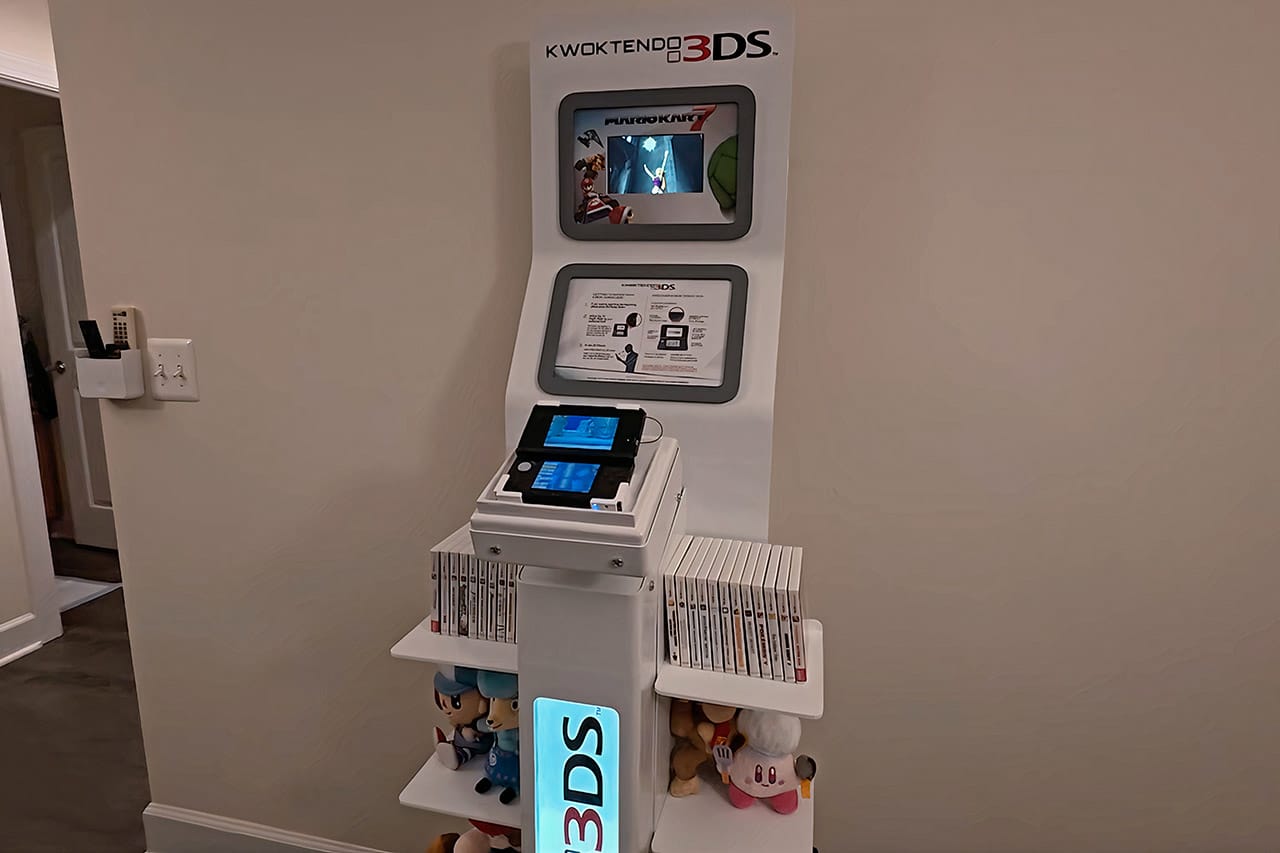
Project Kwokcade, a dedicated hobbyist, has successfully constructed a full-size Nintendo 3DS store kiosk from scratch, a feat driven by the extreme rarity and prohibitive cost of original retail units. The dedication to recreating a piece of retail history, especially one as iconic as the Nintendo 3DS kiosk with its dual screens and unique demo loops, speaks volumes about the passion within our modding and preservation communities.
The quest for an authentic 3DS retail display often ends in frustration for collectors. Original units rarely appear on the market, and when they do, their price point is typically out of reach for most. This scarcity prompted Kwokcade to pursue an alternative approach, moving from passive searching to active creation.
His project began with extensive research and careful planning. Kwokcade diligently gathered all available measurements and photographs online. Crucially, he also received valuable contributions from other aficionados and even footage from a collector in France, highlighting the collaborative spirit often found in these niche communities.
Designing the Display Digitally
With a wealth of reference material, Kwokcade turned to 3D modelling software, specifically 3DS Max. He engineered a hollow digital model of the entire kiosk, ensuring accuracy to the original dimensions. This digital blueprint was then meticulously divided into thirty-one individual components.
Each of these parts was designed to fit comfortably onto a standard 3D printer bed, a common constraint for hobbyist makers using fused deposition modelling (FDM) printers. To ensure structural integrity and ease of assembly, the design incorporated holes for dowels, allowing for precise alignment and connection between sections. Threaded inserts were also integrated, ready to accept screws for a strong, secure final build.
Building and What It Means
Kwokcade carefully balanced material efficiency with structural strength. The walls of the 3D model were kept thin enough to minimise plastic consumption, yet robust enough to support the entire structure once assembled. This attention to detail is critical in large-scale 3D printing projects, where material costs and print time can quickly escalate.
The real story here is not just the successful build, but the collaborative spirit among enthusiasts. Sharing measurements and photos is often how complex hardware projects, like custom FPGA cores or intricate backlight mods, get off the ground. This project serves as a strong example of how community knowledge can overcome the limitations of scarcity and cost.
This custom-built 3DS kiosk demonstrates the power of modern fabrication techniques in retro gaming preservation. It offers a tangible solution for collectors who desire a piece of gaming history without relying on the volatile and often inaccessible market for original, rare items. It also inspires others to tackle similar projects, bringing forgotten retail displays back to life.
If those carts deserve shelf time, they deserve protection. Browse the Nintendo range at shop.retroshell.com, NES through GameCube, all UK-made.
Follow RetroShell on X for daily retro gaming news. Join the community on r/RetroShell.
Originally published by TechEBlog. Read original article.