
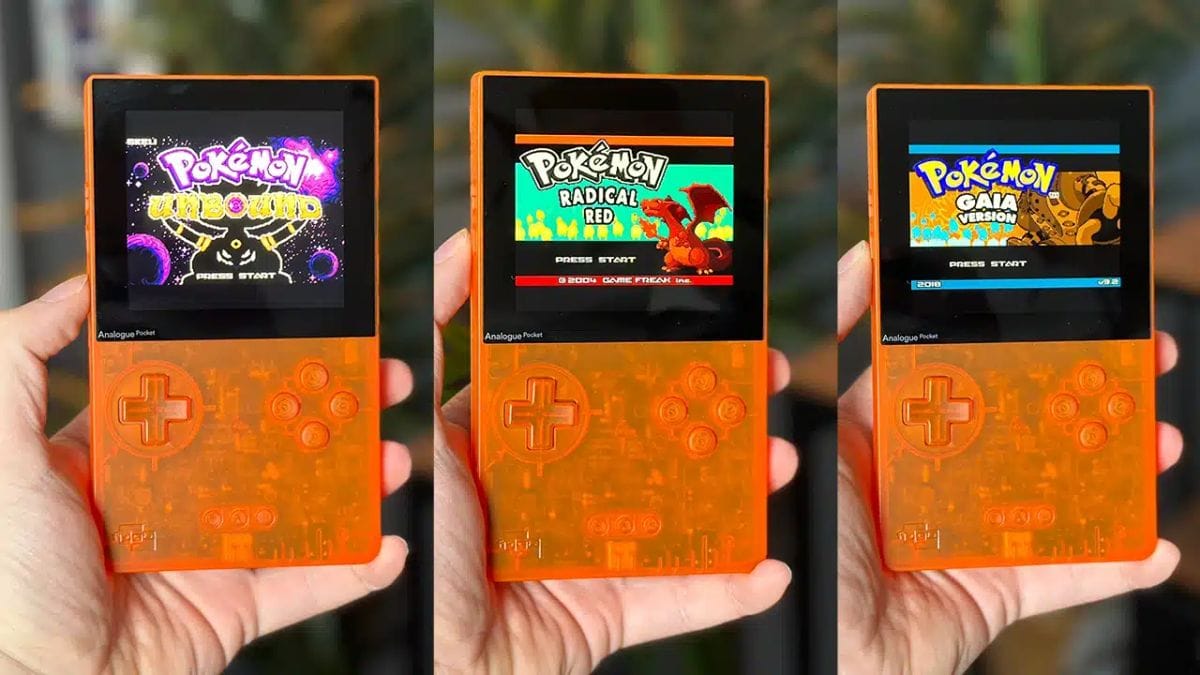
Pokémon ROM Hacks: Pushing GBA Limits

The Game Boy Advance, a console known for its vibrant 32-bit colour palette and a CPU clocking in at 16.78 MHz, continues to be a fertile ground for community-driven projects, particularly in the realm of Pokémon Read-Only Memory (ROM) hacks. RetroDodo recently highlighted several ambitious fan-made titles, showcasing how developers push the GBA's hardware to its limits, often adding features that even modern official releases might envy. These projects demonstrate a sustained passion for the platform and its most popular series.
Many of these ROM hacks go far beyond simple palette swaps or minor tweaks. They introduce entirely new regions, expand the roster of Pokémon to include creatures from later generations, and implement mechanics that were absent in the original GBA titles. This level of modification requires deep understanding of the game's code and the GBA's architecture, allowing for experiences that feel fresh while retaining the familiar pixel art aesthetic.
Lazarus: A New Journey in Greece
RetroDodo's top pick, Pokémon Lazarus, is a prime example of this ambition. Based on Pokémon Emerald, it transports players to a new region inspired by Greece. The hack features Pokémon from every generation, including the latest Generation 9, and offers hundreds of Pokémon to catch within the first few hours of gameplay. It expands exploration across diverse environments such as forests, mountains, oceans, and ice caverns.
Lazarus also incorporates modern quality-of-life features. Pokémon can follow the player, and some can even be mounted for faster travel. It includes trackable quests and side-missions, alongside a well-written storyline that aims to feel like an official entry. The game is designed to be challenging, with difficult puzzles, tough trainers, and a lower catch-rate for basic Pokémon, which, as RetroDodo points out, can deepen the player's connection to their team.
Unbound: A Region Built from Scratch
Another standout is Pokémon Unbound, which RetroDodo praises as one of the best Pokémon games ever made, fan-made or otherwise. Developer Skeli crafted an entirely new region called Borrius, complete with a sprawling story and dozens of post-game encounters. This hack integrates major mechanics from the first eight generations of Pokémon, including Dynamax encounters and Mega Evolutions, adding significant strategic depth to battles.
Unbound uses FireRed as its base, allowing for extensive character customisation. It features 80 missions and introduces new ways to collect Hidden Machines (HMs). The narrative begins with a young trainer discovering the corrupt Naljo region, which is larger than Johto and includes over 250 Pokémon from four different regions. It even adds unique Fairy, Gas, and Sound types, a creative expansion of the type chart that is genuinely innovative.
Radical Red: The Difficulty Hack
Pokémon Radical Red is perhaps one of the most famous ROM hacks, known for its increased difficulty. It uses the Complete FireRed Upgrade engine, which allows for the inclusion of mechanics, moves, and Pokémon up to Generation 9. This engine is critical for enabling the hack's extensive team diversity and strategic combat requirements. Players must carefully consider Hidden Abilities and Pokémon typing for each battle, or face repeated losses.
Like Unbound, Radical Red incorporates Dynamax and Mega Evolution mechanics. While its core story remains largely identical to FireRed, these additions provide engaging detours. A notable new feature is the PokéNav, a device that helps players find optimal Pokémon for specific challenges, streamlining team building. This hack is ideal for those who found the original FireRed too easy and sought a more demanding experience.
Glazed and Special Pikachu Edition
Pokémon Glazed aims to emulate the multi-region exploration of Gold and Silver, offering two and a half regions: the new Tunod, a redesigned Johto, and the smaller Rankor Archipelago. It includes Pokémon up to Generation 6, new 'Dream World' Pokémon, and five starter options. The game also features all legendary Pokémon from Generations 1 to 4, plus several from Generation 5, and even allows travel between two different worlds. However, Glazed was subject to Digital Millennium Copyright Act (DMCA) claims, making it harder to find, though it remains highly regarded.
For fans of Pokémon Yellow, Special Pikachu Edition provides a challenging twist. Pokémon can learn up to three moves at level 1, accelerating early gameplay. It adds 553 new moves from all generations, extra routes in Kanto, and more accessible buildings. Gym Leaders and the Elite Four are significantly tougher, demanding careful team composition and item management. This hack caters to players seeking a harder, more strategic Yellow experience.
Expanding the GBC Legacy
Beyond the GBA, the Game Boy Colour (GBC) also sees significant ROM hacking activity. Pokémon Dark Energy is a GBC hack with a gothic theme, shifting the focus from becoming champion to an RPG-esque storyline with side quests and active battle modes. It streamlines trade evolutions, allowing them to occur via levelling up or specific missions, removing the need for physical link cables or Wi-Fi trades, a welcome change for players on modern retro handhelds like the Miyoo Mini or Anbernic devices.
Pokémon Bronze offers a mash-up of Kanto and Johto, with nine regions to visit and the ability to return to Kanto via a tunnel. It presents a harder adventure, with players thwarting Team Rocket in Cartridge Town. Pokémon Crystal Clear is another popular GBC hack, offering extensive customisation, the ability to visit gyms in any order, and re-challenge leaders. It provides 16 badges to collect and 24 starter Pokémon options, significantly increasing replayability.
Light Platinum and Crystal's Subtle Improvements
Pokémon Light Platinum, based on Ruby and Sapphire, allows travel across two new regions, Zhery and Lauren. Created by WesleyFG, it introduces new leaders, Elite Four members, and rivals, alongside a vast array of Pokémon from Kanto, Johto, Hoenn, Sinnoh, and Unova. The hack also features travel across new dimensions, the ability to catch every legendary Pokémon up to Unova, and a large final event called the Pokémon World Championship.
For Pokémon Crystal enthusiasts, a subtle yet impactful hack improves the original game. It adds a run button, significantly speeding up gameplay, and removes glitches. All 251 Pokémon are catchable, and players can acquire all three Johto starters early, with Kanto starters available by mid-game. These quality-of-life adjustments, combined with time-of-day modifications, make for a much smoother and more complete Crystal experience.
The Modding Scene's Enduring Impact
What this hints at, for the scene, is a clear demand for more complex, challenging, and feature-rich Pokémon experiences than official releases sometimes provide. The real story here is the ingenuity of the community, leveraging existing game engines to create entirely new experiences, often with quality-of-life improvements that modders on platforms like the Analogue Pocket or Anbernic devices appreciate. These projects not only extend the lifespan of classic hardware but also demonstrate the creative potential when a dedicated fanbase takes the reins.
The continued development of these sophisticated ROM hacks shows no signs of slowing. They represent a significant part of retro gaming culture, offering endless hours of new content for beloved platforms like the GBA and GBC. As long as there are passionate developers willing to delve into the code, the Pokémon universe will continue to expand in unexpected and exciting ways, providing fresh adventures for players who appreciate the classic pixel art and gameplay of these handheld systems.
If those carts deserve shelf time, they deserve protection. Browse the Nintendo range at shop.retroshell.com — NES through GameCube, all UK-made.
Follow RetroShell on X for daily retro gaming news. Join the community on r/RetroShell.
Originally published by RetroDodo. Read original article.