TRSE Browser IDE Opens Retro Development to All

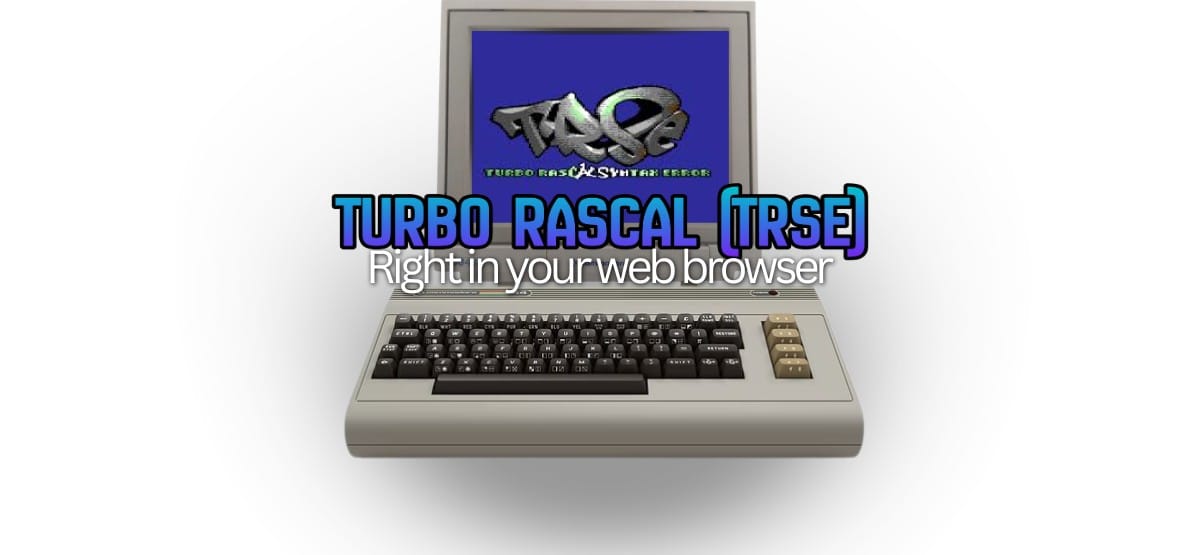
The formidable Turbo Rascal Syntax Error, known to many as TRSE, has finally shed its most significant barrier to entry. It now runs entirely within your web browser. For those of us who remember the often-fiddly process of setting up development environments on our BBC Micros or ZX Spectrums, this is a welcome change. Its integration into the Retro Game Coders online IDE means complex setup is a thing of the past.
For years, TRSE has held a strong reputation amongst seasoned retro developers. It offers a comprehensive suite. This encompasses an Integrated Development Environment, a robust compiler, its own programming language, a sprite editor, and even a music tracker. This powerful tool targets an impressive array of over 20 classic platforms. These range from the Commodore 64 and NES to the Amiga 500, ZX Spectrum, and BBC Micro.
However, getting TRSE operational was often a project in itself. Developers faced the daunting task of downloading the application. They also resolved Qt library dependencies. Installing separate emulators for each target system was required. Then, painstaking configuration was needed for them to communicate. This considerable friction often deterred hobbyists and newcomers. They would give up before writing a single line of code.
Removing Development Hurdles
That substantial hurdle has now been completely removed. The integration of TRSE into the Retro Game Coders online IDE offers a seamless, browser-based experience. There is no installation or complex configuration required. Users simply select their desired target platform. They write their Turbo Rascal code, and hit 'run'. The IDE then compiles the code. It launches it within an included emulator directly on screen. Currently, the browser IDE supports a fine selection of machines. These include the Commodore 64, VIC-20, Commodore PET, BBC Micro, ZX Spectrum, Amstrad CPC6128, MSX, Atari 8-bit, Apple II, Vectrex, and IBM PC.
The Rascal Language Advantage
Beyond the ease of access, the programming language itself, known as Rascal, presents a compelling proposition. Inspired by Pascal, it strikes a useful balance between readability and low-level control. This allows it to compile down to remarkably tight machine code for each target system. For those developers accustomed to modern programming languages, the learning curve for Rascal is notably more approachable. It offers a gentler introduction compared to diving straight into assembly language. This makes the entire process far less intimidating.
A New Era for British Micro Development
It is particularly exciting to see the impact this could have on the British microcomputer scene. The ZX Spectrum, BBC Micro, and Amstrad CPC6128 were the bedrock of a generation of bedroom coders in the UK. Many of us remember the thrill of typing in listings from magazines like CRASH or Your Sinclair. This new browser-based TRSE truly democratises the creation of new software for these beloved machines. It makes development so much more accessible. It removes the technical faff that often put off aspiring developers. This allows them to focus on the creative act. This is a significant step towards preserving and revitalising the spirit of those early days of home computing.
For anyone who previously found the initial setup of TRSE too daunting, this browser-based solution offers a clean and inviting on-ramp. The Retro Game Coders site also provides an existing library of TRSE tutorials. These can now be followed directly within the browser IDE. This removes any lingering excuses not to explore the fascinating world of retro game development. It is a welcome development for the entire community.
Follow RetroShell on X for daily retro gaming news. Join the community on r/RetroShell.
Originally published by Retro Handhelds. Read original article.