Shadow Fields: A New ZX Spectrum Shmup Pushes Boundaries

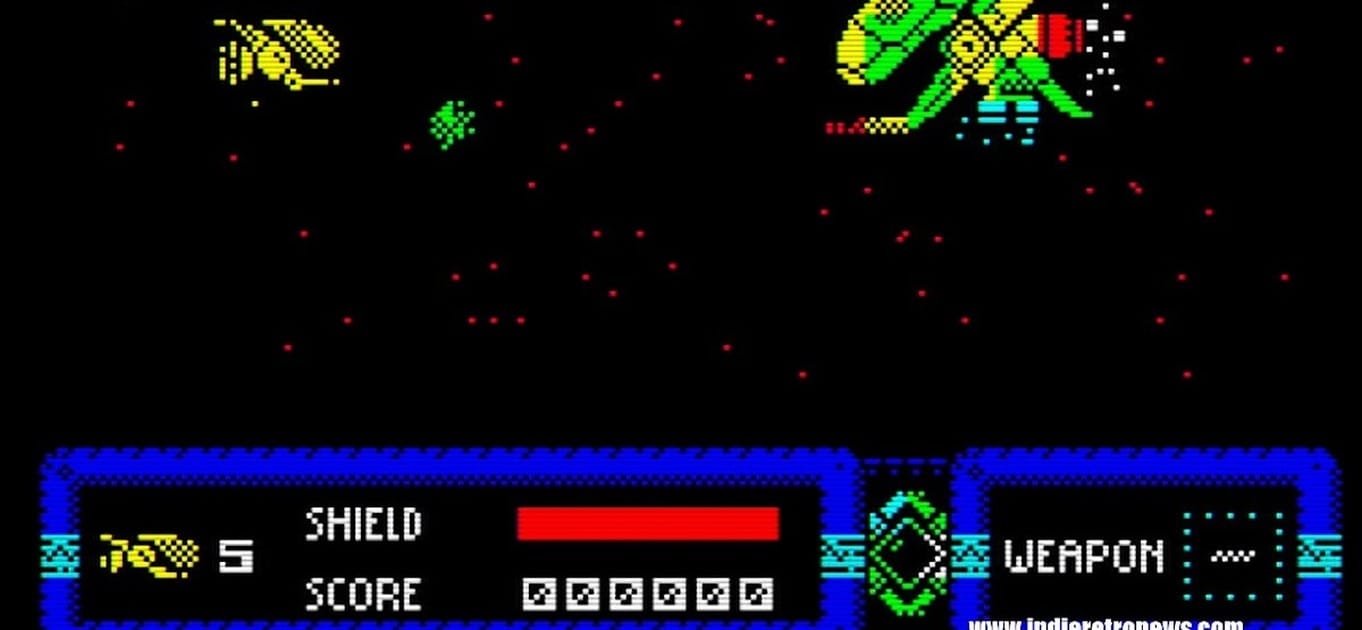
A brand new horizontal shoot-'em-up, Shadow Fields, has recently graced the ZX Spectrum 128k, and it's already drawing considerable praise from those who remember the machine's unique colour clash and its vibrant, if sometimes challenging, programming scene. Developed by Manuel Ferreira Moreno, known as Gandulf, this title is a genuine labour of love, coded entirely in 100% assembler, a dedication that harks back to the days when every cycle counted and programmers like Matthew Smith squeezed magic from the Z80.
Indie Retro News reports that the game is being hailed as a technical marvel, pushing the classic hardware to its very limits. Community feedback has been effusive, with comments like, "Damn, that looks like it couldn't be a Speccy game," and "Gorgeous shoot-em-up," reflecting the surprise and delight at what Gandulf has achieved on a machine often underestimated for its graphical capabilities.
Hand-Crafted Code and Visuals
What truly sets Shadow Fields apart is its commitment to traditional development methods. Unlike some modern homebrew efforts that might use pre-existing engines or even AI-generated assets, Gandulf crafted every line of code by hand. He also served as the game's graphics artist, a dual role that was common during the Spectrum's heyday, when a single visionary could bring an entire world to life on a cassette tape, according to Crash magazine's reviewers. This approach ensures a cohesive vision, something often lost in larger productions.
The game's key features include destructible environments, allowing players to blast apart the game world, adding a tactical layer to the fast-paced action. Furthermore, players will face massive, full-colour bosses that dominate the screen, a feat that would have had Crash magazine's reviewers in the summer of 1987 waxing lyrical about the programmer's skill. The sheer scale of these sprites, rendered without significant attribute clash, is a testament to Gandulf's deep understanding of the Spectrum's architecture.
What This Means for the Scene
The real story here is the continued vitality of the ZX Spectrum homebrew scene. While many might assume the machine's development peaked in the late 1980s, projects like Shadow Fields prove that there is still room for innovation and technical excellence. It shows that dedicated individuals can still extract new experiences from familiar hardware, challenging our preconceptions of what a 128k Spectrum can do. This kind of project inspires new generations of coders to look at these old machines not as relics, but as canvases for new ideas.
This release is more than just another game; it's a statement about the enduring power of passion and skill in the face of hardware limitations. It reminds us that the spirit of experimentation and the pursuit of technical mastery, which defined the early British computing scene, is very much alive and well today. We look forward to seeing what other surprises the Spectrum community has in store, as developers continue to explore its hidden depths.
RetroShell also makes museum-grade acrylic game protectors — UK-produced, cast acrylic, sized for every major console generation.
Follow RetroShell on X for daily retro gaming news. Join the community on r/RetroShell.
Originally published by Indie Retro News. Read original article.