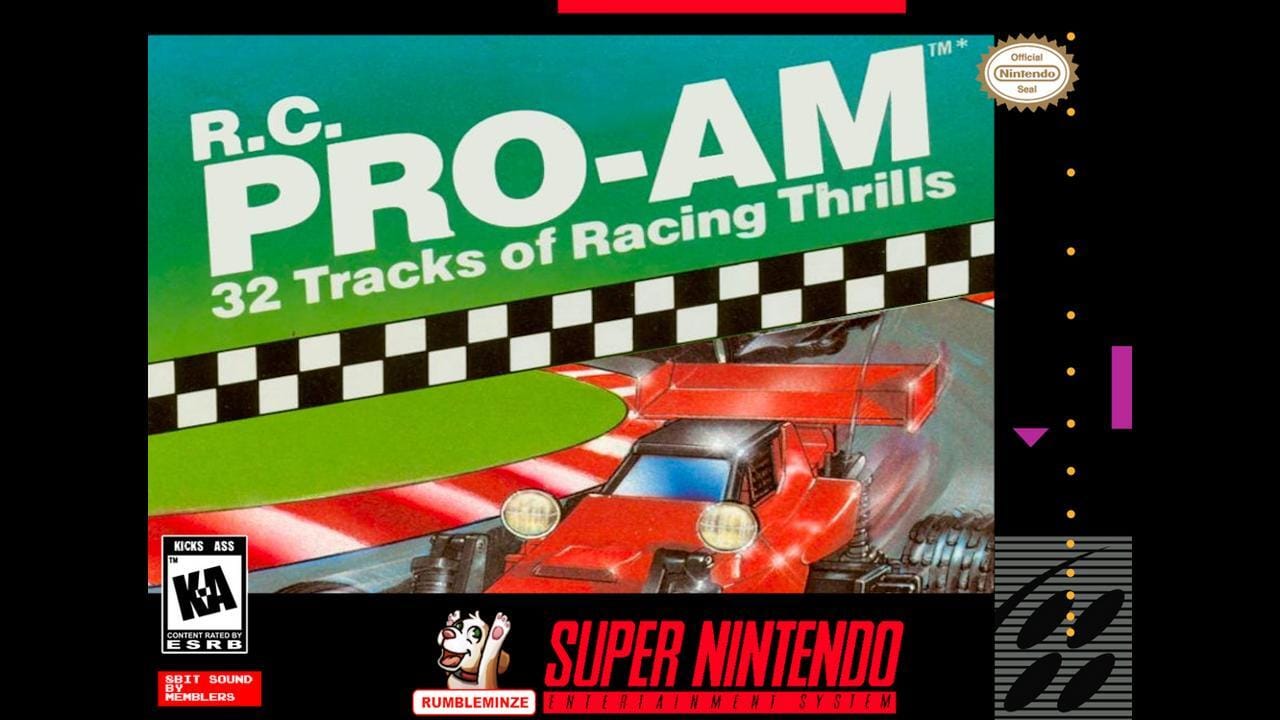
Rumbleminze Ports R.C. Pro-Am to SNES, Boosts Performance

Developer Rumbleminze just dropped an NES to Super Nintendo Entertainment System (SNES) conversion of R.C. Pro-Am, and it's a clean upgrade. This isn't just a straight port; it uses FastROM/HiROM for faster data transfer, a technical detail that often gets overlooked but is critical for smooth performance on the SNES. The original NES version, for all its charm, was notorious for its sprite flicker and slowdown when the action got heavy, a common limitation of 8-bit hardware that this conversion directly addresses.
RetroRGB reports that this fan project significantly reduces those issues. The SNES's higher sprite limit is the key here, allowing more on-screen elements without the visual compromises. Sound is handled by the Memblers 2A03 Emulator, ensuring the audio experience remains faithful to the original. Notably, there's no MSU-1 audio enhancement, as the original R.C. Pro-Am had no music during races, a design choice that some players might find jarring today.
Why This Conversion Matters for Players
This kind of fan-driven conversion isn't just a technical exercise; it's about refining the play experience. For a game like R.C. Pro-Am, which relies on quick reflexes and clear visual feedback, removing sprite flicker and slowdown fundamentally changes how it feels to play. It offers a version that, in many ways, surpasses the original's technical limitations, giving players a smoother, more consistent ride. This pushes the boundaries of what's possible with classic games, much like the debates around the Power Glove or R.O.B. tried to push the boundaries of interaction, albeit with less success.
The Collector's Take on Fan Projects
For collectors, these conversions raise interesting questions. Does a technically superior fan port diminish the appeal of a pristine, original Nintendo Entertainment System (NES) cartridge? I argue it doesn't. The original NES cart, even with its inherent technical quirks, remains a piece of hardware history. Its value is tied to its authenticity and condition, be it a CIB (complete in box) copy or a loose cart with some label damage or manual foxing. These fan projects offer an alternative way to play the game, not replace the artifact itself.
What this hints at, for the scene, is a growing divide between collecting for preservation and collecting for optimal play. Some collectors prioritize sealed, graded games, often from services like WATA, focusing on the item's market value and rarity. Others are more interested in the best possible way to experience these games, whether that's through FPGA hardware, emulation, or fan conversions like this one. This R.C. Pro-Am port caters directly to the latter, providing a polished experience that respects the original while improving its technical delivery. It's a testament to the enduring appeal of these titles that developers continue to invest time in making them shine on different platforms. The original R.C. Pro-Am also saw a version released on the Sega Genesis (known as the Mega Drive in Europe), showing its cross-platform appeal even back then.
Moving forward, these kinds of conversions will likely continue to gain traction. They offer a fresh perspective on beloved classics, ensuring their playability for new generations without requiring a deep dive into original, sometimes temperamental, hardware. It's about keeping the games alive, in the best possible form, for those who prioritize the experience over the physical collectible.
RetroShell makes the Nintendo protector set collectors actually reach for — precision-cut, British production, ships worldwide.
Follow RetroShell on X for daily retro gaming news. Join the community on r/RetroShell.
Originally published by RetroRGB. Read original article.