
Lost Media Games: Unseen Handhelds and Arcade Prototypes

The ongoing effort to preserve video game history relies heavily on the diligent work of ROM dumping, ensuring that software from original formats is archived digitally. Without this critical step, games can become 'lost media', vanishing as physical cartridges degrade or development builds remain locked away. ComicBook Gaming recently highlighted several such titles, including a pair of intriguing Game Boy Advance projects that never saw the light of day, a common fate for many ambitious handheld programmes.
Lost media, in this context, refers to any game that has not been successfully dumped from its original format. This includes titles that were fully developed but unreleased, partially developed, or even released but subsequently lost due to a lack of digital backup. The challenge of recovering or completing these games often seems insurmountable, leaving them unplayable for enthusiasts and historians alike.
The Challenge of Undumped ROMs
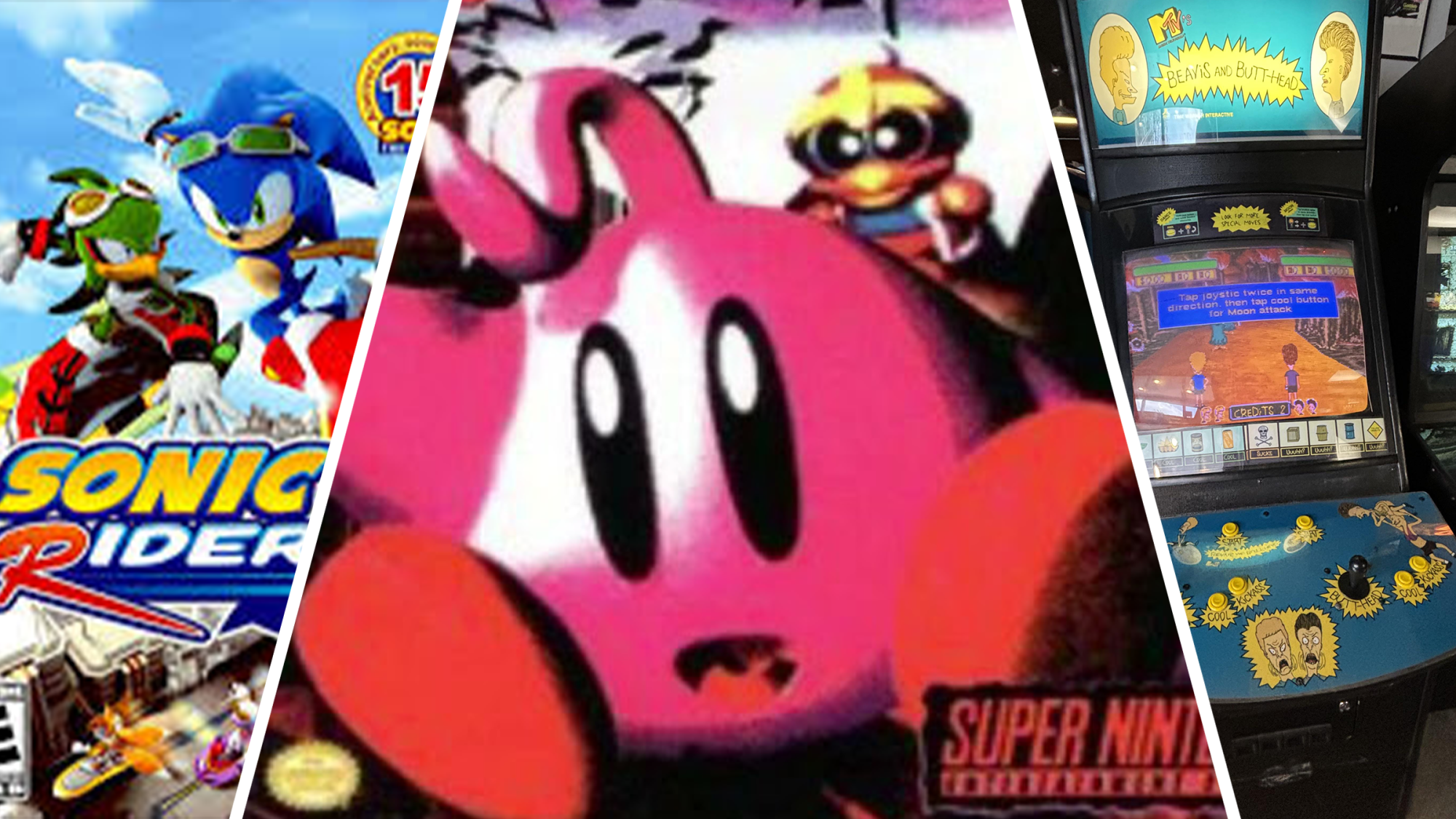
One notable example is Kid Kirby, a Super Nintendo Entertainment System (SNES) title developed by DMA Design, now known as Rockstar North. This platformer would have featured an infant Kirby and uniquely required the Super NES Mouse for gameplay, using its input to drag Kirby through levels in a manner reminiscent of modern physics puzzlers. While various assets, including level maps and character renders, have surfaced online, no playable ROM has ever been dumped, leaving the game in a state of digital limbo.
Another intriguing console entry is Return of Donkey Kong, an unreleased Nintendo Entertainment System (NES) game first announced in the Official Nintendo Player’s Guide in 1987. Advertisements suggested players could control Donkey Kong himself, a significant departure for the character years before Donkey Kong Country redefined his role on the Super Nintendo. Despite multiple mentions in publications through May 1988, the game never materialised, with no known prototypes or ROMs ever appearing.
GBA's Unseen Library
The Game Boy Advance (GBA) features prominently in the discussion of lost media, with two significant titles mentioned. Sonic Riders was intended as a GBA port developed by Backbone Entertainment, designed to launch alongside its console counterparts for the Sonic the Hedgehog franchise's 15th anniversary. Sega ultimately rejected the 2D graphical approach, deeming it unsuitable for a series increasingly defined by 3D environments. The GBA, with its 240x160 pixel screen and ARM7TDMI processor, often saw developers pushing its limits to replicate console experiences, but this port proved too challenging to adapt to Sega's demands within the deadline. While animations exist, a full ROM remains undumped.
Similarly, Rare's Donkey Kong Coconut Crackers for the GBA was a 3D isometric puzzle game where Donkey Kong would drop paint-filled coconuts to create shapes. Rare, known for its work on the Donkey Kong franchise, even produced a playable demo that circulated among testers. However, following Microsoft's acquisition of Rare Ltd., the game was cancelled, later being reworked and reskinned into It's Mr. Pants. Crucially, even the playable demo of Donkey Kong Coconut Crackers has never been dumped, meaning this piece of Rare's GBA history is effectively lost.
Arcade Prototypes and Their Fate
What this list hints at, for the scene, is the particular vulnerability of handheld prototypes and unreleased arcade machines. Unlike console games, which often have multiple production runs or development kits, handheld prototypes can be singular, making their preservation even more precarious. The fact that a playable demo of Donkey Kong Coconut Crackers exists but remains undumped is a stark reminder of how close we often come to losing these pieces of history entirely, especially when they are tied to specific development hardware or internal builds.
The 1996 Beavis and Butt-Head arcade game offers a unique case. Though cancelled, some cabinets did make it into the wild. Built with 3DO hardware, the game completed four of its planned six levels but performed poorly in testing. Midway's acquisition of Atari around that time led to the cancellation of many in-development projects, including this one. Twelve prototype machines were reportedly sold at auction, and some individuals have encountered them over the years. However, no ROMs have been dumped, meaning the only way to experience this game is to locate one of these rare cabinets and hope it is still operational.
The ongoing challenge for preservationists is to locate and dump these elusive pieces of software before they are lost forever. The existence of physical prototypes or assets without corresponding ROMs serves as a constant reminder of the fragility of digital history, urging continued efforts to archive every possible fragment of our gaming past.
RetroShell makes the Nintendo protector set collectors actually reach for — precision-cut, British production, ships worldwide.
Follow RetroShell on X for daily retro gaming news. Join the community on r/RetroShell.
Originally published by ComicBook Gaming. Read original article.