
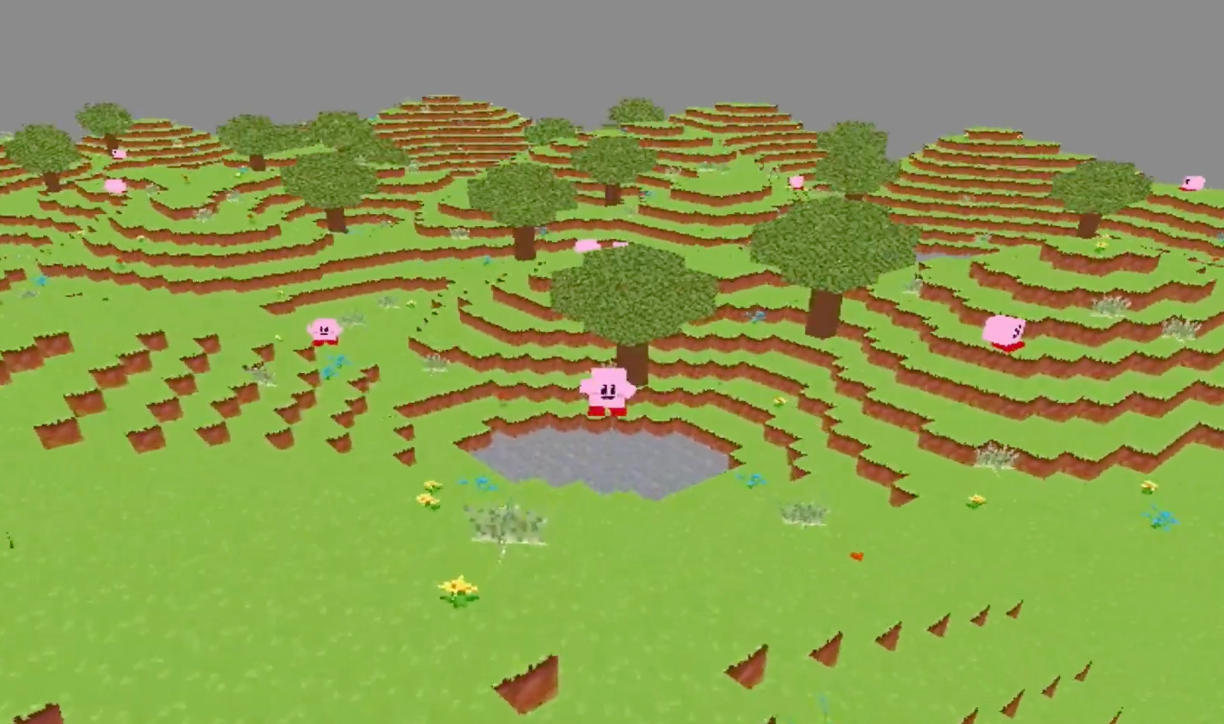
GameCube Set for Surprise Voxel Game in 2026

The Nintendo GameCube, a console that concluded its commercial production nearly two decades ago, is reportedly set to receive a new voxel-based title, described as a "Minecraft alternative", in 2026. This development, while light on specifics, immediately raises questions about the technical challenges involved in developing for a fixed-function pipeline console like the GameCube in the modern era, particularly for a genre often associated with more flexible, procedural generation.
According to a brief report by GAMINGbible, the game is expected to launch in two years. Crucially, the report offers no further details regarding the developer, the game's official title, or the method of its distribution. This absence of information leaves the retro gaming community to speculate on whether this will be a commercial release, a fan-made homebrew project, or perhaps a port of an existing title.
The Unlikely Revival of GameCube Development
New software for a console released in 2001 is a rare occurrence, typically confined to small-scale homebrew efforts or preservation projects. The GameCube, with its custom PowerPC Gekko central processing unit and Flipper graphics processing unit, presents a distinct architecture. Developing for such a system requires a deep understanding of its hardware limitations and specific programming paradigms, a far cry from the abstracted engines common in contemporary game development.
This is not merely a matter of nostalgia; it represents a continued dedication to a platform many considered commercially unsuccessful compared to its rivals. The GameCube's library, however, is often lauded for its quality and unique titles. Its cultural impact has arguably outstripped its initial sales figures, fostering a dedicated community that continues to explore its capabilities.
Technical Hurdles and Creative Solutions
A "Minecraft alternative" implies a voxel-based, open-world construction game. Such titles often rely on dynamic world generation and significant memory management. The GameCube's 24 megabytes of main random-access memory and 16 megabytes of embedded frame buffer memory are modest by modern standards. Creating a convincing, expansive voxel world within these constraints would necessitate considerable optimisation and clever programming.
The real story here is not merely the existence of a new title, but the continued dedication required to develop for a console like the GameCube, which presents a distinct set of hardware constraints compared to modern, more abstract development environments. It speaks to a particular kind of engineering challenge, one that appeals to those who enjoy pushing the boundaries of older hardware.
What This Means for Console Longevity
This announcement, however vague, reinforces the idea that no console is truly obsolete as long as a passionate community exists to support it. Homebrew developers, modders, and enthusiasts consistently find new ways to extend the life and capabilities of older hardware. From new operating systems to entirely new games, these efforts ensure that platforms like the GameCube remain relevant beyond their original commercial lifespan.
What this hints at, for the scene, is a persistent interest in pushing the boundaries of what older hardware can achieve, often driven by passion projects rather than commercial imperatives. The prospect of a new, substantial game for the GameCube in 2026 will undoubtedly be watched with keen interest, awaiting further details on this unexpected development.
Keeping Nintendo boxes crisp? Our Nintendo game protectors are UK-made cast acrylic, sized for NES, SNES, N64, GameCube and handheld boxes.
Follow RetroShell on X for daily retro gaming news. Join the community on r/RetroShell.
Originally published by GAMINGbible. Read original article.