SNK and Bandai's Monochrome Misstep Against Game Boy Color

The commercial dominance of Nintendo's Game Boy was an undeniable force, particularly in its home market. Its enduring success, even with a monochrome display, led several Japanese hardware manufacturers to miscalculate the trajectory of portable gaming technology, a misstep that became acutely apparent with the arrival of the Game Boy Color and its advanced reflective Thin-Film Transistor (TFT) screen.
Early Challengers and Their Missteps
Nintendo did not operate without competition in the nascent handheld market. Early challengers such as Atari with its Lynx, Sega with the Game Gear, and NEC's PC Engine GT, known in the West as the TurboExpress, all attempted to capture market share by offering superior graphical capabilities, specifically backlit colour displays. However, this technological advantage proved to be a significant commercial disadvantage.
These early colour handhelds suffered from substantial power drain, severely limiting their portability and battery life, a critical factor for a device designed for on-the-go use. This fundamental flaw allowed the monochrome Game Boy to maintain its market lead, demonstrating that consumers prioritised practicality and longevity over cutting-edge visuals at the time.
The Arrival of New Contenders
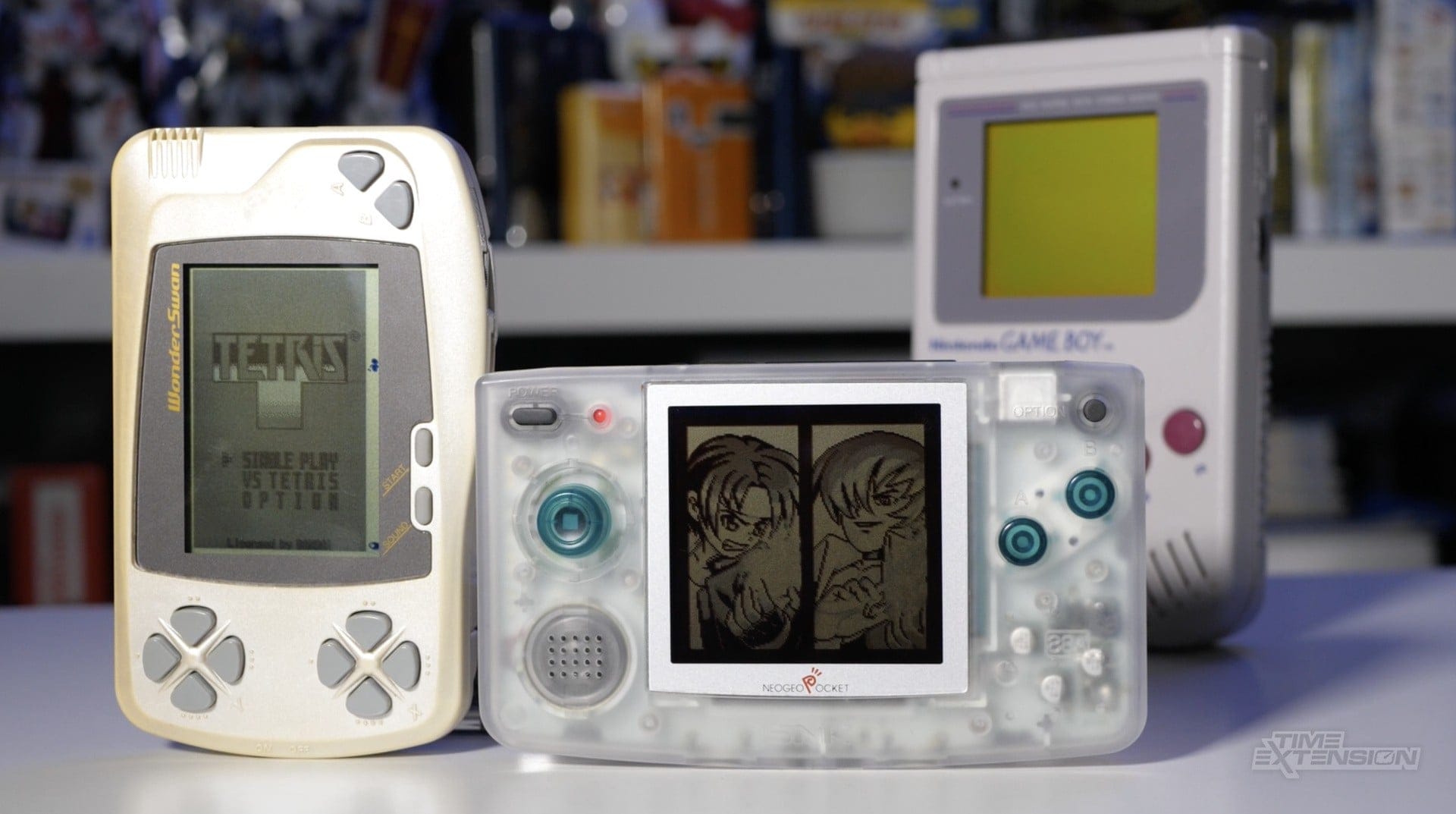
As Nintendo prepared to introduce the Game Boy Color, two prominent Japanese companies, SNK and Bandai, decided the time was opportune to challenge the Kyoto-based giant once more. SNK, renowned for its Neo Geo (ネオジオ) home and arcade systems, introduced the Neo Geo Pocket (ネオジオポケット). Simultaneously, Bandai, a toy company with a growing presence in video gaming, enlisted the expertise of Gunpei Yokoi, the original designer of the Game Boy, to create the WonderSwan (ワンダースワン).
These new handhelds launched in close succession. The Neo Geo Pocket debuted in October 1998, coinciding with Nintendo's release of the Game Boy Color. The WonderSwan followed in March 1999. This timing proved critical, as both SNK and Bandai had seemingly based their strategies on the continued success of monochrome displays, influenced by the Game Boy's longevity and the massive sales boost from the Pokémon (ポケットモンスター) phenomenon and the Game Boy Pocket refresh in 1996.
A Strategic Miscalculation in Display Technology
The real story here is the strategic miscalculation regarding the market's readiness for colour. While earlier attempts at colour handhelds suffered from significant battery drain, Nintendo's adoption of reflective TFT technology for the Game Boy Color fundamentally shifted the landscape. This innovation allowed for a colour screen without the prohibitive power demands that plagued its predecessors, offering a compelling upgrade without sacrificing portability.
SNK and Bandai, having likely commenced their hardware development plans around 1996, aimed to avoid the battery life pitfalls of earlier colour handhelds by opting for monochrome screens. However, Nintendo's unexpected announcement of the Game Boy Color, featuring its efficient new display technology, effectively pulled the rug out from under their strategy. It was likely too late for either company to significantly alter their course, leading them to launch devices that were arguably overshadowed by Nintendo's advanced offering.
The Market's Swift Evolution
The rapid evolution of the market forced both companies to adapt quickly. SNK released the Neo Geo Pocket Color (ネオジオポケットカラー) in March 1999, merely five months after its monochrome predecessor. This swift iteration meant the original Neo Geo Pocket's library only reached nine titles, though all were forward-compatible with the colour version. Similarly, Bandai announced the WonderSwan Color (ワンダースワンカラー) in the same year its original monochrome model launched, demonstrating a reactive scramble to meet market expectations.
Many early adopters of these monochrome systems found themselves upgrading swiftly to the colour variants, a common experience when technology undergoes such rapid shifts. The later SwanCrystal (スワンクリスタル) variant of the WonderSwan, for instance, offered further display improvements, highlighting the continuous pursuit of better visual fidelity in the handheld space.
Sales Figures and Enduring Appeal
Despite their strategic challenges, these handhelds achieved notable sales figures, particularly within Japan. The WonderSwan, sold exclusively in its home country, managed to sell approximately 3.5 million units. While this figure might not satisfy Nintendo's scale of success, it represents a significant achievement for a Japan-only release.
The Neo Geo Pocket, despite a global release and a software library often considered superior by enthusiasts, did not perform as well commercially. Reports suggest around two million units were sold worldwide before Japanese pachinko manufacturer Aruze (アルゼ), which acquired SNK after its bankruptcy in 2001, discontinued the device. While commercially overshadowed, both the Neo Geo Pocket and WonderSwan are still highly regarded by collectors today, representing a fascinating alternative history of handheld gaming beyond Nintendo's well-documented dominance. Their unique designs and software libraries, including titles like King of Fighters R-1 (キング・オブ・ファイターズR-1) and Beatmania (ビートマニア) on the WonderSwan, continue to attract dedicated fans.
Still playing your Atari? Keep the cartridges museum-grade with our UK-made Atari game protectors, precision-cut acrylic, designed to last longer than the hardware.
Follow RetroShell on X for daily retro gaming news. Join the community on r/RetroShell.
Originally published by Time Extension. Read original article.