
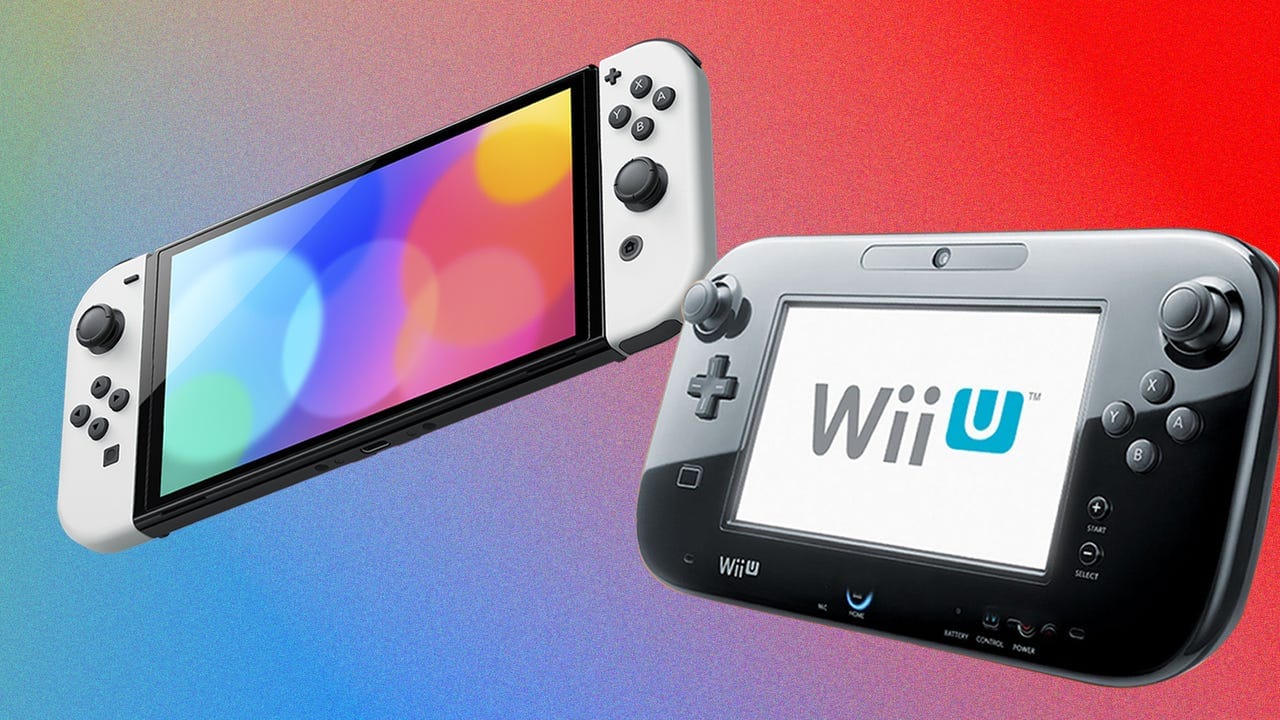
Reggie Fils-Aimé Blames Wii U Failure on Slow Exclusives
Reggie Fils-Aimé, former president of Nintendo of America, has finally laid out his take on the Wii U's commercial failure. He points to a slow drip of key exclusives like Smash Bros. and Mario Kart, alongside fierce competition from Sony and Microsoft. This isn't just another post-mortem; Fils-Aimé himself called the Wii U Nintendo's "second worst performing platform," a direct shot that puts it right behind the infamous Virtual Boy.
Speaking at an NYU Game Center Q&A, Fils-Aimé recounted the initial optimism surrounding the Wii U. Nintendo believed in a dual-screen approach, combining the "10-foot experience" of a television with the "10-inch experience" of the GamePad controller. This was meant to open up new gameplay possibilities, allowing for both shared big-screen play and unique, individual experiences on the tablet.
The "10-Foot, 10-Inch" Gamble
The vision was clear: create games that used both screens in novel ways. NintendoLand, a mini-game collection, launched with the console. It was designed to be the Wii U's Wii Sports, a system seller that showcased the hardware's unique capabilities. Fils-Aimé admitted that even he felt a slight unease, an "itch in the back of [his] neck," that NintendoLand wasn't quite the phenomenon Wii Sports had been.
The console did well in its first year. However, sales quickly stalled as players looked ahead to the next generation of consoles from Sony and Microsoft. The PlayStation 4 and Xbox One were on the horizon, promising more traditional power and graphics. Nintendo's innovative but confusing GamePad concept struggled to compete against that raw horsepower narrative.
Software Drought and Market Pressure
Fils-Aimé highlighted a critical issue: the pace of new software. Key titles like a new Smash Bros., Mario Kart, and the then-nascent Splatoon franchise were in development. They simply did not materialize on the timetable Nintendo needed. This left early adopters with a console that had potential but lacked a steady stream of must-have games to justify its purchase.
My take is that while slow software was a factor, the core confusion around the Wii U's identity played a larger role. Was it a new console, or an add-on for the original Wii? The marketing struggled to convey its purpose, and even strong exclusives would have faced an uphill battle against that initial misunderstanding. The console's low sales, ultimately 13.56 million units, are proof of this uphill battle.
Reggie's Course Correction
As the Wii U entered "life support," Fils-Aimé, then a commercial executive, pushed for decisive action. Nintendo had launched with two different SKUs, one white with less memory and one black with more. He killed the white SKU. This move simplified the offering for retailers, who struggled to explain the differences to customers and maintain inventory for both versions.
Nintendo also shifted focus. They started building deeper relationships with independent developers, encouraging them to bring digital-only titles to the platform. This strategy, born out of necessity for the Wii U, would later prove critical for the Nintendo Switch's early success, providing a diverse library of games beyond Nintendo's first-party offerings.
Classic Consoles: A Stopgap Strategy
To sustain the business through the holiday seasons, Nintendo launched the NES Classic Edition and, in the following year, the SNES Classic Edition. These micro-consoles were a commercial success, selling millions of units. They tapped into a powerful vein of nostalgia, offering a curated selection of classic games in a compact, collectible form factor.
For collectors, these Classic Editions were an interesting market play. They weren't original hardware, but they offered a new way to experience beloved games. Their success showed Nintendo that there was a huge appetite for retro experiences, a market the Wii U, with its forward-looking but flawed concept, had failed to capture. The Classic consoles were a stopgap, a way to generate revenue and keep Nintendo relevant while the company planned its next big move.
The Switch Pivot
Even as the Wii U struggled, planning for its successor was already well underway. Fils-Aimé recalled a pivotal meeting in March 2016 with former Nintendo president Satoru Iwata in Japan. During this meeting, Iwata revealed his cancer had returned. After a personal discussion, they "flipped the switch" and began detailed launch planning for the Nintendo Switch.
The Switch evolved the Wii U's core concept, making the portable GamePad experience the central focus of the entire console. This refined vision, combined with a strong launch lineup, turned Nintendo's fortunes around dramatically. The Switch has since sold over 155 million units, a stark contrast to the Wii U's performance.
Wii U's Legacy in the Collector Market
The Wii U's commercial failure, selling only 13.56 million units globally, means it will always be a footnote in Nintendo's storied history. However, for collectors, low sales often translate to future rarity. Finding a Complete In Box (CIB) Wii U console, especially the less common white SKU, in pristine condition without label damage or manual foxing, could become increasingly difficult.
While it never reached the widespread appeal of its predecessor or successor, the Wii U represents a critical learning period for Nintendo. It was a bold experiment that didn't quite land, but its ideas directly informed the design of one of the most successful consoles of all time. The Wii U's place in the collector market will likely grow as a testament to Nintendo's willingness to innovate, even when it leads to a stumble. It's a console that tells a story, and those stories always find an audience among dedicated collectors.
RetroShell makes the Nintendo protector set collectors actually reach for — precision-cut, British production, ships worldwide.
Follow RetroShell on X for daily retro gaming news. Join the community on r/RetroShell.
Originally announced by Nintendo · first reported by IGN.