Rare Commodore 4064 Restored by Tynemouth Software

The Commodore 4064, a curious beast marrying the robust, all-in-one chassis of the PET with the vibrant, SID-chip-powered heart of the Commodore 64, has been brought back from the brink by the diligent hands at Tynemouth Software, revealing a fascinating footnote in the company's often-unpredictable product lineage. This particular machine, a less common sight than its more famous siblings, offers a glimpse into Commodore's strategic thinking for specific markets, far removed from the colourful home computing revolution that was sweeping Britain. Hackaday reports on the intricate process of reviving this unusual 8-bit computer, a task that required considerable expertise and patience.
Commodore's PET, or Personal Electronic Transactor, was a significant success in the late 1970s, an integrated unit featuring a built-in CRT display, a 6502 processor, and a GPIB port, often found in educational or business settings. The Commodore 64, by contrast, became a household name in the early 1980s, just as the home computer boom was truly taking hold, a year or so after the BBC Micro launched its educational assault. It offered high-resolution colour graphics on a standard television and a legendary synthesizer chip, the SID, which inspired a generation of musicians and game developers, including the likes of Rob Hubbard and Martin Galway, whose work defined the sound of many a playground argument over the best loading screen music.
Unravelling the PET-64 Mystery
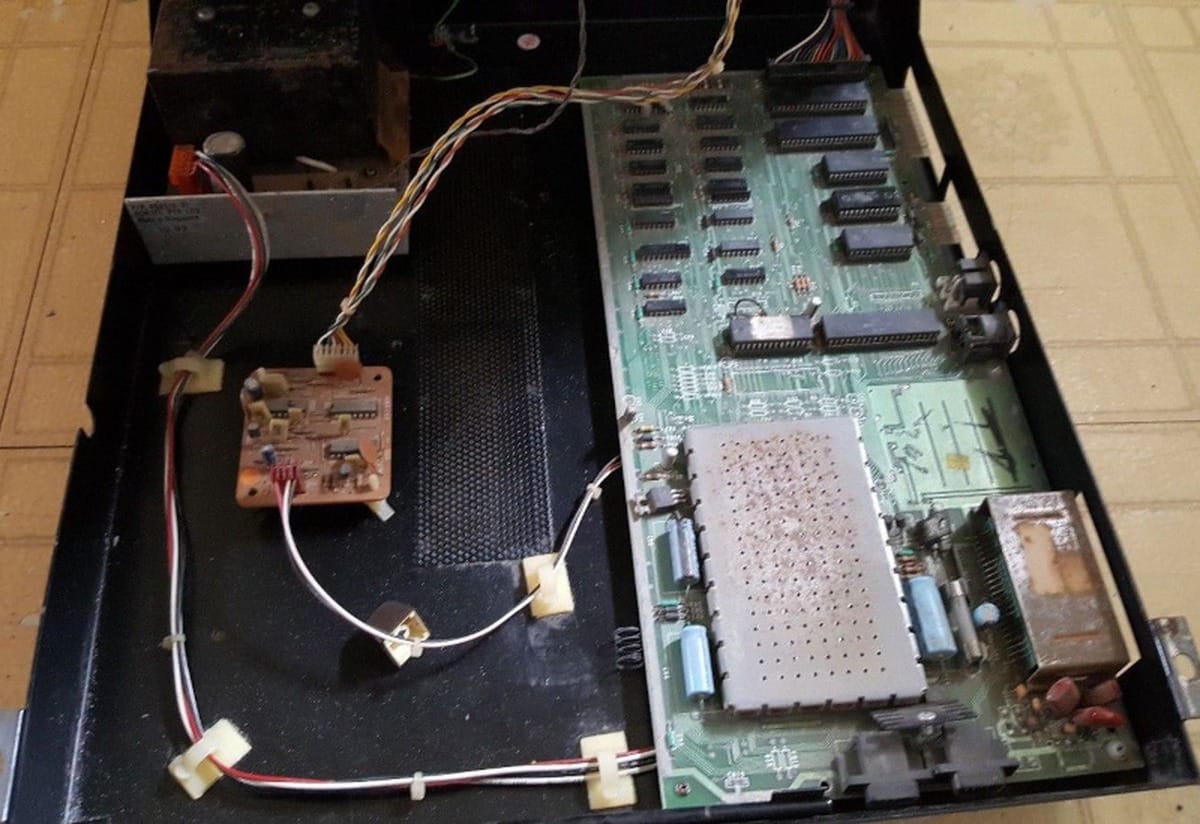
This particular 4064 unit, found in a rather damp state, presented Tynemouth Software with a series of challenges. The mainboard was notably grubby, requiring extensive debugging of its power and video circuits. A specific sync splitter board was needed to drive the PET's non-composite monitor, adding another layer of complexity to the restoration. The team eventually narrowed down the core issues to a faulty ROM chip and several memory errors, a common enough ailment for period hardware that has endured decades of storage.
For years, there has been some debate among Commodore enthusiasts as to whether these 4064 machines were simply cobbled together from surplus PET parts. However, Tynemouth Software's close examination of the restored unit helps to settle this discussion. They point to custom metalwork within the case and specific Commodore 64 features on the board itself, suggesting a more deliberate design and manufacturing process. This was not merely a case of throwing old parts into a box; it was a considered, albeit niche, product.
A Glimpse into Commodore's Strategy
What this hints at, for the scene, is a deeper understanding of how manufacturers like Commodore adapted their offerings for different sectors. While the C64 was designed for the living room, the 4064 was clearly aimed at environments where the robust, all-in-one form factor of the PET remained desirable, such as schools or small offices. This pragmatic approach to product development, using existing successful designs as a foundation for new market opportunities, was a hallmark of the era, much like how British companies such as Acorn and Sinclair often iterated on their designs to meet specific educational contracts.
This successful restoration by Tynemouth Software, a group known for their work on other classic machines like the ZX80, not only brings a rare piece of computing history back to life but also provides valuable insights into the manufacturing decisions of the time. It serves as a reminder that even within the well-documented history of machines like the Commodore 64, there are still fascinating, lesser-known variants waiting to be rediscovered and understood by a new generation of enthusiasts.
Keep your collection properly. RetroShell's shop stocks UK-made acrylic protectors for Atari, Sega, Nintendo and more.
Follow RetroShell on X for daily retro gaming news. Join the community on r/RetroShell.
Originally published by Hackaday. Read original article.