Commodore 64 Sync Splitter Board's Secrets Uncovered

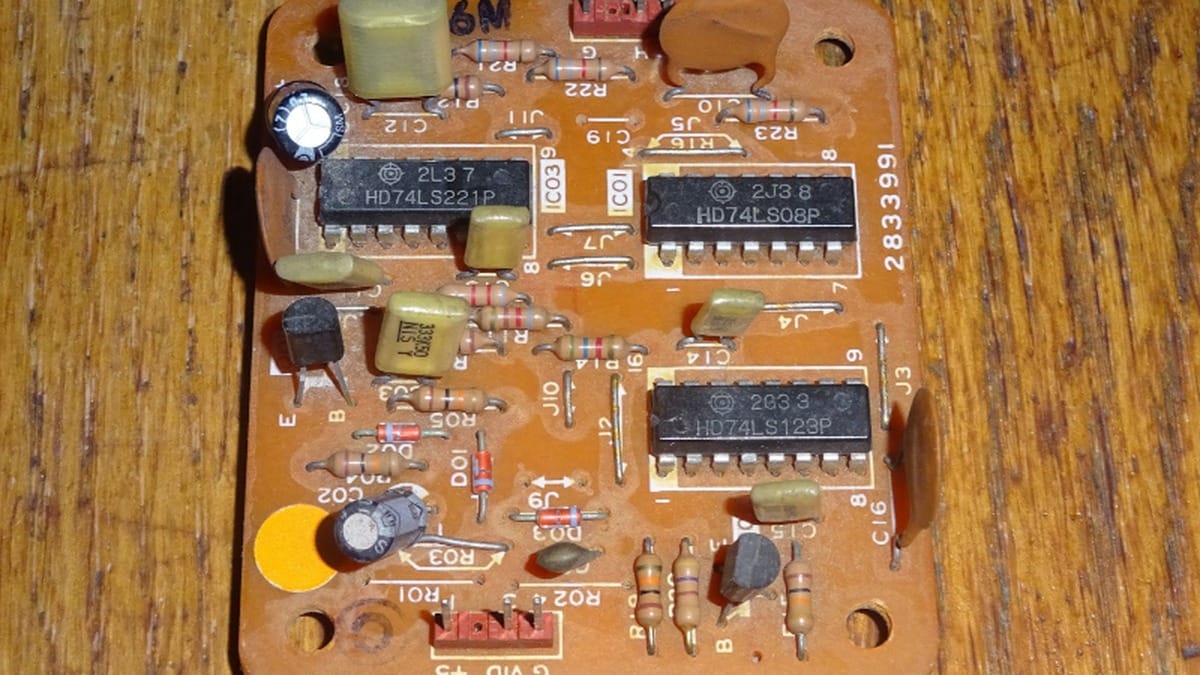
A rather intriguing piece of Commodore 64 hardware, a sync splitter board found within a C64 machine re-housed in a PET case, has recently been the subject of a thorough reverse engineering by Tynemouth Software, as reported by Hackaday. It reminds me of the clever little hacks and workarounds that would often grace the pages of Zzap!64's 'Tech Tips' column back in '85, showing how resourceful engineers and enthusiasts alike had to be with the hardware at hand.
The necessity of such a board might seem curious at first glance, given that one might expect an 8-bit computer to have these video synchronisation signals readily available. However, the Commodore 64's VIC chip, the Video Interface Chip, was designed to combine these signals into a single composite output internally, leaving the original engineers with a puzzle to solve for external monitors.
While the fundamental principles of video signal technology date back to the 1930s, allowing for basic sync pulse extraction with just a few passive components and transistors, such a simple approach often yields a messy output with imprecise timing. Commodore's solution, as revealed by the reverse engineering, extends this basic concept with additional logic, creating a remarkably well-engineered splitter.
Engineering Around the VIC Chip
The board employs a pair of filters, each with a carefully selected time constant designed to capture the relevant vertical and horizontal sync pulses. Beyond these filters, the circuit incorporates one-shots, which are monostable multivibrators, to provide clean pulses of precisely the correct duration. Gates are also present, providing blanking to prevent spurious pulses from appearing where they should not, ensuring a stable and reliable video signal.
What this hints at, for the scene, is the often-unseen ingenuity that went into making these machines work with the displays of the period, particularly when a chip's internal design presented an unexpected challenge. It shows that even seemingly minor components could hide sophisticated design choices.
A Glimpse into Period Hardware Design
The video path itself presents a slight departure from a conventional analogue sync splitter, as the output from the Commodore 64 is entirely digital, taking a Transistor-Transistor Logic, or TTL, level signal through a gate. This design choice speaks volumes about the constraints and opportunities faced by hardware designers during the 1980s, a time when every component and every signal path had to be carefully considered for cost and performance.
The decision by the owner to keep the boards uncleaned, preserving their original patina, also offers a fascinating insight into the physical history of these machines. It is a tangible link to the past, much like finding a well-preserved copy of Crash magazine from the summer before the miners' strike ended, complete with its original cover art by Oliver Frey, showing the wear and tear of its journey through time.
This reverse engineering effort by Tynemouth Software not only sheds light on a specific piece of Commodore engineering but also contributes to the broader understanding of how these beloved 8-bit systems managed their complex video outputs, ensuring their compatibility with the monitors of the day.
Keep your collection properly. RetroShell's shop stocks UK-made acrylic protectors for Atari, Sega, Nintendo and more.
Follow RetroShell on X for daily retro gaming news. Join the community on r/RetroShell.
Originally published by Hackaday. Read original article.