
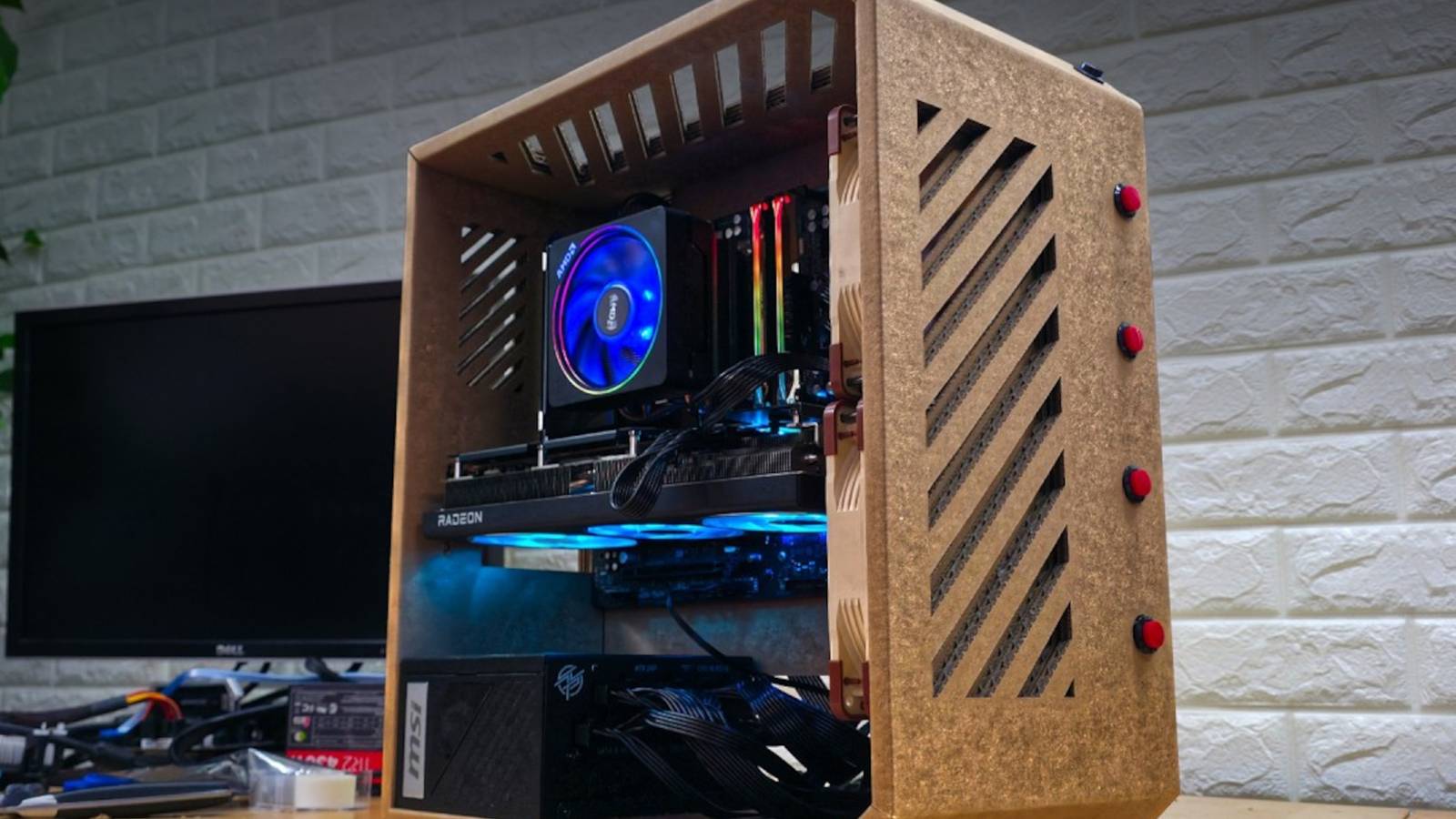
Cardboard PC Case Shows Ingenuity

There's a certain charm, isn't there, to the ingenuity of a home computer enthusiast, a spirit that harks back to the days when a ZX Spectrum 48K might arrive in kit form, demanding a soldering iron and a steady hand before you could even load up a copy of Manic Miner. That same spirit, albeit with rather more advanced tools, has recently surfaced with a rather remarkable project: a fully functional personal computer case crafted almost entirely from cardboard, a feat that, on the surface, sounds like something out of a particularly ambitious Your Sinclair reader's letters page from, say, the autumn of 1986.
This unusual build, first spotted by Hackaday and reported by XDA Developers, comes from YouTuber mryeester. They set out to create a cardboard PC case that not only functioned well but also looked good, moving beyond the often 'scuffed' appearance of earlier attempts. The project shows a dedication to form and function, much like the early days when enthusiasts would often customise their machines with external drives or joysticks, sometimes even building their own interfaces.
The Craft Behind the Corrugated
To achieve this level of precision, mryeester enlisted the help of an individual known as the Cardboard Wizard. This collaboration saw the plans sent off to be cut with a Kongsberg C64 industrial CNC machine, a piece of kit that carries a price tag of around £240,000, according to mryeester on YouTube. This certainly moves the project beyond a simple budget build, but it speaks volumes about the lengths one can go to for a unique vision.
Mounting the hardware required careful drilling and screws, ensuring everything was secure within the corrugated structure. The attention to detail even extended to a secret turn-on sequence, demanding nine mechanical switches be pressed in the correct order to power up the machine. This kind of playful, technical flourish reminds me of the hidden messages and elaborate copy protection schemes found in many 8-bit games, like those from the Oliver Twins at Elite or the intricate code of Matthew Smith.
Echoes of the Homebrew Era
What this hints at, for the scene, is not merely the novelty of a cardboard box, but a deeper current of creative problem-solving that has always driven computing, from the earliest days of hobbyist kits to today's bespoke builds. The idea of taking an everyday material and transforming it into something functional and aesthetically pleasing for a computer is a direct lineage from the early home computer scene in Britain, where ingenuity was often born of necessity and a desire to push boundaries.
Once assembled, the cardboard case proved surprisingly capable. It remained sturdy during transit, a critical factor for any PC, and the internal hardware did not suffer from thermal throttling while running Counter-Strike 2. This performance shows that with careful design and execution, even unconventional materials can provide adequate cooling and structural integrity for modern components.
What This Means for the Tinkerer
While few of us have access to a £240,000 CNC machine, the core idea here is about pushing the boundaries of what a computer case can be. It encourages a fresh look at materials and design, moving beyond standard metal or plastic enclosures. For those who enjoy tinkering with their machines, this project serves as a reminder that the spirit of experimentation, so prevalent in the early 1980s when home computers first truly took hold across the UK, is still very much alive and well.
Pair the knowledge with the fit. Player Clothing t-shirts are individually numbered, limited-edition runs — retro DNA on cotton.
Follow RetroShell on X for daily retro gaming news. Join the community on r/RetroShell.
Originally published by XDA Developers. Read original article.