
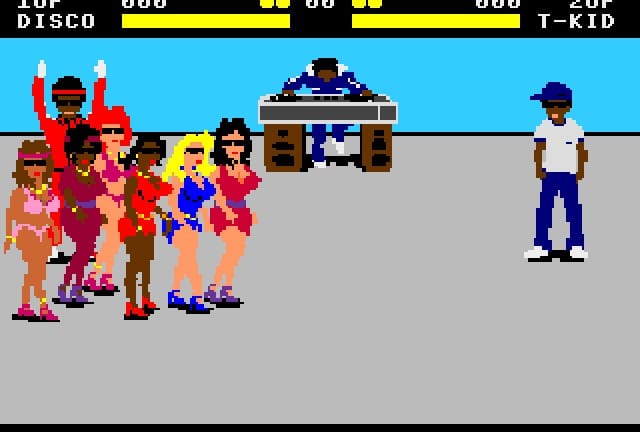
Streetbeat: The C64 Arcade Game That Never Was

From a retro gaming angle, Streetbeat is a proper oddity, a breakdance arcade game that looked as if it had turned up in 1984, even though it was actually a mid-1990s student project. The story has now been documented by Games That Werent, and it is a fine fit for readers who enjoy lost software, fake cabinets and the sort of period detail that made the Commodore 64 scene so memorable.
The project was created by Johan Boije and Mika Pollack at Beckman's College of Design in Stockholm, Sweden, and was presented in 1996-97 as a final examination piece. It was not just a game on a screen, either. The pair built a full arcade cabinet, with custom artwork, a colour box and a manual, all designed to sell the illusion of a genuine commercial release from the 1980s.
Under the playful pseudonyms Acne and HW-MR, and using the fictional label King-Size, they made Streetbeat on an Apple Macintosh with Director. The game itself was a competitive breakdance battle, with players trying to land as many moves as possible in a 30-second round. The look and feel were meant to echo a 1984 Commodore 64 title, while still working as an arcade-style cabinet piece.
The soundtrack was part of the charm, and part of the problem. It used sampled snippets from tracks including White Lines by Grandmaster Flash and the Furious Five, and Hey You by Rock Steady Crew. That gave the project a strong early 80s feel, but it also created licensing issues that would have made a commercial release difficult.
According to the Games That Werent write-up, companies showed interest at the time, but Streetbeat never made it to shops. The Macintosh market was small for this kind of title, and Johan Boije later said the work needed to finish it for sale, plus the modest publisher offers, did not make sense. By then, both creators had moved on into professional careers, with Boije in advertising and Pollack in graphic design.
The original cabinet has since been dismantled, with its parts now in Johan Boije's attic. The software is believed to still exist in playable form on Macintosh systems, although it was built for the custom cabinet controls. Boije also tried to port it to Shockwave for online play, but the file size, mainly because of the music, proved too much to handle cleanly.
For more retro gaming coverage, see our News tag. Stories like this are a reminder that some of the most interesting pieces of gaming history are the ones that never reached the shelves, but still captured a moment in design, music and arcade culture.