
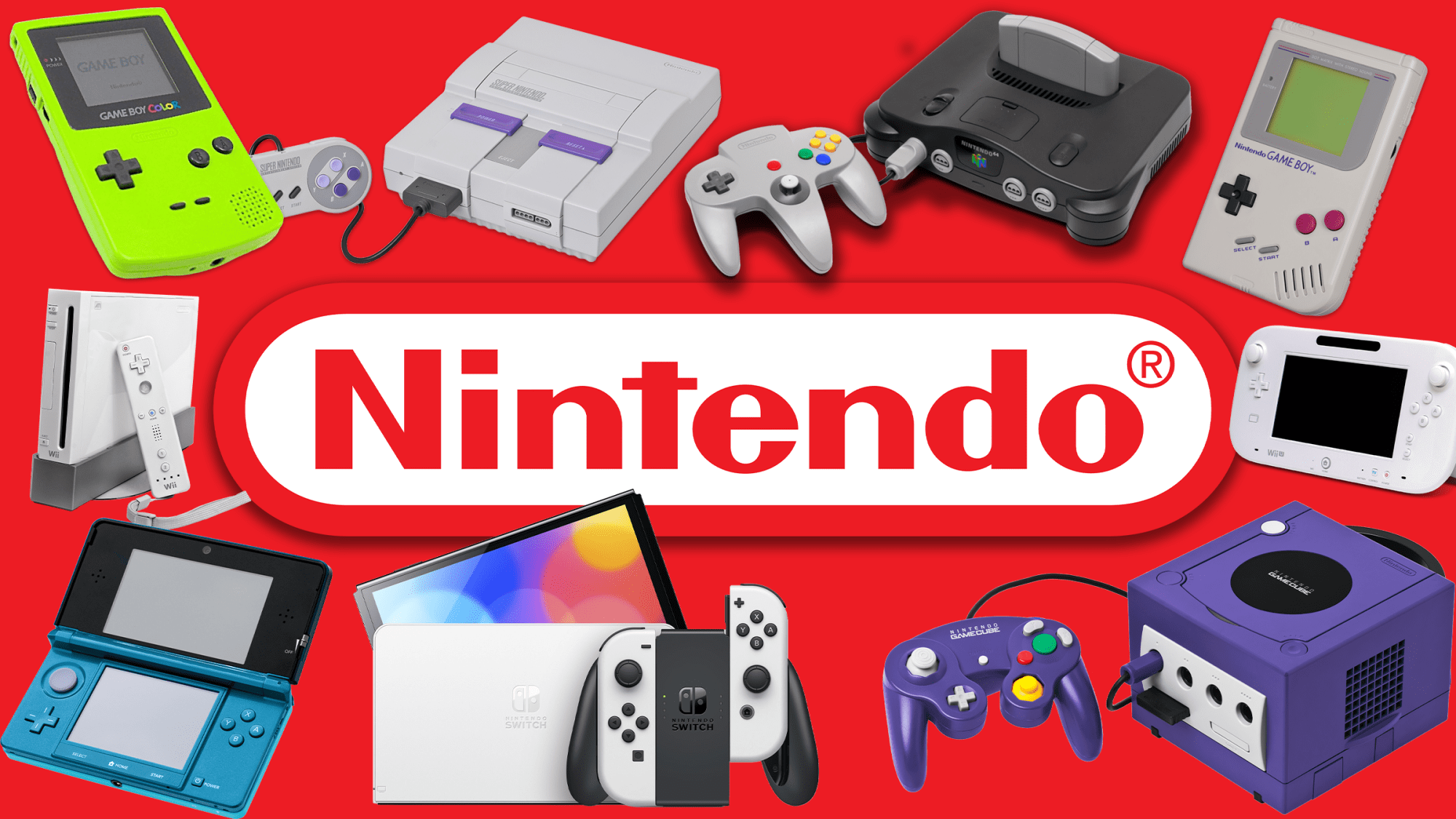
Nintendo's Top Sellers: A Look at Console-Defining Games
ComicBook Gaming has compiled an interesting list detailing the best-selling game for every Nintendo console, offering a clear snapshot of the titles that truly defined each system's commercial success. It is particularly telling to see how often a system's launch title or a bundled game became its most popular, a strategy Nintendo has used effectively since the original Game Boy, where its simple design and monochrome display prioritised battery life, making it a truly portable device.
Nintendo's journey into gaming started in the 1970s, evolving from playing cards to electronic games and eventually the Color TV-Game system. This early system lacked interchangeable games, but the company soon moved into more flexible hardware. Their first handheld system, the Game & Watch, named for its built-in clock, sold over 43.3 million units across more than 60 models.
Early Handheld Dominance: Game & Watch and Game Boy
The best-selling game for the Game & Watch was Donkey Kong, moving over 8 million units. This is unsurprising, given its gameplay mirrored the arcade hit that helped Nintendo avoid bankruptcy in 1981, according to Nintendo best-selling games list. The Game Boy and its successor, the Game Boy Color, continued Nintendo's handheld success, with their simple design and initial lack of a colour screen contributing to longer battery life, a critical feature for portable gaming.
The best-selling title across both Game Boy platforms was the first generation of Pokémon games: Pokémon Red, Green, and Blue. These three titles, released in February 1996, sold a combined 31.3 million copies. When including Pokémon Yellow, which launched in September 1998, total sales for the first generation jump to 45.9 million units, according to Top-selling Nintendo consoles worldwide. This shows the immense cultural and commercial power of the Pokémon franchise from its very beginning.
NES and SNES: Defining Generations with Pack-ins
The Nintendo Entertainment System, or NES, was a critical console for the industry, helping it recover from the 1983 video game crash. Its best-selling game was its first pack-in title, Super Mario Bros. A pack-in game is a title included with the console hardware at purchase, often to showcase the system's capabilities, according to History of Nintendo gaming consoles. Super Mario Bros. stretched the limits of the 8-bit system, selling over 40.24 million copies individually and bundled.
Moving into the 16-bit era, the Super Nintendo Entertainment System, or SNES, also saw a Mario title take the top spot. Super Mario World, the first Mario game on 16-bit hardware, sold over 20.61 million copies. It introduced Yoshi and expanded on the mechanics of Super Mario Bros. 3, demonstrating a significant leap in graphical and gameplay complexity for the new hardware generation.
The Virtual Boy's Unique Case and N64's 3D Leap
The Virtual Boy, a 32-bit system, stands as a notable commercial failure for Nintendo, despite its ambitious technology. It caused eye strain for many users and had a limited library of only 22 games. Its best-selling game was Mario's Tennis, one of its five launch titles and a pack-in game in North America. While exact sales figures are unclear, its status as a bundled title for a system with such a small game count highlights the challenges the Virtual Boy faced in the market.
The Nintendo 64, with its 64-bit hardware, shifted Nintendo's focus to 3D gaming, influencing camera controls and 3D platformers. Its best-selling game was Super Mario 64, another pack-in title. This game, the first in the franchise to feature 3D graphics, sold over 11.91 million copies. Its open world and excellent controls set a new standard for 3D game design.
GameCube and Game Boy Advance: Competition and Continued Handheld Success
The GameCube competed in the sixth console generation against the Sega Dreamcast, Microsoft Xbox, and Sony PlayStation 2. While it did not win that console war, it hosted many strong titles. Its best-selling game was Super Smash Bros. Melee, selling over 7.41 million copies. This fighting game expanded its roster to include characters from franchises like Fire Emblem, which many North American players had not encountered before.
Nintendo continued its handheld innovation with the Game Boy Advance. It faced competition from devices like the Nokia N-Gage and Bandai WonderSwan, but ultimately dominated the market. Its best-selling titles were Pokémon Ruby and Sapphire, released in November 2002, which combined to sell over 16.22 million copies. This performance significantly outstripped Pokémon FireRed and LeafGreen by more than 4 million units, showing the continued strength of the Pokémon brand on new handheld hardware.
The Niche Pokémon Mini and DS Innovation
The Pokémon Mini, a tiny system released in 2001, was not widely marketed. It was designed specifically for Pokémon games and related media. Its best-selling game, Pokémon Party mini, was a pack-in title. With only ten games released in total for the system, and only four in North America, the competition for the top sales spot was minimal. This niche device shows Nintendo's willingness to experiment with dedicated hardware for its most popular franchises.
The Nintendo DS drew inspiration from the dual-screen design of the Game & Watch systems. This dual-screen technology allowed for more on-screen information and new gameplay possibilities. The best-selling game on the Nintendo DS was New Super Mario Bros., which sold over 30.8 million copies. This figure significantly surpassed its second-best-selling title, Nintendogs, by nearly 7 million copies, cementing New Super Mario Bros. as a massive success for the platform.
Wii's Broad Appeal and 3DS's Autostereoscopic Display
The Wii represented a strategic shift for Nintendo, targeting a wider market with movement-based gaming rather than competing directly on raw power with Sony or Microsoft. This approach led to the Wii becoming one of the best-selling consoles of all time. Its best-selling game, Wii Sports, was a pack-in title designed to teach players the console's controls. It sold an astounding 82.9 million copies, outperforming Mario Kart Wii by over 45.5 million units.
The Nintendo 3DS upgraded the DS with better hardware and an autostereoscopic 3D display on its top screen, allowing for glasses-free 3D visuals. Users could adjust the 3D depth to avoid eye strain. This design proved highly successful, with Mario Kart 7 becoming the handheld system's best-selling game, moving close to 19 million copies throughout the 3DS's lifespan. For a time, it was also a pack-in title, further boosting its reach.
Wii U, Switch, and the Future of Mario Kart Sales
The Wii U, with its touchscreen GamePad, served as a transitional system between the Wii and the Nintendo Switch. Despite underperforming in the market, its best-selling game was Mario Kart 8, selling more than 8.46 million copies. This figure is notable, as the system's second-best-selling game, Super Mario 3D World, sold fewer than 5.9 million copies.
The Nintendo Switch, a hybrid console functioning as both a home system and a handheld, achieved massive success. Its best-selling game is Mario Kart 8 Deluxe, an updated version of the Wii U title. This game has sold over 70.59 million copies, showcasing the enduring appeal of the Mario Kart franchise across generations. ComicBook Gaming's report also touches upon the Nintendo Switch 2, stating that it has been out for less than a year as of writing. For this new system, Mario Kart World appears to be the current best-selling game, with over 14.03 million copies sold, though Nintendo has not yet revealed full sales figures for the new hardware.
The consistent high sales of Mario Kart and Super Mario titles across multiple console generations, often as pack-in games, highlights Nintendo's effective strategy of pairing accessible, high-quality software with new hardware. This approach not only drives initial adoption but also establishes a strong foundation for a system's commercial life, a pattern evident from the 8-bit NES right through to the latest Switch figures. These historical sales figures also underpin the continued interest in these platforms for modern preservation and hardware projects, such as FPGA implementations that aim for cycle-accurate recreations of these beloved systems.
Get every story worth reading in one email. Subscribe to the RetroShell newsletter and we'll send it on Monday morning.
Follow RetroShell on X for daily retro gaming news. Join the community on r/RetroShell.
Originally announced by Nintendo · first reported by ComicBook Gaming.