Devil May Cry Season 2: An Adaptation Finds Its Footing

The recent release of the second season of Netflix's Devil May Cry animated series offers a chance to reflect on adaptations and their fidelity to source material, particularly when that material itself has a complex genesis. The original Devil May Cry game, launched on the PlayStation 2, famously began its life as a prototype for what would become Resident Evil 4, a lineage that speaks to the iterative nature of creative development in the industry. Inverse's review suggests this new season refines the programme's approach, moving closer to the core narrative beats that defined the Capcom series.
Inverse notes that the first season, produced by Adi Shankar, engaged with a complex juxtaposition. It depicted demons as a morally diverse species, caught in cycles of subjugation. It also introduced DARKCOM, a theocratic American militia dedicated to exterminating demons. This was an attempt to explore hatred, misunderstanding, and shadowy intrigue, themes that resonated with the game's release shortly after the September 11th attacks.
The Series' Own Evolution
This thematic engagement, while compelling to some, earned mixed results. Many fans felt it was a bewildering deviation from the central thrust of the games. Dante, voiced by Johnny Yong Bosch, often found himself sidelined in his own story. The challenge for any adaptation is to interpret the source material without losing its essence. This can be a delicate balance.
Season 2, however, manages to significantly improve upon the foundation of the first. It marries its incisive depiction of senseless conflict with the intimate familial struggle that drives much of the first game and the wider franchise. This shift suggests a learning curve for the production, a common occurrence in multi-season animated projects.
Refining the Narrative Core
The ending of season 1 set the stage for a clever reversal of the first game's basic premise. The United States military launches a full-scale invasion of Makai, the demon world. This occurs at the behest of Vice President and DARKCOM commander William Baines, voiced by Ian James Corlett. Corlett capably takes over the role following the passing of Kevin Conroy.
Inverse highlights the drumbeat of battle as a running theme. The opening episode follows a soldier deployed on Makai. Their inevitable, needless demise at the hands of Mundus, Makai's immensely powerful despot, is genuinely harrowing. This sequence establishes the season's tone effectively.
Allegory and Adaptation
The entire mission, it turns out, was a diversion. Elite DARKCOM agent Lady, portrayed by Scout Taylor-Compton, was tasked with stealing a chalice. This chalice is one of four mythic Arcana sought by DARKCOM's corporate investor, Arius, voiced by Graham McTavish. His aim is to defeat Mundus and end the conflict.
Lady serves as a character through whom the show explores the manipulation of soldiers. She is still reeling from the revelation that her ruthlessness towards Makaians contributed to the threat of the White Rabbit in season 1. Lady tries to commit herself even harder to DARKCOM's campaign, believing it the only way to free Makai's citizens. Taylor-Compton's performance brings out a shadow of vulnerability and self-loathing. Watching Lady deprogram from her militaristic instincts is one of the season's strongest arcs.
Character Arcs and Thematic Weight
Lady's indoctrination into DARKCOM finds an echo in the presence of Vergil, Dante's long-lost half-brother. Vergil, voiced by Robbie Daymond, is now Mundus' adopted son. He was trained by Makai's king after a demon attack separated him from Dante as a child. Vergil is ruthlessly dedicated to his adopted home and guardian.
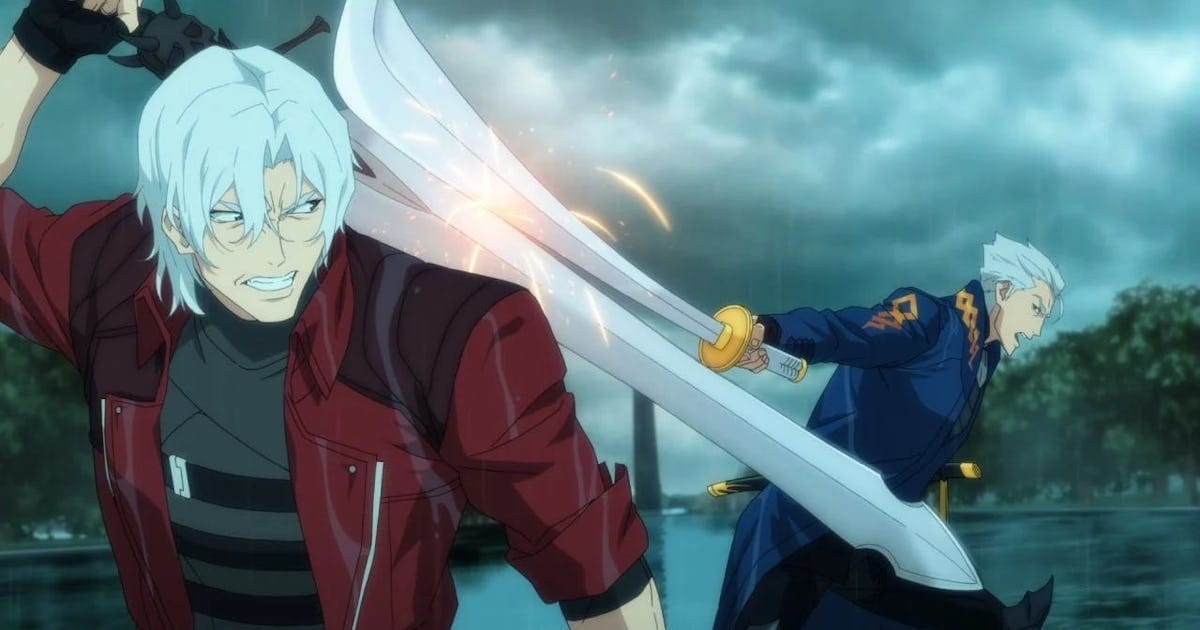
His sudden appearance as a major threat convinces DARKCOM to free Dante from suspended animation. This pits the twins against each other. They are on opposite sides of a conflict that neither fully understands. The relationship between Dante and Vergil finally places Dante centre stage, both in action and character focus. Daymond receives more time to develop Vergil as a complex, tortured character, driven by Mundus' manipulations and his own guilt.
Corporate Interests and Ancient Conflicts
Beyond the personal battles, the season also reveals the machinations of the war between Earth and Makai. While Baines was positioned as DARKCOM's head last season, it is revealed that Arius and his international corporation, Ouroboros, fund the organisation for their own aims. Fans of the games will likely anticipate these aims. For new viewers, this scheming reflects how international conflicts can often be traced back to corporate interests. This is a subtle but potent observation.
We also gain a closer look at Makai's internal structure and history. Mundus' rule is merely one link in a chain of subjugation spanning centuries. His plan to reconnect the human world and Makai is another conquest, one that uses his own people as cannon fodder. The real story here, beyond the demon-slaying, is the show's attempt to grapple with the often-uncomfortable political undercurrents that can be read into even fantastical narratives.
Visuals and Pacing Considerations
Studio Mir's animation refines the emotional stakes of the many battles in Devil May Cry season 2. Season 1 felt fluid and electrifying. Season 2, however, ups the ante with fight sequences that are as meaningful to the characters as they are flashy and kinetic. There is particular attention given to how each character's fighting style reflects their journey through the story. The clashes between Dante and Vergil feel as emotionally charged as they do in the source material, despite differing circumstances.
The downside, Inverse points out, is that with everything Season 2 tries to pull off, some elements feel underdeveloped or rushed. The rapid development of Lady and Dante's relationship, for instance, or the introduction of new characters towards the season's end, feel somewhat tacked on. Power shifts within the authorities and DARKCOM also unfold at a breakneck pace, leaving little room to breathe before the next plot point.
The Enduring Fraternal Conflict
This balancing act does not reward every element equally. However, the programme wisely learns from its previous season. It leans hard into arguably the most important part of the source's mythos: the Shakespearean family tragedy that separates Dante and Vergil. Every childhood flashback and every sword-strike in their contemporary duels builds towards a final, consequential showdown. The fate of two realms hangs in the balance.
While the entire season shows what is at stake for both Makai and Earth, it ultimately rests on the relationship between two brothers. They are still grieving the family they lost. They try to protect their homes in different ways. If fans of the games were deterred by a first season that seemed to rewrite the narrative, they will find this season returns to the bitter rivalry that kicked off the franchise decades ago. It is a welcome return to form, demonstrating that even complex adaptations can find their way back to the core of what made the original material resonate.
Collecting Sega? UK-made acrylic protectors for every generation live at the RetroShell Sega shop. Thicker than the cheap ones, no static, no yellowing.
Follow RetroShell on X for daily retro gaming news. Join the community on r/RetroShell.
Originally published by Inverse. Read original article.