
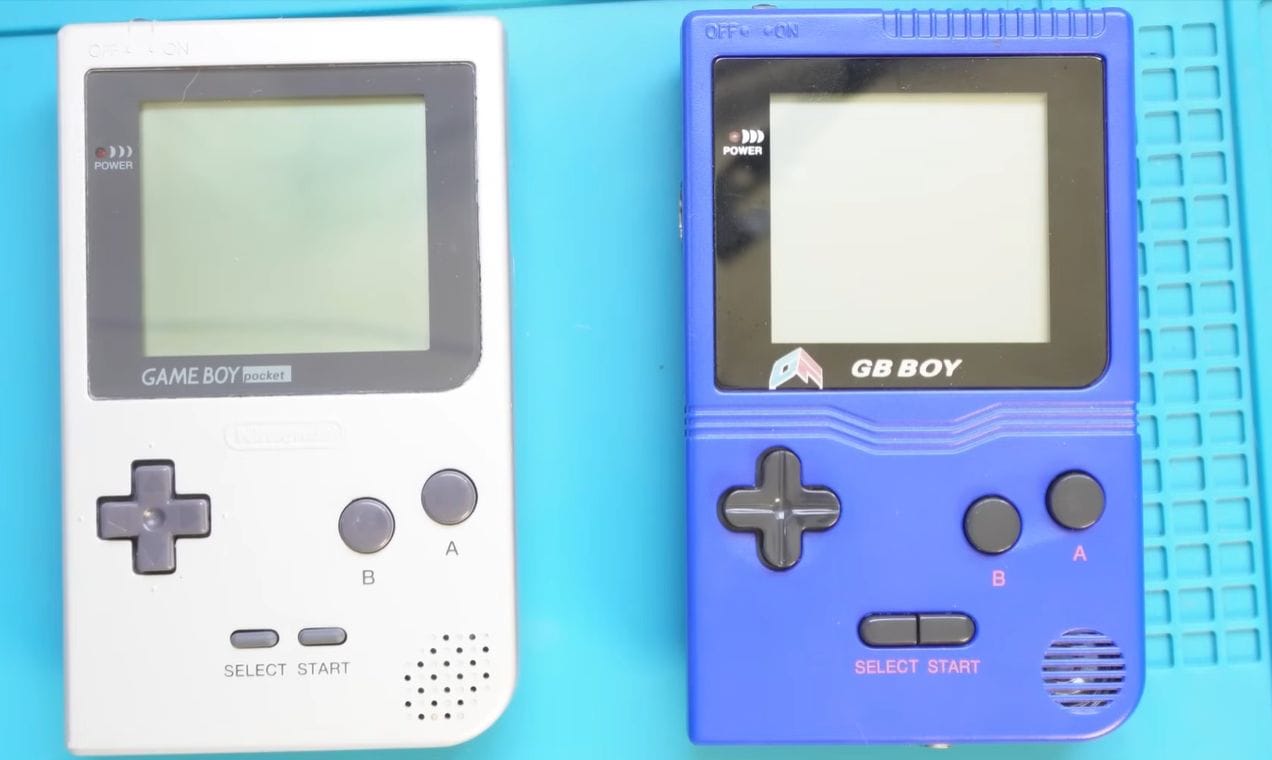
GB Boy Clone Speed Fix Exposes Hardware Flaws

In the retro gaming scene, clone handhelds can be a mixed bag, and the GB Boy is a good example. Hackaday recently covered a unit that ran original Game Boy cartridges too fast, a fault traced to the wrong oscillator frequency on the main board.
The report links to a video by [Sharopolis], who had set the handheld aside because its playback speed was unusable. The GB Boy accepts original cartridges, but this kind of timing problem is a reminder that clone hardware can look promising while still cutting corners on the parts that matter most.
The issue came down to the clock source. Inside the unit, the main chip is marked KF2001 and is supported by two memory chips, but the oscillator labelled X1 was a 5 MHz crystal. By comparison, an original Game Boy Pocket uses a 4.1943 MHz oscillator, and that difference is enough to make games run too fast and throw off audio timing.
[Sharopolis] replaced the crystal with a 4.1943 MHz part, sourced from a reel of 100 replacement oscillators, and the GB Boy then ran games at the correct speed. It is a straightforward repair, but it also shows how a decent core chip can be let down by cheaper supporting components.
The fix did not end there. After the oscillator swap, the display began to flicker, and comments on the video suggest that replacing the low-quality capacitors on the PCB may help. That fits a familiar pattern with clone hardware, where unstable power delivery and poor component choices can create a second fault as soon as the first one is solved.
For more retro hardware news, keep an eye on RetroShell news, and if you want another preservation angle, see our coverage of NES clone chip ROM dumping. The original report is from Hackaday.